
Catalogue Search | MBRL


Are you sure you want to remove the book from the shelf?

{{itemTitle}}
62
result(s) for
"Lee, Peter, author"
Sort by:

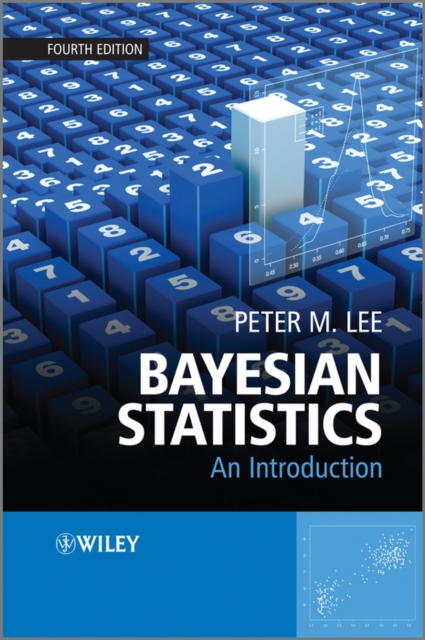
Bayesian statistics
Bayesian Statistics is the school of thought that combines prior beliefs with the likelihood of a hypothesis to arrive at posterior beliefs. The first edition of Peter Lee's book appeared in 1989, but the subject has moved ever onwards, with increasing emphasis on Monte Carlo based techniques. This new fourth edition looks at recent techniques such as variational methods, Bayesian importance sampling, approximate Bayesian computation and Reversible Jump Markov Chain Monte Carlo (RJMCMC), providing a concise account of the way in which the Bayesian approach to statistics develops as well as how it contrasts with the conventional approach. The theory is built up step by step, and important notions such as sufficiency are brought out of a discussion of the salient features of specific examples. This edition: * Includes expanded coverage of Gibbs sampling, including more numerical examples and treatments of OpenBUGS, R2WinBUGS and R2OpenBUGS. * Presents significant new material on recent techniques such as Bayesian importance sampling, variational Bayes, Approximate Bayesian Computation (ABC) and Reversible Jump Markov Chain Monte Carlo (RJMCMC). * Provides extensive examples throughout the book to complement the theory presented. * Accompanied by a supporting website featuring new material and solutions. More and more students are realizing that they need to learn Bayesian statistics to meet their academic and professional goals. This book is best suited for use as a main text in courses on Bayesian statistics for third and fourth year undergraduates and postgraduate students.
eBook

Bayesian Statistics
Bayesian Statistics is the school of thought that combines prior beliefs with the likelihood of a hypothesis to arrive at posterior beliefs. The first edition of Peter Lee's book appeared in 1989, but the subject has moved ever onwards, with increasing emphasis on Monte Carlo based techniques. This new fourth edition looks at recent techniques such as variational methods, Bayesian importance sampling, approximate Bayesian computation and Reversible Jump Markov Chain Monte Carlo (RJMCMC), providing a concise account of the way in which the Bayesian approach to statistics develops as well as how it contrasts with the conventional approach. The theory is built up step by step, and important notions such as sufficiency are brought out of a discussion of the salient features of specific examples. This edition: * Includes expanded coverage of Gibbs sampling, including more numerical examples and treatments of OpenBUGS, R2WinBUGS and R2OpenBUGS. * Presents significant new material on recent techniques such as Bayesian importance sampling, variational Bayes, Approximate Bayesian Computation (ABC) and Reversible Jump Markov Chain Monte Carlo (RJMCMC). * Provides extensive examples throughout the book to complement the theory presented. * Accompanied by a supporting website featuring new material and solutions. More and more students are realizing that they need to learn Bayesian statistics to meet their academic and professional goals. This book is best suited for use as a main text in courses on Bayesian statistics for third and fourth year undergraduates and postgraduate students.
eBook

Strategic cyber security management
\"This textbook places cyber security management within an organizational and strategic framework, enabling students to develop their knowledge and skills for a future career. The reader will learn to: evaluate different types of cyber risk, carry out a threat analysis and place cyber threats in order of severity, formulate appropriate cyber security management policy, establish an organization-specific intelligence framework and security culture, devise and implement a cyber security awareness programme, and integrate cyber security within an organization's operating system. Learning objectives, chapter summaries and further reading in each chapter provide structure and routes to further in-depth research. Firm theoretical grounding is coupled with short problem-based case studies reflecting a range of organizations and perspectives, illustrating how the theory translates to practice, with each case study followed by a set of questions to encourage understanding and analysis. Non-technical and comprehensive, this textbook shows final year undergraduate students and postgraduate students of Cyber Security Management, as well as reflective practitioners, how to adopt a pro-active approach to the management of cyber security. Online resources include PowerPoint slides, an instructor's manual, and a test bank of questions\"-- Provided by publisher.
Book
Fault tolerance, principles and practice
The production of a new version of any book is a daunting task, as many authors will recognise.In the field of computer science, the task is made even more daunting by the speed with which the subject and its supporting technology move forward.
eBook

From dead ends to cold warriors : constructing American boyhood in postwar Hollywood films
\"After World War II, studies examining youth culture on the silver screen start with James Dean. But the angst that Dean symbolized-anxieties over parents, the \"Establishment,\" and the expectations of future citizen-soldiers-long predated Rebels without a Cause. Historians have largely overlooked how the Great Depression and World War II impacted and shaped the Cold War, and youth contributed to the national ideologies of family and freedom. From Dead Ends to Cold Warriors explores this gap by connecting facets of boyhood as represented in American film from the 1930s to the postwar years. From the Andy Hardy series to pictures such as The Search, Intruder in the Dust, and The Gunfighter, boy characters addressed larger concerns over the dysfunctional family unit, militarism, the \"race question,\" and the international scene as the Korean War began. Navigating the political, social, and economic milieus inside and outside of Hollywood, Peter W.Y. Lee demonstrates that continuities from the 1930s influenced the unique postwar moment, coalescing into anticommunism and the Cold War\"-- Provided by publisher.
BOOK


New Zealand's South Island road trips
Lonely Planet New Zealand's South Island is your passport to the most relevant, up-to-date advice on what to see and skip, and what hidden discoveries await you. Skiing the scenic slopes around Queenstown, encounter wild kiwis on unspoilt Stewart Island, or indulge in deliciously fresh seafood in Kaikoura; all with your trusted travel companion. Includes pull-out driving map.
Book
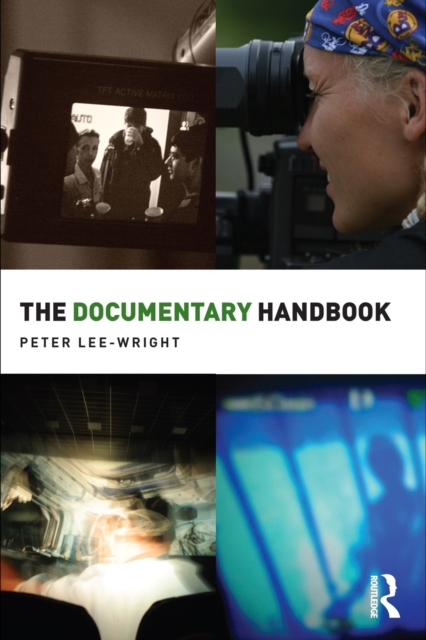
The Documentary Handbook
'The Documentary Handbook is mandatory reading for those who want a critical understanding of the place of factual formats in today’s exploding television and media industry, as well as expert guidance in complex craft skills in order to fully participate. The practical advice and wisdom here is second to none.' – Tony Steyger, Principal Lecturer, Southampton Solent University, UK
The Documentary Handbook is a critical introduction to the documentary film, its theory and changing practices. The book charts the evolution of documentary from screen art to core television genre, its metamorphosis into many different types of factual TV programme and its current emergence in forms of new media. It analyses those pathways and the transformation of means of production through economic, technical and editorial changes.
The Documentary Handbook explains the documentary process, skills and job specifications for everyone from industry entrants to senior personnel, and shows how the industrial evolution of television has relocated the powers and principles of decision-making. Through the use of professional Expert Briefings it gives practical pointers about programme-making, from research, developing and pitching programme ideas to their production and delivery through a fast-evolving multi-platform universe.
Peter Lee-Wright is a documentary film-maker with 30 years’ experience working for the BBC and Channel 4. He is currently Senior Lecturer in Media & Communications at Goldsmiths College, University of London. His most recent writing – critical overviews of sports documentary and trade union documentary – was published in Routledge’s Encyclopedia of the Documentary Film (2005).
Introduction Part 1: Talk to the Camera 1. Reportage 2. 'Lecture' Series 3. Vox Populi Part 2: Observe the People 4. Real Life 5. Docu-soap and Moc-doc 6. Ambulance Chasers 7. Undercover Expose 8. Freak Shows Part 3: Change the Mind 9. Education 10. Propaganda 11. Polemic 12. Liberation Part 4: Entertainment for All 13. Formats and Reality TV 14. Lifestyle and Makeover 15. Performance 16. Drama-doc 17. Art and Anarchy Part 5: Watch the Figures 18. Biopics 19. Wildlife and Environment 20. Landmarks 21. Box Office Conclusion Bibliography Filmography Index
eBook