
Catalogue Search | MBRL


Are you sure you want to remove the book from the shelf?

{{itemTitle}}
833
result(s) for
"Lee, Tara"
Sort by:


Automated Insulin Delivery in Women with Pregnancy Complicated by Type 1 Diabetes
This trial randomly assigned pregnant women with type 1 diabetes to standard insulin therapy with continuous glucose monitoring or to hybrid closed-loop therapy. The latter significantly improved maternal glycemic control.
Journal Article


IgA transcytosis and antigen recognition govern ovarian cancer immunity
Most ovarian cancers are infiltrated by prognostically relevant activated T cells
1
–
3
, yet exhibit low response rates to immune checkpoint inhibitors
4
. Memory B cell and plasma cell infiltrates have previously been associated with better outcomes in ovarian cancer
5
,
6
, but the nature and functional relevance of these responses are controversial. Here, using 3 independent cohorts that in total comprise 534 patients with high-grade serous ovarian cancer, we show that robust, protective humoral responses are dominated by the production of polyclonal IgA, which binds to polymeric IgA receptors that are universally expressed on ovarian cancer cells. Notably, tumour B-cell-derived IgA redirects myeloid cells against extracellular oncogenic drivers, which causes tumour cell death. In addition, IgA transcytosis through malignant epithelial cells elicits transcriptional changes that antagonize the RAS pathway and sensitize tumour cells to cytolytic killing by T cells, which also contributes to hindering malignant progression. Thus, tumour-antigen-specific and -antigen-independent IgA responses antagonize the growth of ovarian cancer by governing coordinated tumour cell, T cell and B cell responses. These findings provide a platform for identifying targets that are spontaneously recognized by intratumoural B-cell-derived antibodies, and suggest that immunotherapies that augment B cell responses may be more effective than approaches that focus on T cells, particularly for malignancies that are resistant to checkpoint inhibitors.
In patients with high-grade serous ovarian cancer, robust and protective humoral responses are dominated by B-cell-derived polyclonal IgA that binds to polymeric IgA receptors that are universally expressed on ovarian cancer cells.
Journal Article

Circulating endocannabinoids and genetic polymorphisms as predictors of posttraumatic stress disorder symptom severity: heterogeneity in a community-based cohort
The endocannabinoid signaling system (ECSS) regulates fear and anxiety. While ECSS hypoactivity can contribute to symptoms of established post-traumatic stress disorder (PTSD), the role of the ECSS in PTSD development following trauma is unknown. A prospective, longitudinal cohort study of 170 individuals (47% non-Hispanic Caucasian and 70% male) treated at a level 1 trauma center for traumatic injury was carried out. PTSD symptom assessments and blood were obtained during hospitalization and at follow-up (6–8 months post injury). Serum concentrations of the endocannabinoids
N
-arachidonoylethanolamine (AEA) and 2-arachidonoylglycerol (2-AG) were determined at both time points and selected genetic polymorphisms in endocannabinoid genes, including rs324420 in fatty acid amide hydrolase, were assessed. For the entire sample, serum concentrations of AEA at hospitalization were significantly higher in those diagnosed with PTSD at follow-up (
p
= 0.030). Serum concentrations of 2-AG were significantly, positively correlated with PTSD symptom severity at follow-up only in minorities (
p
= 0.014). Minority participants (mostly Black/African American) also demonstrated significant, negative correlations between serum AEA concentrations and PTSD symptom severity both measured at hospitalization (
p
= 0.015). The A/A genotype at rs324420 was associated with significantly higher PTSD symptom severity (
p
= 0.025) and occurred exclusively in the Black participants. Collectively, these results are contrary to our hypothesis and find positive associations between circulating endocannabinoids and risk for PTSD. Minority status is an important modulator of the association between endocannabinoids and risk for PTSD, suggesting that the ECSS contributes to risk most significantly in these individuals and the contextual factors related to these findings should be further explored.
Journal Article

Airway Epithelial Inflammation In Vitro Augments the Rescue of Mutant CFTR by Current CFTR Modulator Therapies
In cystic fibrosis (CF), defective biogenesis and activity of the cystic fibrosis transmembrane conductance regulator (CFTR) leads to airway dehydration and impaired mucociliary clearance, resulting in chronic airway infection and inflammation. The most common CFTR mutation, F508del, results in a processing defect in which the protein is retained in the endoplasmic reticulum and does not reach the apical surface. CFTR corrector compounds address this processing defect to promote mutant CFTR transfer to the apical membrane. When coupled with potentiators to increase CFTR channel activity, these drugs yield significant clinical benefits in CF patients carrying the F508del mutation. However, processing of CFTR and other proteins can be influenced by environmental factors such as inflammation, and the impact of airway inflammation on pharmacological activity of CFTR correctors is not established. The present study evaluated CFTR-rescuing therapies in inflamed CF airway epithelial cultures, utilizing models that mimic the inflammatory environment of CF airways. Primary bronchial epithelial cultures from F508del/F508del CF patients were inflamed by mucosal exposure to one of two inflammatory stimuli: 1) supernatant from mucopurulent material from CF airways with advanced lung disease, or 2) bronchoalveolar lavage fluid from pediatric CF patients. Cultures inflamed with either stimulus exhibited augmented F508del responses following therapy with correctors VX-809 or VX-661, and overcame the detrimental effects of chronic exposure to the CFTR potentiator VX-770. Remarkably, even the improved CFTR rescue responses resulting from a clinically effective triple therapy (VX-659/VX-661/VX-770) were enhanced by epithelial inflammation. Thus, the airway inflammatory milieu from late- and early-stage CF lung disease improves the efficacy of CFTR modulators, regardless of the combination therapy used. Our findings suggest that pre-clinical evaluation of CFTR corrector therapies should be performed under conditions mimicking the native inflammatory status of CF airways, and altering the inflammatory status of CF airways may change the efficacy of CFTR modulator therapies.
Journal Article

Rapid development of drug resistance during initial dolutegravir-based antiretroviral therapy of an infant with HIV
Dolutegravir resistance is predominantly reported in antiretroviral therapy-experienced individuals. We describe an infant who developed high-level resistance to abacavir, lamivudine, and dolutegravir within 97 days of initiation, despite initial wild-type infection. Causative factors likely include probable sub-therapeutic antiretroviral drug levels, poor tolerance, severe immunocompromise, and a high pre-treatment viral load.
Journal Article

AiDAPT: automated insulin delivery amongst pregnant women with type 1 diabetes: a multicentre randomized controlled trial – study protocol
Background
Pregnant women with type 1 diabetes strive for tight glucose targets (3.5-7.8 mmol/L) to minimise the risks of obstetric and neonatal complications. Despite using diabetes technologies including continuous glucose monitoring (CGM), insulin pumps and contemporary insulin analogues, most women struggle to achieve and maintain the recommended pregnancy glucose targets. This study aims to evaluate whether the use of automated closed-loop insulin delivery improves antenatal glucose levels in pregnant women with type 1 diabetes.
Methods/design
A multicentre, open label, randomized, controlled trial of pregnant women with type 1 diabetes and a HbA1c of ≥48 mmol/mol (6.5%) at pregnancy confirmation and ≤ 86 mmol/mol (10%) at randomization. Participants who provide written informed consent before 13 weeks 6 days gestation will be entered into a run-in phase to collect 96 h (24 h overnight) of CGM glucose values. Eligible participants will be randomized on a 1:1 basis to CGM (Dexcom G6) with usual insulin delivery (control) or closed-loop (intervention). The closed-loop system includes a model predictive control algorithm (CamAPS FX application), hosted on an android smartphone that communicates wirelessly with the insulin pump (Dana Diabecare RS) and CGM transmitter. Research visits and device training will be provided virtually or face-to-face in conjunction with 4-weekly antenatal clinic visits where possible. Randomization will stratify for clinic site. One hundred twenty-four participants will be recruited. This takes into account 10% attrition and 10% who experience miscarriage or pregnancy loss. Analyses will be performed according to intention to treat. The primary analysis will evaluate the change in the time spent in the target glucose range (3.5-7.8 mmol/l) between the intervention and control group from 16 weeks gestation until delivery. Secondary outcomes include overnight time in target, time above target (> 7.8 mmol/l), standard CGM metrics, HbA1c and psychosocial functioning and health economic measures. Safety outcomes include the number and severity of ketoacidosis, severe hypoglycaemia and adverse device events.
Discussion
This will be the largest randomized controlled trial to evaluate the impact of closed-loop insulin delivery during type 1 diabetes pregnancy.
Trial registration
ISRCTN 56898625
Registration Date: 10 April, 2018.
Journal Article
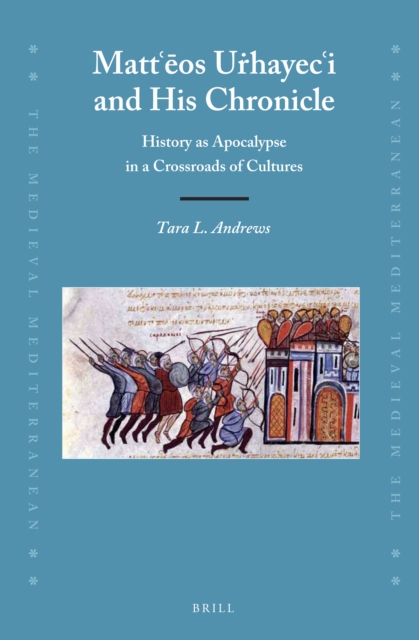
Mattʿēos Uṙhayecʿi and his chronicle : history as apocalypse in a crossroads of cultures
Winner of the 2018 Dr Sona Aronian book prize for Excellence in Armenian Studies In Mattʿēos Uṙhayecʿi and His Chronicle Tara L. Andrews offers the first in-depth analysis of the history written by Mattʿēos, an Armenian priest living in Edessa around the turn of the twelfth century.
eBook

Haemolytic disease of the fetus and newborn diagnosed after delivery of a baby to a mother with low anti-E antibody titres
The authors report a term male neonate who was born in unexpectedly poor condition with low Apgar scores and low venous cord gas pH. He required admission to the neonatal unit and was found to have developed haemolytic anaemia with associated hydrops, following a presumed severe antenatal insult. Antenatally, low levels of anti-E antibodies (titre 8) had been detected at 28 weeks’ gestation. Following the British Society for Haematology and local neonatal team guidance, advice was given for cord direct antiglobulin test, full blood count and bilirubin at delivery. This case highlights the rare case of haemolytic disease of the fetus and newborn on a background of maternal low titre anti-E antibodies.
Journal Article