
Catalogue Search | MBRL


Are you sure you want to remove the book from the shelf?

{{itemTitle}}
65,105
result(s) for
"Lee, Young"
Sort by:


Altered asymmetries of the structural networks comprising the fronto-limbic brain circuitry of preterm infants
This study aimed to elaborate upon prior findings suggestive of the altered lateralization of structural connectivity in the developing preterm brain by using diffusion tensor imaging tractography to explore how network topological asymmetries in fronto-limbic neural circuitry are altered at 36–41 weeks, postmenstrual age in 64 preterm infants without severe brain injury and 33 term-born infants. We compared the pattern of structural connectivity and network lateralization of the betweenness centrality in the medial fronto-orbital gyrus, superior temporal gyrus, amygdala, and hippocampus—the structures comprising the fronto-limbic brain circuit—between preterm and term infants. Global efficiency, local efficiency, and small-world characteristics did not differ significantly between the two hemispheres in term-born infants, suggesting that integration and segregation are balanced between the left and right hemispheres. However, the preterm brain showed significantly greater leftward lateralization of small-worldness (
P
= 0.033); the lateralization index of the betweenness centrality revealed that the medial fronto-orbital gyrus (
P
= 0.008), superior temporal gyrus (
P
= 0.031), and hippocampus (
P
= 0.028) showed significantly increased leftward asymmetry in preterm infants relative to term-infants independent of sex, age at imaging, and bronchopulmonary dysplasia. The altered lateralization of fronto-limbic brain circuitry might be involved in the early development of social–emotional disorders in preterm infants.
Journal Article


New reference genome sequences of hot pepper reveal the massive evolution of plant disease-resistance genes by retroduplication
Background
Transposable elements are major evolutionary forces which can cause new genome structure and species diversification. The role of transposable elements in the expansion of nucleotide-binding and leucine-rich-repeat proteins (NLRs), the major disease-resistance gene families, has been unexplored in plants.
Results
We report two high-quality de novo genomes (
Capsicum baccatum
and
C. chinense
) and an improved reference genome (
C. annuum
) for peppers. Dynamic genome rearrangements involving translocations among chromosomes 3, 5, and 9 were detected in comparison between
C. baccatum
and the two other peppers. The amplification of
athila
LTR-retrotransposons, members of the
gypsy
superfamily, led to genome expansion in
C. baccatum
. In-depth genome-wide comparison of genes and repeats unveiled that the copy numbers of NLRs were greatly increased by LTR-retrotransposon-mediated retroduplication. Moreover, retroduplicated NLRs are abundant across the angiosperms and, in most cases, are lineage-specific.
Conclusions
Our study reveals that retroduplication has played key roles for the massive emergence of NLR genes including functional disease-resistance genes in pepper plants.
Journal Article

Well-being and well-dying, cancel the cancer
\"This book is a one-stop shop, easy-to-understand guidebook for cancer patients - This book explains important concepts about cancer such as the onset of cancer, surgery, radiotherapy, chemotherapy, recovering from cancer, the recurrence of cancer, rehabilitation programs, and pathways to the end of life - Provides information for patients to understand why, how, and what with each step of treatment plan, as well as a realistic range of possible outcome. This helps to reduce anxiety and give patients a greater sense of ownership in their treatment process\"-- Provided by publisher.
Book

Osteoclast-secreted SLIT3 coordinates bone resorption and formation
Coupling is the process that links bone resorption to bone formation in a temporally and spatially coordinated manner within the remodeling cycle. Several lines of evidence point to the critical roles of osteoclast-derived coupling factors in the regulation of osteoblast performance. Here, we used a fractionated secretomic approach and identified the axon-guidance molecule SLIT3 as a clastokine that stimulated osteoblast migration and proliferation by activating β-catenin. SLIT3 also inhibited bone resorption by suppressing osteoclast differentiation in an autocrine manner. Mice deficient in Slit3 or its receptor, Robo1, exhibited osteopenic phenotypes due to a decrease in bone formation and increase in bone resorption. Mice lacking Slit3 specifically in osteoclasts had low bone mass, whereas mice with either neuron-specific Slit3 deletion or osteoblast-specific Slit3 deletion had normal bone mass, thereby indicating the importance of SLIT3 as a local determinant of bone metabolism. In postmenopausal women, higher circulating SLIT3 levels were associated with increased bone mass. Notably, injection of a truncated recombinant SLIT3 markedly rescued bone loss after an ovariectomy. Thus, these results indicate that SLIT3 plays an osteoprotective role by synchronously stimulating bone formation and inhibiting bone resorption, making it a potential therapeutic target for metabolic bone diseases.
Journal Article


Recent Insights into Particulate Matter (PM2.5)-Mediated Toxicity in Humans: An Overview
Several epidemiologic and toxicological studies have commonly viewed ambient fine particulate matter (PM2.5), defined as particles having an aerodynamic diameter of less than 2.5 µm, as a significant potential danger to human health. PM2.5 is mostly absorbed through the respiratory system, where it can infiltrate the lung alveoli and reach the bloodstream. In the respiratory system, reactive oxygen or nitrogen species (ROS, RNS) and oxidative stress stimulate the generation of mediators of pulmonary inflammation and begin or promote numerous illnesses. According to the most recent data, fine particulate matter, or PM2.5, is responsible for nearly 4 million deaths globally from cardiopulmonary illnesses such as heart disease, respiratory infections, chronic lung disease, cancers, preterm births, and other illnesses. There has been increased worry in recent years about the negative impacts of this worldwide danger. The causal associations between PM2.5 and human health, the toxic effects and potential mechanisms of PM2.5, and molecular pathways have been described in this review.
Journal Article
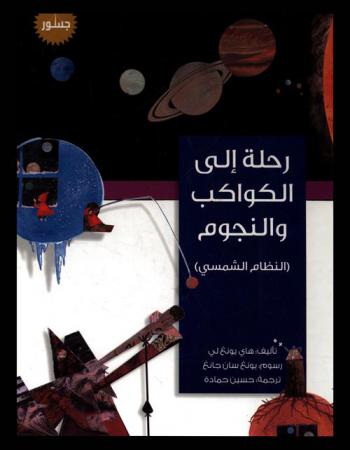
رحلة إلى الكواكب والنجوم : النظام الشمسي
يتناول كتاب (رحلة إلى الكواكب والنجوم) والذي قام بتأليفه (هاي يونغ لي) في حوالي (36) صفحة من القطع الكبير، النظام الشمسي يشبه عائلة كبيرة تضم العديد من الكواكب والكويكبات والمذنبات ومن المهم جدا نفهم النظام الشمسي كي نستطيع أن نفهم الكون... لهذا سيأخذنا هذا الكتاب في رحلة إلى النجوم في السماء لنتعلم أحجام الكواكب والمسافات في ما بينها في النظام الشمسي.
Book

Gait speed and handgrip strength as predictors of all-cause mortality and cardiovascular events in hemodialysis patients
Background
Low physical performance in patients undergoing maintenance hemodialysis is associated with a high mortality rate. We investigated the clinical relevance of gait speed and handgrip strength, the two most commonly used methods of assessing physical performance.
Methods
We obtained data regarding gait speed and handgrip strength from 277 hemodialysis patients and evaluated their relationships with baseline parameters, mental health, plasma inflammatory markers, and major adverse clinical outcomes. Low physical performance was defined by the recommendations suggested by the Asian Working Group on Sarcopenia.
Results
The prevalence of low gait speed and handgrip strength was 28.2 and 44.8%, respectively. Old age, low serum albumin levels, high comorbidity index score, and impaired cognitive functions were associated with low physical performance. Patients with isolated low gait speed exhibited a general trend for worse quality of life than those with isolated low handgrip strength. Gait speed and handgrip strength showed very weak correlations with different determining factors (older age, the presence of diabetes, and lower serum albumin level for low gait speed, and lower body mass index and the presence of previous cardiovascular events for low handgrip strength). Patients with low gait speed and handgrip strength had elevated levels of plasma endocan and matrix metalloproteinase-7 and the highest risks for all-cause mortality and cardiovascular events among the groups (adjusted hazard ratio of 2.72,
p
= 0.024). Elderly patients with low gait speed and handgrip strength were at the highest risk for poor clinical outcomes.
Conclusion
Gait speed and handgrip strength reflected distinctive aspects of patient characteristics and the use of both factors improved the prediction of adverse clinical outcomes in hemodialysis patients. Gait speed seems to be a better indicator of poor patient outcomes than is handgrip strength.
Journal Article