
Catalogue Search | MBRL


Are you sure you want to remove the book from the shelf?

{{itemTitle}}
8
result(s) for
"Lerer, Seth, 1955-"
Sort by:

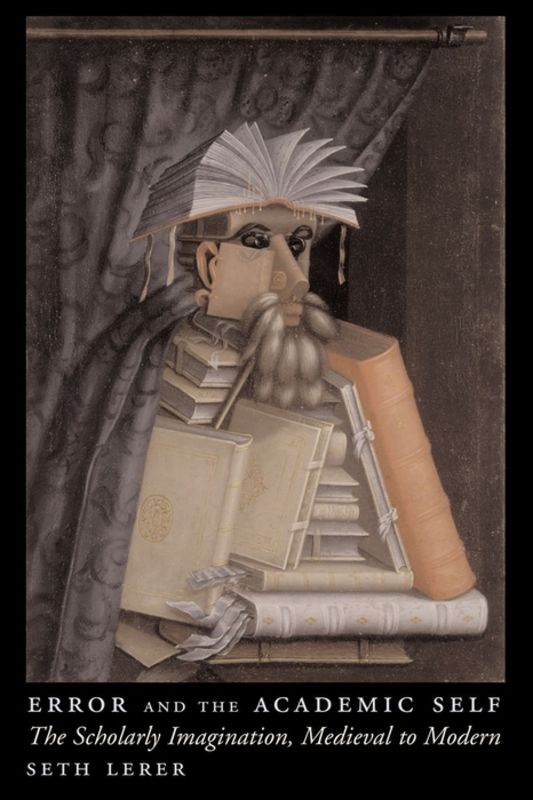
Error and the Academic Self
How and why did the academic style of writing, with its emphasis on criticism and correctness, develop? Seth Lerer suggests that the answer lies in medieval and Renaissance philology and, more specifically, in mistakes. For Lerer, erring is not simply being wrong, but being errant, and this book illuminates the wanderings of exiles, émigrés, dissenters, and the socially estranged as they helped form the modern university disciplines of philology and rhetoric, literary criticism, and literary theory. Examining a diverse group that includes Thomas More, Stephen Greenblatt, George Hickes, Seamus Heaney, George Eliot, and Paul de Man, Error and the Academic Self argues that this critical abstraction from society and retreat into ivory towers allowed estranged individuals to gain both a sense of private worth and the public legitimacy of a professional identity.
eBook

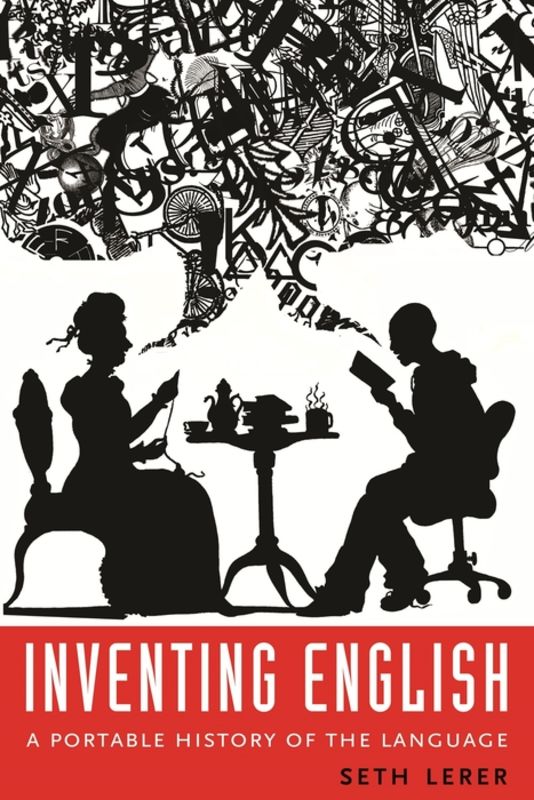
Inventing English
Why is there such a striking difference between English spelling and English pronunciation? How did our seemingly relatively simple grammar rules develop? What are the origins of regional dialect, literary language, and everyday speech, and what do they have to do with you? Seth Lerer's Inventing English is a masterful, engaging history of the English language from the age of Beowulf to the rap of Eminem. Many have written about the evolution of our grammar, pronunciation, and vocabulary, but only Lerer situates these developments in the larger history of English, America, and literature. Lerer begins in the seventh century with the poet Caedmon learning to sing what would become the earliest poem in English. He then looks at the medieval scribes and poets who gave shape to Middle English. He finds the traces of the Great Vowel Shift in the spelling choices of letter writers of the fifteenth century and explores the achievements of Samuel Johnson's Dictionary of 1755 and The Oxford English Dictionary of the late nineteenth and early twentieth centuries. He describes the differences between English and American usage and, through the example of Mark Twain, the link between regional dialect and race, class, and gender. Finally, he muses on the ways in which contact with foreign languages, popular culture, advertising, the Internet, and e-mail continue to shape English for future generations. Each concise chapter illuminates a moment of invention-a time when people discovered a new form of expression or changed the way they spoke or wrote. In conclusion, Lerer wonders whether globalization and technology have turned English into a world language and reflects on what has been preserved and what has been lost. A unique blend of historical and personal narrative, Inventing English is the surprising tale of a language that is as dynamic as the people to whom it belongs.
eBook

Tradition : a feeling for the literary past
\"Seth Lerer presents an original take on tradition in the literary imagination. He asks how we can have an unironic, affective relationship to the literary past in an age marked by historical self-consciousness, critical distance, and shifts in cultural literacy. Tradition : a feeling for the literary past ranges through a set of fiction, poetry, and criticism that makes up inherited traditions and that also confronts the question of a literary canon and its personal and historical meaning. How are we taught to have a felt experience of literary objects? How do we make our personal anthologies of reading to shape social selves? Why should we care about what literature does both to and for us? This book affirms the value of close and nuanced reading for our understanding of both past and present. Its larger goal is to explore the ways in which the literary past makes us, and in the process, how we create canons for reading, teaching, and scholarship. The writers discussed here were all great readers. Dickens and Orwell, Rushdie and Bradbury, Dickinson and Frost, Anne Bradstreet and Gjertrud Schnackenberg, Chaucer, Dante, Virgil--they all built their literary structures on the scaffold of their bookshelves. Lerer demonstrates how reading the past generates the literary present, and imagines our literate future\"--Page 4 of cover.
Book


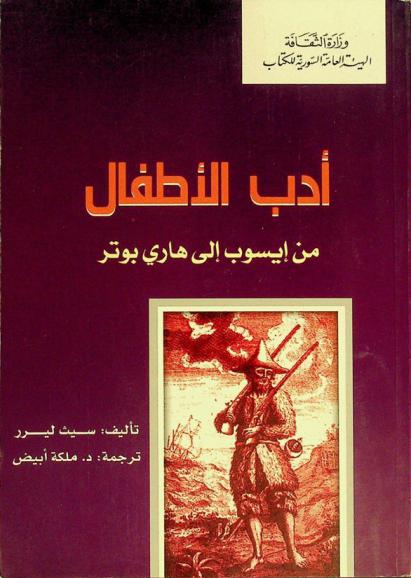
أدب الأطفال من إيسوب إلى هاري بوتر
يستعرض الكتاب تطور أدب الأطفال منذ القصص القديمة التي كتبها إيسوب، والتي تضمنت حكايات ذات عبر وقيم أخلاقية، حتى الأعمال الأدبية الحديثة مثل سلسلة \"هاري بوتر\" لج. ك. رولينج، أدب إيسوب : يتناول الكتاب قصص إيسوب الشهيرة، ويشرح كيف شكلت هذه الحكايات أساسيات أدب الأطفال، من خلال تقديم دروس أخلاقية وقيمية. التحولات الأدبية : يناقش الكتاب كيف تطور أدب الأطفال عبر العصور، متناولا التغيرات في المواضيع والأساليب والتقنيات المستخدمة في كتابة القصص. أدب العصر الحديث : يسلط الضوء على الأدب المعاصر للأطفال، مثل سلسلة \"هاري بوتر\"، ويناقش تأثير هذه الأعمال على الأطفال وعلى الأدب بوجه عام. التحليل النقدي : يقدم الكتاب تحليلا نقديا للأعمال المختلفة، ويناقش كيف يمكن أن تعكس القصص تطورات اجتماعية وثقافية.
Book