
Catalogue Search | MBRL


Are you sure you want to remove the book from the shelf?

{{itemTitle}}
1,578
result(s) for
"Lerner, Michael A"
Sort by:
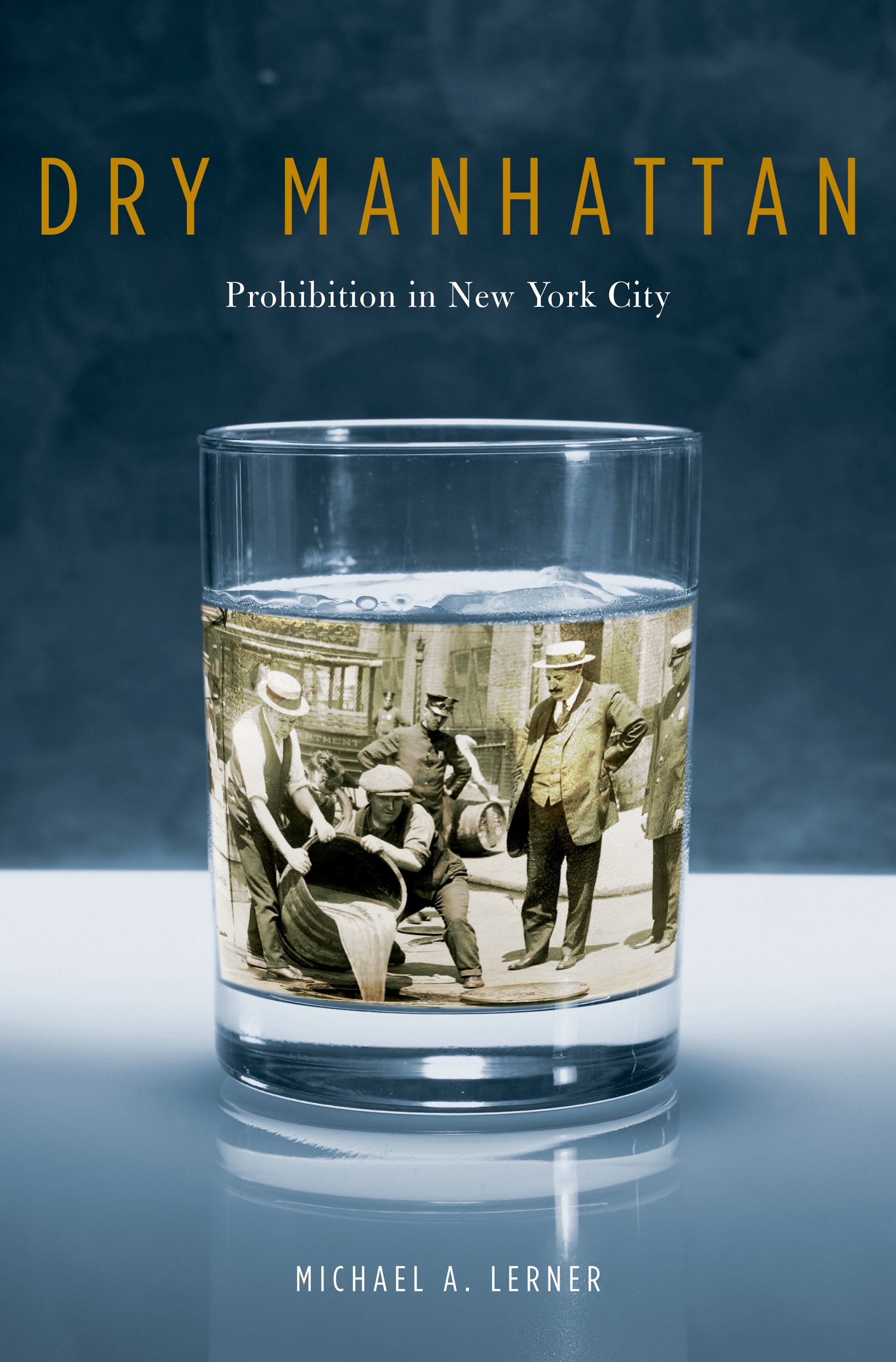
Dry Manhattan
In 1919, the United States embarked on the country's boldest attempt at moral and social reform: Prohibition. The 18th Amendment to the Constitution prohibited the manufacture, transportation, and sale of alcohol around the country. This \"noble experiment,\" as President Hoover called it, was intended to usher in a healthier, more moral, and more efficient society. Nowhere was such reform needed more, proponents argued, than in New York City—and nowhere did Prohibition fail more spectacularly. Dry Manhattan is the first major work on Prohibition in nearly a quarter century, and the only full history of Prohibition in the era's most vibrant city.
Though New Yorkers were cautiously optimistic at first, Prohibition quickly degenerated into a deeply felt clash of cultures that utterly transformed life in the city. Impossible to enforce, the ban created vibrant new markets for illegal alcohol, spawned corruption and crime, fostered an exhilarating culture of speakeasies and nightclubs, and exposed the nation's deep prejudices. Writ large, the conflict over Prohibition, Michael Lerner demonstrates, was about much more than the freedom to drink. It was a battle between competing visions of the United States, pitting wets against drys, immigrants against old stock Americans, Catholics and Jews against Protestants, and proponents of personal liberty against advocates of societal reform.
In his evocative history, Lerner reveals Prohibition to be the defining issue of the era, the first major \"culture war\" of the twentieth century, and a harbinger of the social and moral debates that divide America even today.
eBook

Dry Manhattan
In 1919, the United States made its boldest attempt at social reform: Prohibition. This \"noble experiment\" was aggressively promoted, and spectacularly unsuccessful, in New York City. In the first major work on Prohibition in a quarter century, and the only full history of Prohibition in the era's most vibrant city, Lerner describes a battle between competing visions of the United States that encompassed much more than the freedom to drink.
eBook
Al Smith, the Wet Hope of the Nation
After nearly a decade of excessive drinking, farcical police raids, and endless cycles of nightclub openings and closings, the excitement that had characterized the cosmopolitan rebellion against the Eighteenth Amendment in New York City slowly gave way to weariness. The gaiety that New Yorkers found in speakeasies could not obscure the fact that the noble experiment had become a national embarrassment. The United States, which had preached the virtues of Prohibition internationally, ended the decade not as a model of temperance but as the world’s largest importer of cocktail shakers. One New York City paper lamented, “We mix more cocktails
Book Chapter
The Brewers of Bigotry
In May 1921, seventy-seven-year-old Nora Kelly appeared in a New York City courtroom, charged with possessing a one-dollar flask of whiskey. When taken before the judge, the elderly resident of West Seventeenth Street pleaded that she needed the liquor to maintain her health. “I am old and weak and I take a little drop to brace up my strength,” she explained to a city magistrate, “especially early in the day.” Her plea fell on deaf ears. The magistrate sentenced Kelly to five days in jail. Before the proceedings ended, however, Kelly spoke out against Prohibition for what it was doing
Book Chapter
The Wet Convention and the New Deal
In the summer of 1932, the Great Depression, now nearing its third year, loomed large over the American political landscape. More than 10 million people were out of work. While the national unemployment rate hovered near 20 percent, in large cities the number of people without jobs ran closer to 50 percent, with many workers reduced to part-time employment at best. Nationally, 12 million Americans had been displaced from their homes. The value of the stock market had fallen from $87 billion to $19 billion, and more than 2,000 U.S. banks had failed. In New York City, where the Depression
Book Chapter
The Itch to Try New Things
On any given night during the Prohibition era, a crowd of actors, writers, dramatists, celebrities, and hangers-on would gather at Tony’s, a popular Forty-ninth Street speakeasy known for its crowded bar, white cotton tablecloths, inedible Italian food, and plentiful supplies of liquor of questionable quality served in coffee cups. Tony’s was stuffy and had no music, but the regulars loved it anyway for its $1.25 drinks and its host, Tony Soma. A former hotel waiter who got started in the speakeasy business with a supply of bootleg liquor procured from a dentist, Tony treated his patrons well, especially the actors
Book Chapter
The End of the Party
After the presidential election of 1928, the nation’s dry leaders confidently claimed that Herbert Hoover’s election had validated their cause. They argued that Hoover’s victory over Al Smith proved that the nation still supported Prohibition, and they promised that the New York governor’s defeat would mark the end of opposition to the Eighteenth Amendment. With Al Smith forced into political retirement, the drys expected resistance to Prohibition finally to subside, and the nation to ease into a long-overdue acceptance of the dry agenda. Commenting on the election outcome, Ella Boole of the Woman’s Christian Temperance Union argued that “it was
Book Chapter
Hootch Joints in Harlem
Harlem emerged in the 1920s as the most vibrant African-American community in the nation. Dubbed the “Mecca of the New Negro,” Harlem in the Jazz Age bustled with excitement. As a result of the Great Migration of the 1910s, the community was filled with tens of thousands of black migrants from the American South. An additional influx of immigrants from the West Indies pushed the population even higher, transforming what had once been a predominantly German-Jewish area into an almost entirely African-American one. The Harlem Renaissance was in full flower, and black writers and intellectuals garnered international attention, as did
Book Chapter
A Surging Wet Tide
If the dry crusade retained any hope that Prohibition could ever be enforced in New York City, that dream vanished when the stock market crashed in October 1929. The national economic crisis that followed the crash brought a sudden end to the gay atmosphere of the Roaring Twenties, and in the context of the ensuing Depression, New Yorkers could only look upon continued efforts to enforce Prohibition as a cruel joke.
The Depression struck New York City harder than any place in America, leaving close to two million people out of work. Given the dire economic situation, many New Yorkers
Book Chapter
Vote as You Drink
At three o’clock in the morning on July 3, 1926, a raiding party of Prohibition agents and officers from the NYPD entered Texas Guinan’s 300 Club at 151 West Fifty-fourth Street. Acting on evidence gathered over the previous nights by policewomen dressed as flappers and detectives dressed in evening wear, the late-night raiders seized four bottles of liquor and arrested a seventeen-year-old floor dancer for performing an “objectionable dance.”
More than four hundred patrons were crowded into the club when the raid commenced, including two United States senators and twenty members of a Georgia delegation traveling with golfer Bobby Jones,
Book Chapter