
Catalogue Search | MBRL


Are you sure you want to remove the book from the shelf?

{{itemTitle}}
26
result(s) for
"Lesage, Dries"
Sort by:


Thriving in Complexity? The OECD System's Role in Energy and Taxation
The purpose of this article is to reveal how two organizations from the OECD system—the Organisation for Economic Co-operation and Development and the International Energy Agency—are maneuvering strategically to retain their focal places in the regime complexes that developed around taxation and energy, respectively. It argues that their bid for leadership and centralization is built on the comparative advantages they enjoy as institutions; namely, their historically accumulated expertise and distinct working methods, their close ties with the Group of 8, and their rapidly developing relationships with emerging powers. Notwithstanding these institutional assets, a revision of the OECD's membership could further cement and legitimize the central role of the OECD system in these regime complexes.
Journal Article

IMF reform after the crisis
The global financial crisis moved the International Monetary Fund (IMF) back to the center stage, after some years of disengagement by major emerging markets and developing countries (EMDCs). Neo-liberal institutionalism predicts that crises in a highly interdependent world induce states to strengthen multilateral institutions. In the case of the IMF, many observers believed that a more effective IMF was contingent on giving EMDCs a larger voice. However, the 2010 Quota and Governance Reform at the IMF fell below expectations in this regard. On the basis of an analysis of the
ex ante
preferences and power relations of the major players, we show that this should not come as a surprise and that the 2010 reform agreement has reached the boundaries of the politically possible. Hence, this empirical case study brings in power and preferences to qualify the more optimist neo-liberal institutionalist accounts against the backdrop of an increasingly multipolar world.
Journal Article
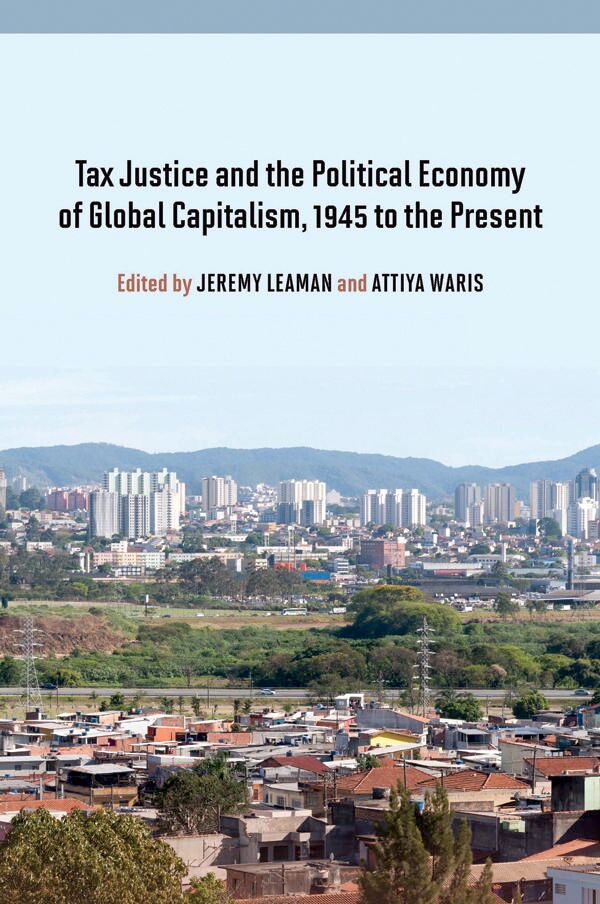
Tax justice and the political economy of global capitalism, 1945 to the present
Tax \"justice\" has become an increasingly central issue of political debate in many countries, particularly following the cardiac arrest of global financial services in 2008 and the subsequent worldwide slump in trade and production. The evident abuse of tax systems by corporations and rich individuals through tax avoidance schemes and offshore shadow banking is increasingly in the public eye. Above all, the political challenges of recovery and structural reform have raised core issues of burden-sharing and social equity on the agendas of both civil society groups and political elites. Democratic states need tax revenue to fund public goods and combat public \"bads\" with any degree of legitimacy. The contributions to this book discuss the haphazard evolution of contemporary taxation systems, their contradictory effects in a globalized economy, and the urgency of their reform as a precondition for social justice.
eBook

Neo-liberalism at a Time of Crisis: the Case of Taxation
This essay explores how the global financial crisis of 2008–2009 has affected the stability of what Stephen Gill has termed the ‘new constitutionalism of disciplinary neo-liberalism’,1 more precisely, in the realm of international tax policy. Rather than providing an in-depth and complete empirical study of the matter, this essay will highlight certain interesting developments and touch upon a series of possibly relevant questions that could form the basis for a future research agenda. In the first section, we will examine the remarkable strength and resilience of the new constitutionalism as the institutional component of neo-liberal hegemony. Then we will proceed to an exploration of the impact of the crisis on this hegemony, also paying attention to deepening geopolitical multipolarity as an additional variable. The final, more empirical section will investigate the case of international taxation in this context, and demonstrate that new constitutionalism remains a crucial supporting pillar of neo-liberal globalisation.
Journal Article

The International Energy Agency after 35 years: Reform needs and institutional adaptability
Despite the mounting scholarly interest in processes of institutional change in international organizations, still very little is known about how and when such evolutionary dynamics occur. This article hopes to contribute to this young, yet growing body of literature by process-tracing the changes that have occurred in the institutional setup of the International Energy Agency (IEA). Founded during the first oil crisis of 1973–74, the IEA has had to deal with major environmental changes over its lifetime. In response, the agency has diversified away from its original
raison d’être
, namely managing an emergency oil sharing mechanism, to become a more proactive policy adviser guiding its member governments toward sustainable energy economies. The article seeks to explain the observed patterns of change and inertia, using a theoretic paradigm that builds on theories of “new institutionalism.” The paper argues that the agency’s institutional flexibility can only be fully explained by taking into account a combination of factors: (1) the member states’ choices, in particular the impulses of the G8-members of the IEA; (2) path dependency, especially the institutional link with the Organization for Economic Cooperation and Development (OECD); and (3) agency by the secretariat and the executive bureau of the IEA.
Journal Article
INTRODUCTION: THE G8 AND G20 IN FLUX, UNDER THE SKILLFUL PRESIDENCY OF CANADA AND KOREA
The year 2010 has been important for both the G8 and G20. The respective chairs, Canada and the Republic of Korea, in their own way, and from their own perspective, left their mark on these informal groupings, and thus co-determined their future. Adapted from the source document.
Journal Article
TAXATION AND THE 2008 UN FOLLOW-UP CONFERENCE ON FINANCING FOR DEVELOPMENT: POLICY RECOMMENDATIONS
This paper addresses the taxation dimension of the \"Follow-up International Conference on Financing for Development to Review the Implementation of the Monterrey Consensus\" in Doha, Qatar, from 29 November to 2 December 2008. The Doha conference is meant as a stock-taking and updating exercise with regard to the Financing for Development (FfD) process that started with the 2002 UN Financing for Development Conference in Monterrey, Mexico. Tax policy is obviously an important aspect of financing for development, although it received relatively little attention in Monterrey. Some recent studies have highlighted the devastating effects on development of ill-conceived tax policies and lack of international tax cooperation in an era of globalisation. In a 2005 report, Oxford professor Alex Cobham estimated the loss of tax revenues for developing countries as a result of asset-holding in offshore financial centres (OFCs) by rich individuals at $50 billion annually. A similar amount of public revenues is lost each year due to corporate profit shifting abroad, including to OFCs. In a May 2008 report, Christian Aid pointed at the dramatic consequences of problematic tax policies and weak enforcement in developing countries. Many observers agree that the taxation dimension of FfD is at least as important as official development assistance (about $104 billion in 2006). In this context we have to bear in mind that developed countries too are still heavily struggling with issues such as tax-inspired capital flows to OFCs and taxing multinational corporations properly without being played off one against another. Within the frameworks of the European Union (EU) and the Organisation for Economic Cooperation and Development (OECD) developed countries have already undertaken coordinated action to deal with some of these issues, whereas such initiatives remain largely absent at the universal level. Adapted from the source document.
Journal Article