
Catalogue Search | MBRL


Are you sure you want to remove the book from the shelf?

{{itemTitle}}
31
result(s) for
"Lessambo, Felix I"
Sort by:


Central Banks and Monetary Policies
This book provides a uniquely comprehensive and detailed analysis of central banks within the G-20. It discusses their policies and functions in detail. Central banks use monetary policy to manage economic fluctuations and achieve price stability. Monetary policy is the control of the quantity of money available in an economy and the channels by which new money is supplied. Monetary policy is implemented either (i) through interest rate policy, whereby the central bank influences financial conditions by setting, or closely controlling, a short-term rate and by steering expectations about the interest rate forward, or (ii) through balance sheet policy, whereby the central bank influences financial conditions beyond the short-term rate by adjusting its balance sheet. Inflation targeting has emerged as the leading framework for monetary policy. Since the 1990s, the role of the interest rate has increased, and many countries are using inflation targeting to achieve the aims of their monetary policy. Central banks around the globe, and within the G-20, have introduced explicit inflation targets. Though a central bank cannot directly control inflation, or the factors that determine inflation, it does have the tools needed to directly affect a group of nominal variables, that in turn have an impact on the determinants of inflation. Moreover, most major central banks have adopted unconventional monetary policies to stabilize financial conditions, boost economic activity, and maintain price stability. Last but not least, financial and monetary policies have become increasingly international, involving trade-offs between domestic and foreign interests. The response to cross-border financial crises requires the close cooperation of multiple jurisdictions. The book is a key reference text for researchers, teachers and students in banking, economic policy,
and government worldwide.
eBook

The U.S. banking system : laws, regulations, and risk management
The U.S. banking system differs from many countries both in the range of services supplied and the complexity of operations. Meanwhile, the U.S. financial markets have become the attraction of worldwide investors. This book explains the three key aspects of the industry: the laws governing the banking institutions, the regulations thereof, and their economics and financial statements in a manner not covered by any competitive publications, of interest to both professionals and scholars who want to better grasp this industry. Auditing a bank and/or liquidating a bank require a set of rules not always well understood. The book provides such an overview.
Book

International Financial Institutions and Their Challenges
Lessambo analyzes the claimed purposes of international financial institutions, their failures, and the causes of those failures, and then proposes solutions for the future.
eBook

Central Banks and Monetary Policies
This book provides a uniquely comprehensive and detailed analysis of central banks within the G-20. It discusses their policies and functions in detail. Central banks use monetary policy to manage economic fluctuations and achieve price stability. Monetary policy is the control of the quantity of money available in an economy and the channels by which new money is supplied. Monetary policy is implemented either (i) through interest rate policy, whereby the central bank influences financial conditions by setting, or closely controlling, a short-term rate and by steering expectations about the interest rate forward, or (ii) through balance sheet policy, whereby the central bank influences financial conditions beyond the short-term rate by adjusting its balance sheet. Inflation targeting has emerged as the leading framework for monetary policy. Since the 1990s, the role of the interest rate has increased, and many countries are using inflation targeting to achieve the aims of their monetary policy. Central banks around the globe, and within the G-20, have introduced explicit inflation targets. Though a central bank cannot directly control inflation, or the factors that determine inflation, it does have the tools needed to directly affect a group of nominal variables, that in turn have an impact on the determinants of inflation. Moreover, most major central banks have adopted unconventional monetary policies to stabilize financial conditions, boost economic activity, and maintain price stability. Last but not least, financial and monetary policies have become increasingly international, involving trade-offs between domestic and foreign interests. The response to cross-border financial crises requires the close cooperation of multiple jurisdictions. The book is a key reference text for researchers, teachers and students in banking, economic policy,
Book

International Financial Institutions and Their Challenges
Lessambo analyzes the claimed purposes of international financial institutions, their failures, and the causes of those failures, and then proposes solutions for the future
Book
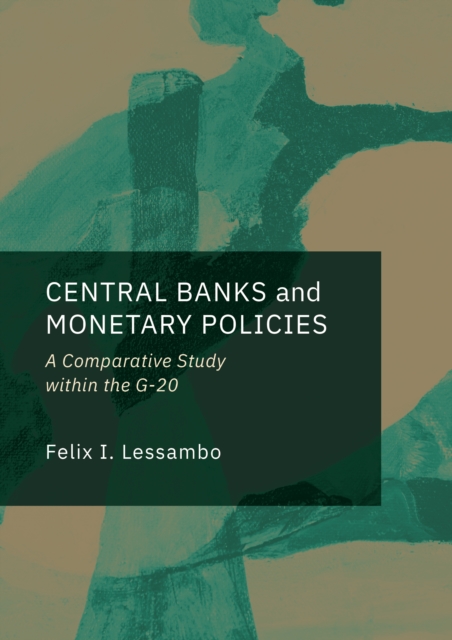
Central Banks and Monetary Policies
This book provides a uniquely comprehensive and detailed analysis of central banks within the G-20. It discusses their policies and functions in detail. Central banks use monetary policy to manage economic fluctuations and achieve price stability. Monetary policy is the control of the quantity of money available in an economy and the channels by which new money is supplied. Monetary policy is implemented either (i) through interest rate policy, whereby the central bank influences financial conditions by setting, or closely controlling, a short-term rate and by steering expectations about the interest rate forward, or (ii) through balance sheet policy, whereby the central bank influences financial conditions beyond the short-term rate by adjusting its balance sheet. Inflation targeting has emerged as the leading framework for monetary policy. Since the 1990s, the role of the interest rate has increased, and many countries are using inflation targeting to achieve the aims of their monetary policy. Central banks around the globe, and within the G-20, have introduced explicit inflation targets. Though a central bank cannot directly control inflation, or the factors that determine inflation, it does have the tools needed to directly affect a group of nominal variables, that in turn have an impact on the determinants of inflation. Moreover, most major central banks have adopted unconventional monetary policies to stabilize financial conditions, boost economic activity, and maintain price stability. Last but not least, financial and monetary policies have become increasingly international, involving trade-offs between domestic and foreign interests. The response to cross-border financial crises requires the close cooperation of multiple jurisdictions. The book is a key reference text for researchers, teachers and students in banking, economic policy, and government worldwide.
eBook