
Catalogue Search | MBRL


Are you sure you want to remove the book from the shelf?

{{itemTitle}}
993
result(s) for
"Let"
Sort by:

Prevalence and determinants of anaemia among women of reproductive age in Aspirational Districts of India: an analysis of NFHS 4 and NFHS 5 data
Background
Over one-third of women worldwide suffer from anaemia. The prevalence of anaemia is particularly pronounced among women of reproductive age (WRA) in developing countries, such as India. No prior study has ever exclusively studied the prevalence of anaemia across the Aspirational Districts of India. Therefore, the purpose of this study was to examine the prevalence of anaemia across Aspirational Districts of India and to identify the determinants of anaemia among WRA in these districts.
Methods
From the National Family Health Survey (NFHS)-4 (2015-16) and NFHS-5 (2019-21), data on 114,444 and 108,782 women aged 15–49 from Aspirational Districts were analyzed in our study, respectively. Bivariate statistics and multivariable binary logistic regression were used to identify the determinants of anaemia.
Results
The national prevalence of anaemia among WRA has increased from 53% in NFHS-4 to 57% in NFHS-5 whereas anaemia among WRA in Aspirational Districts has increased from 58.7% in NFHS-4 to 61.1% in NFHS-5. Between 2015 and 2021, over 60% of Aspirational Districts experienced an increase in the prevalence of anaemia and one-fourth, specifically 29 out of 112, observed a rise by at least 10 percentage points (pp). Notably, there are significant variations in anaemia prevalence among districts, with Simdega and Udalgiri having the highest anaemia prevalence in NFHS-4 and NFHS-5 at 78.2% and 81.5%, respectively. During this period, Barpeta followed by Udalgiri of Assam have witnessed the maximum increase with 29.4% and 26.7% respectively. Moreover, pooled regression results show women with three to four children [AOR: 1.13, 95% CI: 1.08–1.17], women who breastfeed [AOR: 1.17, 95% CI: 1.13–1.20], Scheduled Tribe women [AOR: 1.39, 95% CI: 1.35–1.44], poorest women [AOR: 1.27, 95% CI: 1.22–1.33] and women those who consume fish occasionally [AOR: 1.14, 95% CI: 1.12–1.17] were more likely to be anaemic.
Conclusion
The significant increase in anaemia among WRA in Aspirational Districts of India is a matter of concern. Given the rise in anaemia among WRA, determinants-based and district-specific measures must be designed and implemented to reduce the prevalence of anaemia among Aspirational Districts of India.
Journal Article

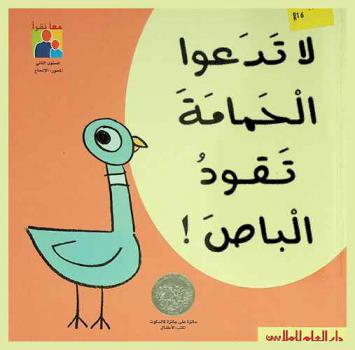
لا تدعني أرحل أبدا
رواية حزينة تدور أحداثها في إطار خيالي قائم على فكرة الاستنساخ ذكريات تحكيها الراوية كاثي، تبدأ في مدرسة داخلية في الريف الإنجليزي يركز الكاتب على ثلاث شخصيات، كاثي واتنين من أصدقاءها من الطفولة وحتى الشباب بعد انتقالهم من المدرسة لعالم الواقع وبالتدريج يبدأ في كشف حقيقة وجودهم ومصيرهم بأسلوب جميل يحكي عن مشاعرهم وأفكارهم وردود أفعالهم المختلفة والعلاقة المتغيرة بينهم ما بين الحب والصداقة، الغيرة والندم والغضب حياة تبدو عادية لكنها غير إنسانية تنقضي تدريجيا في انتظار مؤلم للنهاية.
Book

Spatial clustering of overweight/obesity among women in India: Insights from the latest National Family Health Survey
Overweight/obesity has become global health concern with increasing prevalence. This study examined district-level disparities and spatial clustering of overweight/obesity among women of reproductive age (WRA) in India using the latest National Family Health Survey-5 (2019-2021) data.
Information of 623,656 women aged 15 to 49 from the NFHS-5 (2019-2021) were analysed in this study. The outcome variable was BMI as classified by the world health organisation (WHO). Utilising Global Moran's I, Anselin's Local Moran's I, and spatial regression models spatial clustering and associated factors were analysed.
The study found that 24% (95% CI: 23.8-24.3) of WRA in India were overweight/obese in 2019-21. The prevalence was greatest in Punjab (41%) and lowest in Meghalaya (11%). Additionally, the Global Moran's I value for the outcome variable was 0.73, indicating a positive spatial autocorrelation in the overweight/obesity. Districts of Tamil Nadu, Andhra Pradesh, Karnataka, Kerala, Telangana, Punjab, Himachal Pradesh, Jammu & Kashmir, Haryana, and Delhi were hotspots of overweight/obesity. Several factors of overweight/obesity among WRA were identified, including place of residence (β: 0.034, p: 0.011), parity (β: 0.322, p: 0.002), social group (β: -0.031, p: 0.016), religion (β: -0.044, p: <0.001), household wealth status (β: 0.184, p: <0.001), mass-media exposure (β: 0.056, p: 0.031), and diabetes (β: 0.680, p: <0.001).
The study emphasizes the importance of targeted interventions and region-specific strategies, while also stressing the need to address associated factors to develop effective public health initiatives aimed at reducing overweight/obesity prevalence among WRA in India.
Journal Article
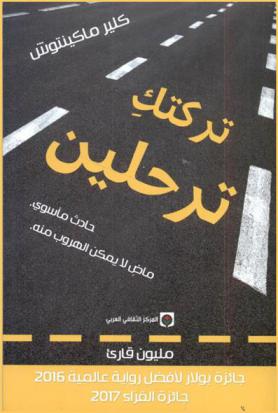
تركتك ترحلين : رواية /
تدور أحداث الرواية في حياة جينا جراي التي تتحول في جزء من الثانية إلى كابوس ولكي تستمر في العيش بعد ما جرى لم يكن أمامها سوى الفرار وبدء حياة جديدة تترك كل شىء وتستقر في بيت ريفي تهب عليه الريح من كل جانب آملة أن تترك هذه الفاجعة خلفها لكن الخوف والحزن وذكريات تلك الليلة الرهيبة التي غيرت حياتها إلى الأبد كل ذلك ظل يطاردها. تركتك ترحلين رواية سيكولوجية رائعة مليئة بمفاجآت تقطع الأنفاس تتسم بقوة.
Book

Tachyonic effects on Kähler moduli stabilized inflaton potential in type-IIB/F theory
We investigate the effects of inclusion of charged tachyonic open-string scalars in the perturbative and the non-perturbative Kähler moduli stabilizations in a geometry of three intersecting magnetized D7-brane stacks in type-IIB/F theory and also study the overall influence of this process on the inflaton potential, in a hybrid inflation scenario. We find that a tachyon lowers the minimum of the inflaton potential and assists to end the inflation. For simplicity, we have included one tachyon at a time in the present work and observe that this procedure preserves the features of slow-roll plateau of the potential. An interesting observation here is that the tachyonic part of the potential can be fine-tuned to get an almost zero minimum of the potential, thereby conforming to the small experimental value of the
cosmological constant
.
Journal Article
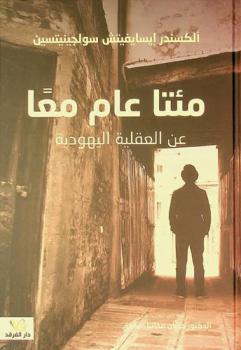
مئتا عام معا عن العقلية اليهودية
يفتح هذا الكتاب نافذة واسعة تطل على حياة الروس واليهود في ظل الإمبراطورية الروسية على مدى قرنين من الزمن (الثامن عشر والتاسع عشر)، ويحلل الشخصيتين الروسية واليهودية تحليلا سيكولوجيا وسوسيولوجيا بعيدا عن التعصيب والانفعالية، وكان التوتر والعداء هو الطابع الغالب عليها، وهو يقدم نشأة العلاقات بينهما وتطورها، ويقف عند المحطات الرئيسية التي مرت بها، ويتناول الكتاب الكثير من المشكلات التي اعترضت هذه العلاقة والتي تطورت إلى صدام دام في أحيان كثيرة.
Book

Anthropogenic impact on ecosystem service value of urban blue space in Old Malda Municipality of eastern India
Present study attempted to quantify the anthropogenic impact on blue space (BS) and potential ecosystem service value (ESV) and link them. A small urban area of eastern India was taken as a case. To fulfill the purpose, the primary data extracted from the field was used. Firstly, an anthropogenic impact score (AIS) comprising eight components was calculated using rank compositing. ESV was estimated with the help of the Rapid Assessment of Wetland Ecosystem Services (RAWES) approach of the Ramsar convention. Rank correlation was carried out for linking AIS and ESV. Results show that 70% of BS is characterized by moderate to high levels of anthropo-driven impacts. Landscape, habitat, and pollution were detected as prime vectors behind these impacts. The impacts were higher in the core urban area. Contrarily, the potential ESV was found to be higher in the peripheral BS units. Most of the blue space failed to offer remarkable provisions and cultural services. However, the regulating services were recorded to have better status. The study clearly reported a negative association between AIS and ESV in BS. Conversion of BS, habitat alteration, pollution, and lack of restoration were found to have very prominent negative effects on ESV. Minimizing such anthropogenic impacts could improve the ESV credibility of urban blue spaces.
Journal Article
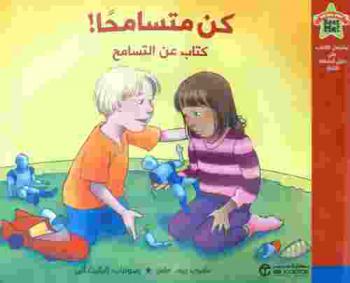
Geographic disparities and determinants of full utilization of the continuum of maternal and newborn healthcare services in rural India
Background
To further reduce maternal and neonatal mortality, it is essential for mothers and newborns to fully utilize all essential services within the continuum of maternal and newborn care. However, research on maternal and child health services in India has not sufficiently examined geographical disparities in the full utilization of these services and the factors influencing the full utilization, particularly in rural areas. This study aims to address this critical gap.
Methods
Utilizing data from 130,312 mothers collected in the National Family Health Survey-5 (2019–21), this study employed spatial analysis to uncover geographical disparities in the full utilization of the continuum of maternal and newborn healthcare services in rural India. Additionally, binary logistic regression was used to identify the factors associated with this utilization.
Results
In rural India, 54.3% mothers recieved four or more antenatal care visits, 88.6% received skilled birth attendance, and 75.5% of mothers and 79.8% of newborns received postnatal care within 48 hours of birth. However, only 43.5% mothers-newborn dyads in rural India utilized all four services of the continuum of maternal and newborn healthcare. There were significant geographical disparities in the full utilization of the continuum of maternal and newborn healthcare services. Hotspots were primarily identified in districts of southern states, western Maharashtra, and central Odisha, while cold spots were evident in the northeastern states of Arunachal Pradesh, Meghalaya, Assam, and Nagaland, as well as in the Empowered Action Group states of Bihar, Uttar Pradesh, and Jharkhand. Key determinants influencing the full utilization of the continuum of care in rural India included maternal education, household wealth, parity, health insurance coverage, and exposure to mass media. Specifically, the odds of fully utilizing the continuum of care were significantly lower among women without formal education (adjusted odds ratio = 0.60, 95% CI = 0.56–0.65), those from the poorest wealth quintile (0.65, 0.61–0.69), and mothers with six or more children (0.42, 0.37–0.47), compared to mothers with higher education, those in the richest wealth quintile, and mothers with a single child, respectively. Additionally, mothers from the southern region were more than twice as likely (2.11, 1.99–2.20) to fully utilize the continuum of healthcare services compared to mothers from the northern region.
Conclusion
The significant geographical disparities in the full utilization of maternal and newborn healthcare services in rural India highlight the necessity for tailored, region-specific interventions. Future programs should focus on addressing the barriers to care by prioritizing vulnerable groups, including those who are poor, uninsured, less educated, adolescents, and women with high parity.
Journal Article