
Catalogue Search | MBRL


Are you sure you want to remove the book from the shelf?

{{itemTitle}}
125
result(s) for
"Levin, Alex V."
Sort by:
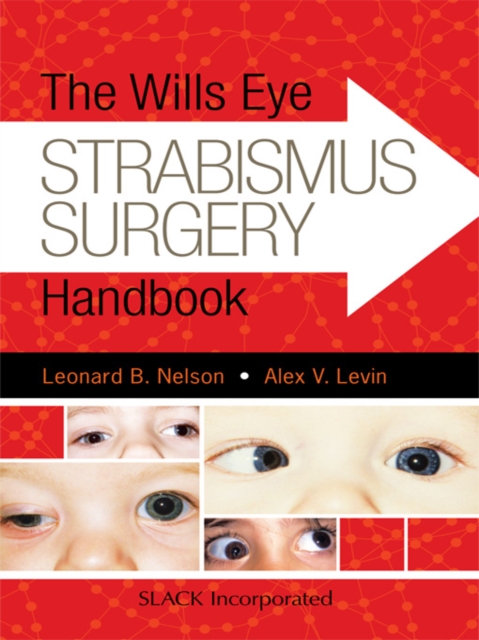
The Wills Eye STRABISMUS SURGERY Handbook
Although residents and pediatric ophthalmology fellows examine patients in the clinic, they may not be involved in surgery on the same patients and even less often get to follow the progress of these patients postoperatively.
The Wills Eye Strabismus Surgery Handbook
is designed to address this challenge in residency and fellowship education as a manual focused on developing surgical plans for strabismus patients.
Drs. Leonard B. Nelson and Alex V. Levin and their contributors have organized
The Wills Eye Strabismus Surgery Handbook
to allow for the reader to take notes regarding their own diagnosis and treatment plan for each case that is presented. This workbook style and its practical, easy-to-read format make this resource useful for written and oral board preparation, and as a handy reference guide for use long after exams are over.
Each chapter presents an introduction into the decision-making process for a specific strabismus condition, followed by the surgical plans selected by three expert Wills Eye Strabismus Center strabismologists with regard to their approach to the presented case.
Summary remarks by the chapter editor briefly review the basic concepts in developing a diagnosis and treatment plan while bringing together the varied opinions offered by the strabismologists in order to put them in context.
Topics covered include:
Strabismus surgery decision making
Esotropia
Exotropia
Dissociated vertical deviation
Cranial nerve palsies
Strabismus syndromes
Strabismus in systemic disease
Reoperations
Nystagmus
Other complex strabismus cases
The Wills Eye Strabismus Surgery Handbook
is an essential resource for residents and pediatric ophthalmology fellows, as well as other ophthalmologists, looking to develop their surgical planning skills. It is a helpful field guide for any ophthalmologists who does strabismus and who is looking for a handy addition to their reference shelf.
eBook

Patients and animal models of CNGβ1-deficient retinitis pigmentosa support gene augmentation approach
Retinitis pigmentosa (RP) is a major cause of blindness that affects 1.5 million people worldwide. Mutations in cyclic nucleotide-gated channel β 1 (CNGB1) cause approximately 4% of autosomal recessive RP. Gene augmentation therapy shows promise for treating inherited retinal degenerations; however, relevant animal models and biomarkers of progression in patients with RP are needed to assess therapeutic outcomes. Here, we evaluated RP patients with CNGB1 mutations for potential biomarkers of progression and compared human phenotypes with those of mouse and dog models of the disease. Additionally, we used gene augmentation therapy in a CNGβ1-deficient dog model to evaluate potential translation to patients. CNGB1-deficient RP patients and mouse and dog models had a similar phenotype characterized by early loss of rod function and slow rod photoreceptor loss with a secondary decline in cone function. Advanced imaging showed promise for evaluating RP progression in human patients, and gene augmentation using adeno-associated virus vectors robustly sustained the rescue of rod function and preserved retinal structure in the dog model. Together, our results reveal an early loss of rod function in CNGB1-deficient patients and a wide window for therapeutic intervention. Moreover, the identification of potential biomarkers of outcome measures, availability of relevant animal models, and robust functional rescue from gene augmentation therapy support future work to move CNGB1-RP therapies toward clinical trials.
Journal Article

Spectrum of PEX1 and PEX6 variants in Heimler syndrome
Heimler syndrome (HS) consists of recessively inherited sensorineural hearing loss, amelogenesis imperfecta (AI) and nail abnormalities, with or without visual defects. Recently HS was shown to result from hypomorphic mutations in PEX1 or PEX6, both previously implicated in Zellweger Syndrome Spectrum Disorders (ZSSD). ZSSD are a group of conditions consisting of craniofacial and neurological abnormalities, sensory defects and multi-organ dysfunction. The finding of HS-causing mutations in PEX1 and PEX6 shows that HS represents the mild end of the ZSSD spectrum, though these conditions were previously thought to be distinct nosological entities. Here, we present six further HS families, five with PEX6 variants and one with PEX1 variants, and show the patterns of Pex1, Pex14 and Pex6 immunoreactivity in the mouse retina. While Ratbi et al. found more HS-causing mutations in PEX1 than in PEX6, as is the case for ZSSD, in this cohort PEX6 variants predominate, suggesting both genes play a significant role in HS. The PEX6 variant c.1802G>A, p.(R601Q), reported previously in compound heterozygous state in one HS and three ZSSD cases, was found in compound heterozygous state in three HS families. Haplotype analysis suggests a common founder variant. All families segregated at least one missense variant, consistent with the hypothesis that HS results from genotypes including milder hypomorphic alleles. The clinical overlap of HS with the more common Usher syndrome and lack of peroxisomal abnormalities on plasma screening suggest that HS may be under-diagnosed. Recognition of AI is key to the accurate diagnosis of HS.
Journal Article


The Eagles Eye Mobile: Assessing Its Ability to Deliver Eye Care in a High-Risk Community
Purpose:
The Philadelphia Eagle Eye Mobile (EEM) provides optometric vision care to children who fail a vision screening performed by nurses at schools in low-income areas.
Methods:
Data for children seen on the EEM between 2006 and 2008 for whom school nurse feedback was available regarding glasses wear at 1-, 4-, and 12-month intervals served as the study population. Optometric findings and glasses prescriptions at initial examination were recorded in the EEM database. The ophthalmic records for children referred for pediatric ophthalmology consultation at our institution were reviewed and those who did not attend were counted.
Results:
A random subset of 689 students at 28 different schools at which follow-up forms were distributed to the school nurses regarding glasses wear was studied. This represents 10.8% of 6,365 children screened at 131 public schools visited by the EEM during that period. False-positive rates of school nurse screening averaged 16.11% (0% to 44%) for 689 children from 28 schools. Glasses compliance was 71% at 12 months and correlated to higher prescriptions. Only 53% of children attended their pediatric ophthalmology referral.
Conclusions:
Nurse training to reduce false-positive screening and strategies to improve attendance at arranged pediatric ophthalmologist consultations are recommended. The EEM effectively gets glasses to students where needed and use rates are satisfactory.
[[
J Pediatr Ophthalmol Strabismus.
2015;52(2):98–105.]
Journal Article

Diagnosis and management of Cornelia de Lange syndrome: first international consensus statement
Cornelia de Lange syndrome (CdLS) is an archetypical genetic syndrome that is characterized by intellectual disability, well-defined facial features, upper limb anomalies and atypical growth, among numerous other signs and symptoms. It is caused by variants in any one of seven genes, all of which have a structural or regulatory function in the cohesin complex. Although recent advances in next-generation sequencing have improved molecular diagnostics, marked heterogeneity exists in clinical and molecular diagnostic approaches and care practices worldwide. Here, we outline a series of recommendations that document the consensus of a group of international experts on clinical diagnostic criteria, both for classic CdLS and non-classic CdLS phenotypes, molecular investigations, long-term management and care planning.
Journal Article

Axenfeld-Rieger syndrome: more than meets the eye
BackgroundAxenfeld-Rieger syndrome (ARS) is characterised by typical anterior segment anomalies, with or without systemic features. The discovery of causative genes identified ARS subtypes with distinct phenotypes, but our understanding is incomplete, complicated by the rarity of the condition.MethodsGenetic and phenotypic characterisation of the largest reported ARS cohort through comprehensive genetic and clinical data analyses.Results128 individuals with causative variants in PITX2 or FOXC1, including 81 new cases, were investigated. Ocular anomalies showed significant overlap but with broader variability and earlier onset of glaucoma for FOXC1-related ARS. Systemic anomalies were seen in all individuals with PITX2-related ARS and the majority of those with FOXC1-related ARS. PITX2-related ARS demonstrated typical umbilical anomalies and dental microdontia/hypodontia/oligodontia, along with a novel high rate of Meckel diverticulum. FOXC1-related ARS exhibited characteristic hearing loss and congenital heart defects as well as previously unrecognised phenotypes of dental enamel hypoplasia and/or crowding, a range of skeletal and joint anomalies, hypotonia/early delay and feeding disorders with structural oesophageal anomalies in some. Brain imaging revealed highly penetrant white matter hyperintensities, colpocephaly/ventriculomegaly and frequent arachnoid cysts. The expanded phenotype of FOXC1-related ARS identified here was found to fully overlap features of De Hauwere syndrome. The results were used to generate gene-specific management plans for the two types of ARS.ConclusionSince clinical features of ARS vary significantly based on the affected gene, it is critical that families are provided with a gene-specific diagnosis, PITX2-related ARS or FOXC1-related ARS. De Hauwere syndrome is proposed to be a FOXC1opathy.
Journal Article
The Eye in Pediatric Systemic Disease
??This book is the first of its kind to describe ocular manifestations of systemic diseases in the pediatric population. Written and edited by experts in areas of pediatric ophthalmology and genetics, this new text covers a multitude of topics in a comprehensive and catalogued fashion. The Eye in Pediatric Systemic Disease is designed as an in depth and up-to-date reference work that is heavily referenced, thus allowing the reader ready access to the international supporting literature. Everything from ocular manifestations of hematologic disease, child abuse, psychiatric diseases, renal disorders, and vitamin disorders are covered, allowing readers to know what to look for in the eyes of children with a given systemic disorder. The Eye in Pediatric Systemic Disease is written in language that is accessible to ophthalmologists and pediatricians, as well as allied health care professionals. Because of this, it will be an essential textbook for use in community pediatric and ophthalmology practices, academic centers, and training programs.
eBook
Wills Eye Handbook of Ocular Genetics
Highly Commended by the BMA Medical Book Awards for Surgical Specialties!
Many serious, potentially blinding eye disorders have a genetic basis. Currently, there are relatively few ocular geneticists in the world, yet inherited eye disease is one of the leading causes of blindness worldwide. Significant strides have been made in gene identification and acquisition of knowledge on the underlying mechanisms of hereditary eye disease. The field of ocular genetics is becoming an increasingly relevant part of ophthalmologists' purview. This has resulted in a dire need for a comprehensive textbook ophthalmologists and other professionals who work with patients with genetic disorders can utilize to gain a better understanding of inherited eye disorders.
The Wills Eye Handbook of Ocular Genetics, by Alex Levin, Mario Zanolli, and Jenina Capasso of Wills Eye Hospital, is a practical, reader-friendly guide on the diagnosis and management of ophthalmic genetic conditions. Every chapter begins with a disease overview, followed by relevant modern genetic concepts, pathways to attaining the correct diagnosis, and pitfalls and pearls gleaned from years of hands-on expertise. At the end of each chapter, questions and answers enable readers to test their knowledge in real-life scenarios they might face in everyday practice. The ultimate goal of this clinically robust handbook is to facilitate optimal patient management and outcomes.
Key Features
* Fundamentals, including basic genetics, inheritance patterns, genetic testing, and ethical issues
* Patient-centered genetic counseling issues such as reproduction, dealing with emotional reactions, prognosis, and future options
* Anterior segment disorders - from corneal dystrophies and aniridia - to childhood cataract and microphthalmia
* A broad spectrum of vitreoretinopathies and retinal diseases including incontinentia pigmenti, retinitis pigmentosa, Bardet-Biedl syndrome, choroideremia, Stargardt disease, achromatopsia, and juvenile X-linked retinoschisis
This textbook is essential reading for practitioners at all levels and in all subspecialties including ophthalmology and genetics. They will find it an excellent resource for navigating the complexities of genetic eye disease.
eBook