
Catalogue Search | MBRL


Are you sure you want to remove the book from the shelf?

{{itemTitle}}
3
result(s) for
"Levinson, Marc author"
Sort by:


An extraordinary time : the end of the postwar boom and the return of the ordinary economy
\"Levinson recounts the global collapse of the postwar economy in the 1970s. While economists struggle to return us to the high economic growth rates of the past, Levinson counterintuitively argues that the boom years of the 1950s and 1960s were an anomaly; slow economic growth is the norm--no matter what economists and politicians may say. Yet these atypical years left the public with unreasonable expectations of what government can achieve. When the economy failed to revive, suspicion of government and liberal institutions rose sharply, laying the groundwork for the political and economic polarization that we're still grappling with today\"-- Provided by publisher.
Book
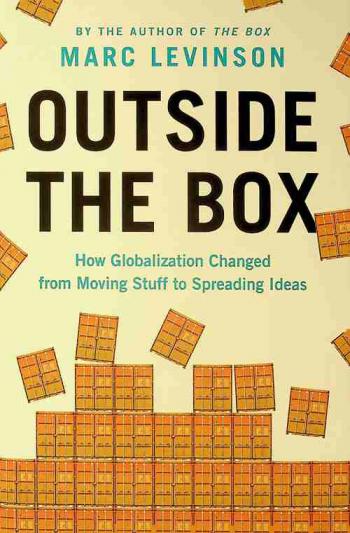
Outside the box : how globalization changed from moving stuff to spreading ideas
\"Marc Levinson offers a brief history of globalization through the stories of the fascinating people and companies that built global supply chains. In Small World he will follow the thread of the balance between people in the private sector pursuing new ways to make goods and do business and governments eliminating barriers. These two spheres-the private sector and government-did not go global in tandem, and many developments in one sphere were far more impactful in the other than imagined at the time. The book will narrate the development of global supply chains in response to trends in both, telling stories ranging from a Prussian-born trader in New Jersey in the 1760s who dreamed of building a vertically-integrated metals empire, to new megaships too big to call on most of the world's ports leaving half empty, as globalization entered a new stage in its history around 2006. Bringing the story up to the present, Levinson engagingly illustrates how we're not experiencing the end of globalization, only its transformation. As one type of globalization is declining, a new one is on the rise\"-- Provided by publisher.