
Catalogue Search | MBRL


Are you sure you want to remove the book from the shelf?

{{itemTitle}}
64
result(s) for
"Ley, Graham"
Sort by:


Towards a Theoretical History for Greek Tragedy
Greek tragedy and its theatre have regularly been drawn into modern theoretical formulas about the nature of theatre making, in proposals which have often had their own cause to plead, but which have still been influential on broadly formed views of the theatre in its history. In this essay, Graham Ley argues that much incidental misrepresentation can be found in this kind of writing alongside the occasional remarkable insight, and that the attention given in modern theory to the Greek theatre is generally inadequate. The theorists discussed are Isadora Duncan, Brecht, Boal, and Hans-Thies Lehmann, with examples also taken from performance theory. Ley then goes on to examine what kind of theoretical view of the ancient Greek theatre would be most appropriate today, and offers a vision of it as a dynamic and innovative environment, looking in this second part of the essay at what can be said of early choric tragedy, of the emergence of the actor, and of the innovation of the dramatic scene building. Graham Ley has written essays on various topics over the years for New Theatre Quarterly, but this is his first piece for the journal on his specialist subject, the performance of ancient Greek tragedy.
Journal Article

British South Asian theatres : a documented history
\"This book documents the presence of South Asians in theatre in Britain, a major aspect of British cultural life over the last thirty years. The work of many British Asian-led companies, including Tara Arts, Tamasha, Kali, Rasa and Rifco, is covered in detail. The authors draw on unpublished theatre archives, practitioners' collections and an extensive series of interviews on the history of British Asian theatre-making. An accompanying DVD provides an album of historical documents, programmes, designs, photographs, and clips from recordings of rehearsals and productions.\"-- P. [4] of cover.
Book
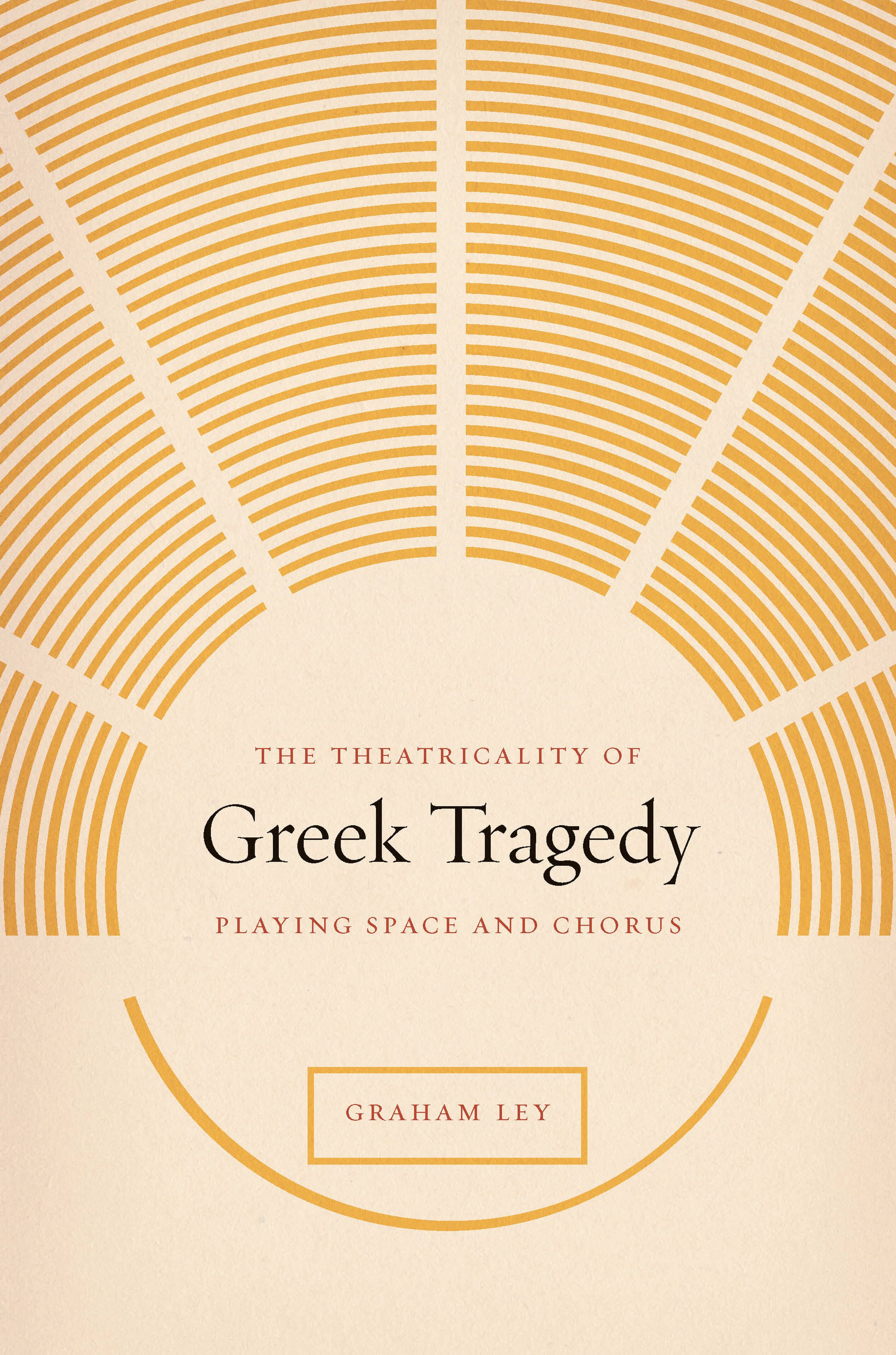
The theatricality of Greek tragedy
Ancient Greek tragedy has been an inspiration to Western culture, but the way it was first performed has long remained in question. In The Theatricality of Greek Tragedy, Graham Ley provides an illuminating discussion of key issues relating to the use of the playing space and the nature of the chorus, offering a distinctive impression of the performance of Greek tragedy in the fifth century BCE. Drawing on evidence from the surviving texts of tragedies by Aeschylus, Sophocles, and Euripides, Ley explains how scenes with actors were played in the open ground of the orchestra, often considered as exclusively the dancing place of the chorus. In reviewing what is known of the music and dance of Greek antiquity, Ley goes on to show that in the original productions the experience of the chorus—expressed in song and dance and in interaction with the characters—remained a vital characteristic in the performance of tragedy. Combining detailed analysis with broader reflections about the nature of ancient Greek tragedy as an art form, this volume—supplemented with a series of illustrative drawings and diagrams—will be a necessary addition to the bookshelf of anyone interested in literature, theater, or classical studies.
eBook
Varifocalism: a Perspective on the Discipline of Theatre Studies
What is the discipline in which ‘academic drama’ is engaged? Leaving aside debates about an emphasis on theatre or performance as the key term, who is included in the discipline, and how has it reshaped itself over the last decades? Is it right to say there have been major redefining changes, and if so, what are they? Graham Ley is Emeritus Professor of Drama and Theory at the University of Exeter. He has published widely on ancient Greek performance and comparative theory, and is currently preparing an essay on a theoretical history for Greek tragedy. He has previously published in New Theatre Quarterly on developments in Australian theatre (1986), the avant-garde (1991), Peter Brook (1993), Diderot (1995), Tara Arts (1997), and most recently diaspora theatre in the UK (2011). The present discussion is adapted from the conclusion to Ancient Greek and Contemporary Performance, a collection of essays to be published later in the year by the University of Exeter Press.
Journal Article
Diaspora Space, the Regions, and British Asian Theatre
In 1996 Graham Ley compiled for NTQ a record of the first twenty years of Tara Arts, the London-based British Asian theatre company. In this essay, he tests the theoretical concept of a third space for diaspora culture against the experience of two leading British Asian theatre companies, and considers the contrasting role of an Asian arts centre. From 2004 to 2009 Graham Ley led an AHRC-funded research project on ‘British Asian Theatre: Documentation and Critical History’, and has co-edited with Sarah Dadswell two books soon to be published by the University of Exeter Press: British South Asian Theatres: a Documented History and Critical Essays on British South Asian Theatre. He has earlier published in NTQ on Australian theatre and enlightenment and contemporary performance theory, and is presently Professor of Drama and Theory at the University of Exeter.
Journal Article