
Catalogue Search | MBRL


Are you sure you want to remove the book from the shelf?

{{itemTitle}}
20
result(s) for
"Leyendecker, Birgit"
Sort by:

No evidence for effects of Turkish immigrant children‘s bilingualism on executive functions
Recent research has increasingly questioned the bilingual advantage for executive functions (EF). We used structural equation modeling in a large sample of Turkish immigrant and German monolingual children (N = 337; aged 5–15 years) to test associations between bilingualism and EF. Our data showed no significant group differences between Turkish immigrant and German children’s EF skills while taking into account maternal education, child gender, age, and working memory (i.e., digit span backwards). Moreover, neither Turkish immigrant children’s proficiency in either language nor their home language environment predicted EF. Our findings offer important new evidence in light of the ongoing debate about the existence of a bilingual advantage for EF.
Journal Article
No evidence for effects of Turkish immigrant children's bilingualism on executive functions
Recent research has increasingly questioned the bilingual advantage for executive functions (EF). We used structural equation modeling in a large sample of Turkish immigrant and German monolingual children (N = 337; aged 5-15 years) to test associations between bilingualism and EF. Our data showed no significant group differences between Turkish immigrant and German children's EF skills while taking into account maternal education, child gender, age, and working memory (i.e., digit span backwards). Moreover, neither Turkish immigrant children's proficiency in either language nor their home language environment predicted EF. Our findings offer important new evidence in light of the ongoing debate about the existence of a bilingual advantage for EF.
Journal Article

Implementation and quality of an early childhood education program for newly arrived refugee children in Germany: an observational study
Early childhood education [ECE] can foster the social-emotional adjustment and development of young refugee children. Still, the large numbers of newly arriving refugee families challenge the ECE capacities of host countries. In Germany, state authorities have subsidized flexible ECE programs for refugee children in response to this situation. The goal of this study was to examine the implementation and quality of these programs. In the first study phase, we categorized the seemingly heterogeneous ECE programs and assembled measures to assess their ECE quality. In the second study phase, we evaluated the ECE quality of a randomly selected sample of these ECE programs (
N
= 42) using standardized observation procedures. The ECE programs were implemented differently in temporary setups (caravans, tents), improvised settings (parish rooms, refugee accommodations), or education settings (preschools, elementary schools). To evaluate ECE quality, we created an observation tool for structural quality and coded dimensions from the Classroom Assessment Scoring System Pre-K for process quality. Overall, structural quality was acceptable but differed between implementation settings. Process quality was consistently high, independent of the settings. Our findings suggest that adaptive ECE programs under a flexible childcare policy could support young refugee children after they arrive in host countries. Still, such ECE programs do not compensate for center-based ECE services because of their more vigorous emphasis on children’s social-emotional adjustment than pre-academic learning. Further research should consider adaptive assessment tools to assess ECE quality, taking into account heterogeneous program implementation strategies and the specific needs of refugee children.
Journal Article

Mental Health Needs of Refugee Children in Specialized Early Education and Care Programs in Germany
Refugee children are at risk to develop mental health problems, which have rarely been investigated in educational contexts. We conducted three studies in childcare programs for refugees in Germany. Children’s behavior was assessed by educators on site (
n
= 84) and online (
n
= 50) using a two-stage-cluster sampling and on site (
n
= 107) using complete samples. In Study 1 and 2, children showed elevated attention problems ranging from medium to large effect sizes,
r
= 0.2 and
r
= 0.5, respectively, and aggressive behavior problems ranging from small to large effect sizes,
r
= 0.1 and
r
= 0.5, respectively, when compared to norm data. In Study 3, children showed elevated peer-problems,
r
= 0.5. Future research needs to investigate whether these problems are a consequence of adapting to a novel context or a precursor of a psychopathology caused by risk factors in the context of forced displacement.
Journal Article
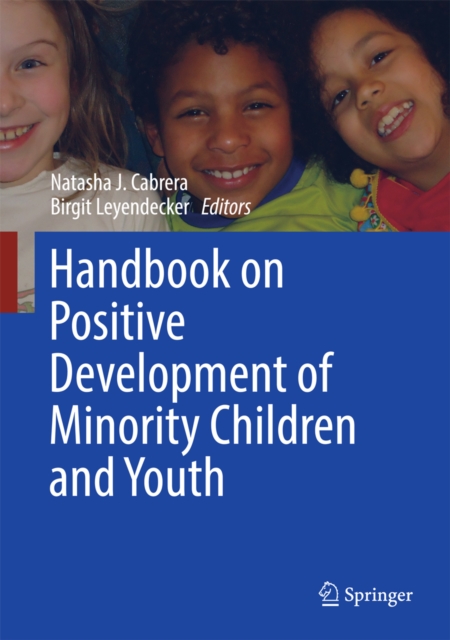
Handbook on Positive Development of Minority Children and Youth
This Handbook presents current research on children and youth in ethnic minority families.It reflects the development currently taking place in the field of social sciences research to highlight the positive adaptation of minority children and youth.It offers a succinct synthesis of where the field is and where it needs to go.
eBook

Classroom quality, classroom composition, and age at entry. Experiences in early childhood education and care and single and dual language learners' german vocabulary
We examined independent and interactive links among three central characteristics of children's experiences in early childhood education and care and the German receptive vocabulary of single language learners and dual language learners (DLLs). We allowed for possible differential effects depending on children's language background. Our sample included 2,231 children (n = 1,555 single language learners, n = 371 DLLs from families in which German was frequently spoken, n = 305 DLLs from families in which German was less frequently spoken). Children attended 177 classrooms in 95 early childhood education and care centers and were 30 to 80 months old. We found that classroom process quality predicted German vocabulary only for DLLs with low exposure to German in the family. An earlier age at entry was linked to a larger German vocabulary for all children, but the link was stronger for DLLs from families with low exposure to German. Classroom composition did not predict German vocabulary. (Orig.).
Journal Article

Family factors predicting vocabulary in Turkish as a heritage language
Most immigrant parents face the challenge of passing on their heritage language to their children. Family predictors of Turkish heritage language vocabulary are examined for 119 preschoolers and 121 fourth graders in Germany. Path analyses link children's Turkish vocabulary to the family background (parents’ education and generational status), the home literacy environment (HLE), and mothers’ language use. The main findings are (a) the HLE predicts children's Turkish vocabulary, (b) mothers’ use of Turkish with their children predicts children's Turkish vocabulary, and (c) family background is mainly connected to Turkish vocabulary by way of mothers’ use of Turkish. The HLE and being exposed to Turkish are both important for children's heritage vocabulary. Thus, parents can use everyday resources to actively promote their children's Turkish language skills.
Journal Article


Family and Individual Factors Associated with Turkish Immigrant and German Children’s and Adolescents’ Mental Health
Turkish immigrants represent the largest ethnic minority in Germany however information about the factors associated with their children’s mental health is scarce. This study examined family and individual factors associated with the strengths and difficulties of Turkish immigrant children and adolescents in comparison with their German peers. Strengths and Difficulties Questionnaires (SDQs) were rated by participants’ mothers (
N
= 480) and teachers (
n
= 164). Compared with German mothers (
n
= 121), Turkish immigrant mothers (
n
= 359) rated their children’s total difficulties, their emotional symptoms and peer problems as well as their prosocial behavior as significantly higher. In contrast, there were no differences in the participating teachers’ ratings of Turkish immigrant compared with German children’s strengths and difficulties. Regression analyses revealed that child gender and family adversity were cross-culturally associated with SDQ scores whereas inconsistent parenting only affected German children’s externalizing behavior problems. Factors associated with Turkish immigrant and German children’s mental health problems are thus both cross-culturally comparable and culturally specific. More information is needed in order to identify individuals at highest risk to develop certain types of behavior problems and provide specific prevention strategies.
Journal Article

Psychosocial problems in traumatized refugee families: overview of risks and some recommendations for support services
This article is an abridged version of a report by an advisory council to the German government on the psychosocial problems facing refugee families from war zones who have settled in Germany. It omits the detailed information contained in the report about matters that are specific to the German health system and asylum laws, and includes just those insights and strategies that may be applicable to assisting refugees in other host countries as well. The focus is on understanding the developmental risks faced by refugee children when they or family members are suffering from trauma-related psychological disorders, and on identifying measures that can be taken to address these risks. The following recommendations are made: recognizing the high level of psychosocial problems present in these families, providing family–friendly living accommodations, teaching positive parenting skills, initiating culture-sensitive interventions, establishing training programs to support those who work with refugees, expanding the availability of trained interpreters, facilitating access to education and health care, and identifying intervention requirements through screening and other measures.
Journal Article