
Catalogue Search | MBRL


Are you sure you want to remove the book from the shelf?

{{itemTitle}}
65,045
result(s) for
"Li, B."
Sort by:


Understanding colossal barocaloric effects in plastic crystals
Plastic crystal neopentylglycol (NPG) exhibits colossal barocaloric effects (BCEs) with record-high entropy changes, offering exciting prospects for the field of solid-state cooling through the application of moderate pressures. Here, we show that the intermolecular hydrogen bond plays a key role in the orientational order of NPG molecules, while its broken due to thermal perturbation prominently weakens the activation barrier of orientational disorder. The analysis of hydrogen bond strength, rotational entropy free energy and entropy changes provides insightful understanding of BCEs in order-disorder transition. External pressure reduce the hydsrogen bond length and enhance the activation barrier of orientational disorder, which serves as a route of varying intermolecular interaction to tune the order-disorder transition. Our work provides atomic-scale insights on the orientational order-disorder transition of NPG as the prototypical plastic crystal with BCEs, which is helpful to achieve superior caloric materials by molecular designing in the near future.
Colossal barocaloric effects with high entropy changes is reported in plastic crystal neopentylglycol, while microscopic mechanism needs to be further explored. Here, the authors show hydrogen bond related reorientational dynamics of neopentylglycol and provide insights in order-disorder transition.
Journal Article


Managing cyclic vomiting syndrome in children: beyond the guidelines
Cyclic vomiting syndrome (CVS) in children is characterized by frequent hospitalizations, multiple comorbidities, and poor quality of life. In the absence of robust data, the treatment of CVS remains largely empiric starting with the 2008 NASPGHAN Consensus Statement recommendations of cyproheptadine for children < 5 years of age and amitriptyline for those ≥ 5 years with propranolol serving as the second-line agent. Comprehensive management begins with lifestyle alterations, and extends to medications, supplements, and stress reduction therapies. Standard drug therapy is organized by the four phases of the illness: (1) interictal (preventative medications and mitochondrial supplements), (2) prodromal (abortive agents), (3) vomiting (fluids/energy substrates, antiemetics, analgesics, and sedatives) and (4) recovery (supportive care and nutrition). Because the response to treatment is heterogeneous, clinicians often trial several different preventative strategies including NK1 antagonists, cautious titration of amitriptyline to higher doses, anticonvulsants, Ca2+-channel blockers, and other TCA antidepressants. When the child remains refractory to treatment, reconsideration of possible missed diagnoses and further mono- or combination therapy and psychotherapy can be guided by accompanying comorbidities (especially anxiety), specific subphenotype, and when available, genotype. For hospital intervention, IV fluids with 10% dextrose, antiemetics, and analgesics can lessen symptoms while effective sedation in some instances can truncate severe episodes.Conclusion: Although management of CVS remains challenging to the clinician, approaches based upon recent literature and accumulated experience with subgroups of patients has led to improved treatment of the refractory and hospitalized patient.What is Known:•Cyclic vomiting syndrome is a complex disorder that remains challenging to manage.•Previous therapy has been guided by the NASPGHAN Consensus Statement of 2008.What is New:•New prophylactic approaches include NK1 antagonists and higher dosages of amitriptyline.•Strategies based upon comorbidities and subphenotype are helpful in refractory patients.
Journal Article

50 years of ASEAN and Singapore
\"On the 8th of August 2017, ASEAN will celebrate the 50th anniversary of its founding. ASEAN is of great importance to Singapore, the region and the world. In 1967, the Association of Southeast Asian Nations, or ASEAN in short, was founded by five countries in Southeast Asia which had just gained independence from their former colonial masters, united by a determination for the region to live in peace and stability. Singapore was one of the five founding members of ASEAN, together with Indonesia, Malaysia, Philippines and Thailand. The grouping was joined later by Brunei (1984), Vietnam (1995), Laos and Myanmar (1997), and finally, Cambodia (1999). ASEAN is today a very successful inter-governmental organization which promotes peace, stability, economic development and regional integration. This volume brings together 50 essays written by Singaporeans who have played a part in the partnership between ASEAN and Singapore. The reader will be able to glean an insight into the workings of ASEAN and Singapore's contributions to ASEAN through the lens of diplomats, academics, civil society leaders and officials\"--Provided by publisher.
Book

Cardiac Vagal Regulation Is Impeded in Children With Cyclic Vomiting Syndrome
The pathophysiology underlying cyclic vomiting syndrome (CVS) remains undefined. Scant data and distinct clinical features point to altered autonomic nervous system function. Autonomic signaling can be noninvasively assessed through cardiac indices of parasympathetic vagal regulation, which is reduced in children with disorders of gut-brain interaction. We aimed to examine dynamic cardiac vagal regulation in children with CVS compared with that in healthy controls (HC).
A total of 31 children with CVS evaluated in a tertiary care CVS center and 66 HC (ages 8-18 years) underwent cardiac autonomic function assessment. Electrocardiogram recordings were conducted during 3-minute sit/stand/sit posture challenges. The electrocardiogram-derived variables heart period, respiratory sinus arrhythmia (RSA), and vagal efficiency (VE) were analyzed using linear regression and mixed-effects modeling.
After exclusion of medication confounders, 23 patients with CVS were included in analyses. Both groups were comparable in age, gender, and body mass index. Compared with HC, children with CVS had shorter heart period (standardized mean difference range: 1.15-1.22, all P values < 0.05) and lower RSA (SMD range: 0.66-0.88, all P values < 0.05). Patients with CVS had significantly lower VE during the entire course of posture shifts, compared with HC ( B = -19.87, SE = 6.95, t = -2.86, P = 0.005, SMD = 0.76).
Children with CVS have suboptimal parasympathetic autonomic regulation compared with HC, indexed by reduced RSA and VE, even during their interepisodic well phase. Abnormal vagal modulation may underlie CVS pathophysiology, comorbidities, and triggers. Assessing VE during posture stressors could inform therapeutic interventions.
Journal Article
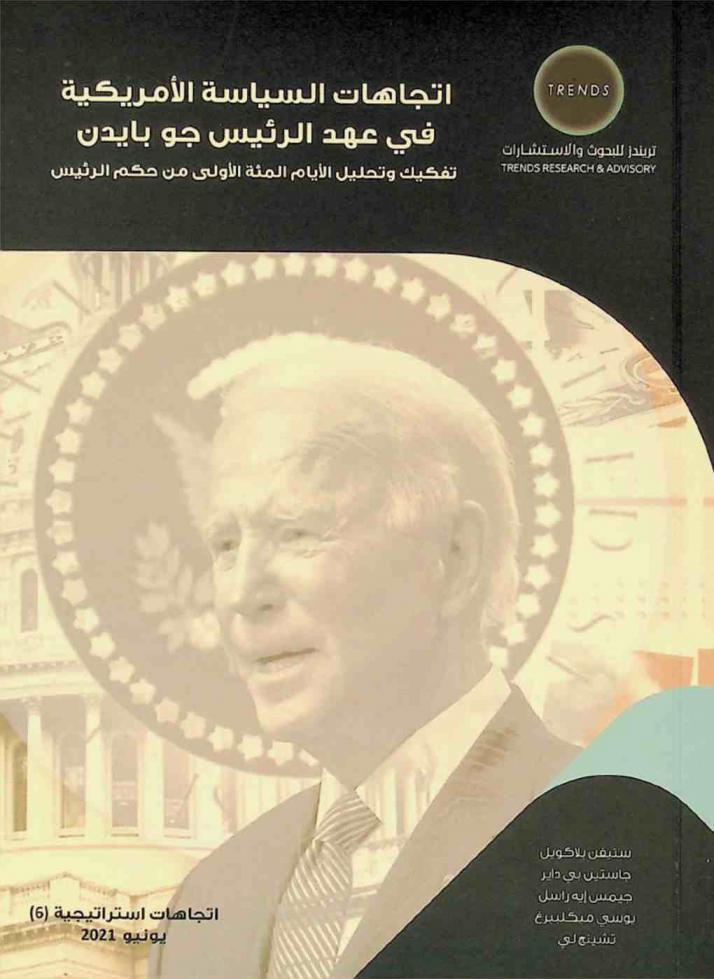
اتجاهات السياسة الأمريكية في عهد الرئيس جو بايدن : تفكيك وتحليل الأيام المئة الأولى من حكم الرئيس
إن تقييم الأيام المئة الأولى من إدارة الرئيس الأمريكي جو بايدن ليس حكما نهائيا على طريقة حكمه بأي حال من الأحوال، بل يلقي بعض الضوء على الوجهة التي تسير نحوها إدارته. وكثيرا ما يشار إلى الأيام المئة الأولى باسم \"فترة شهر العسل\"، وقد انتهت الآن، وتعهد بايدن بإعادة مكتب الرئاسة إلى المكانة التي كان يتمتع بها قبل تولي سلفه دونالد ترامب المنصب. ركزت العديد من قرارات بايدن التنفيذية على مكافحة فيروس كورونا المستجد \"كوفيد-19\"، ولكن معظم خطة عمله أو أجندته الخاصة بالسياستين الداخلية والخارجية تختلف أسلوبا وجوهرا عن خطة الرئيس السابق دونالد ترامب. سوف تدرس هذه المجموعة من الدراسات، التي كتبها خبراء دوليون معروفون، التحديات التي تواجه الرئيس بايدن وتقدم توقعات بشأن أربع مجالات سياساتية رئيسية، هي : طبيعة التغيرات التي شهدتها أو يتوقع أن تشهدها السياسة الداخلية الأمريكية، وعلاقات واشنطن مع كل من روسيا، والصين، والشرق الأوسط. ويناقش المؤلفون توجهات السياستين الداخلية والخارجية للرئيس بايدن ويقدمون بعض التوقعات حول التداعيات المحتملة التي ربما تأتي من هذه السياسات أو تنشأ عنها.
BOOK

A site-resolved two-dimensional quantum simulator with hundreds of trapped ions
A large qubit capacity and an individual readout capability are two crucial requirements for large-scale quantum computing and simulation
1
. As one of the leading physical platforms for quantum information processing, the ion trap has achieved a quantum simulation of tens of ions with site-resolved readout in a one-dimensional Paul trap
2
–
4
and of hundreds of ions with global observables in a two-dimensional (2D) Penning trap
5
,
6
. However, integrating these two features into a single system is still very challenging. Here we report the stable trapping of 512 ions in a 2D Wigner crystal and the sideband cooling of their transverse motion. We demonstrate the quantum simulation of long-range quantum Ising models with tunable coupling strengths and patterns, with or without frustration, using 300 ions. Enabled by the site resolution in the single-shot measurement, we observe rich spatial correlation patterns in the quasi-adiabatically prepared ground states, which allows us to verify quantum simulation results by comparing the measured two-spin correlations with the calculated collective phonon modes and with classical simulated annealing. We further probe the quench dynamics of the Ising model in a transverse field to demonstrate quantum sampling tasks. Our work paves the way for simulating classically intractable quantum dynamics and for running noisy intermediate-scale quantum algorithms
7
,
8
using 2D ion trap quantum simulators.
In this work, stable trapping of a two-dimensional Wigner crystal of above 500 ions is achieved, and the quantum simulation of 300 ions with individual state detection demonstrated.
Journal Article


LncRNA HULC triggers autophagy via stabilizing Sirt1 and attenuates the chemosensitivity of HCC cells
Considerable evidences have shown that autophagy has an important role in tumor chemoresistance. However, it is still unknown whether the lncRNA HULC (highly upregulated in liver cancer) is involved in autophagy and chemoresistance of hepatocellular carcinoma (HCC). In this study, we for the first time demonstrated that treatment with antitumor reagents such as oxaliplatin, 5-fluorouracil and pirarubicin (THP) dramatically induced HULC expression and protective autophagy. Silencing of HULC sensitized HCC cells to the three antitumor reagents via inhibiting protective autophagy. Ectopic expression of HULC elicited the autophagy of HCC cells through stabilizing silent information regulator 1 (Sirt1) protein. The investigation for the corresponding mechanism by which HULC stabilized Sirt1 revealed that HULC upregulated ubiquitin-specific peptidase 22 (USP22), leading to the decrease of ubiquitin-mediated degradation of Sirt1 protein by removing the conjugated polyubiquitin chains from Sirt1. Moreover, we found that miR-6825-5p, miR-6845-5p and miR-6886-3p could decrease the level of USP22 protein by binding to the 3′-untranlated region of USP22 mRNA. All the three microRNAs (miRNAs) were downregulated by HULC, which resulted in the elevation of USP22. In addition, we showed that the level of HULC was positively correlated with that of Sirt1 protein in human HCC tissues. Collectively, our data reveals that the pathway ‘HULC/USP22/Sirt1/ protective autophagy’ attenuates the sensitivity of HCC cells to chemotherapeutic agents, suggesting that this pathway may be a novel target for developing sensitizing strategy to HCC chemotherapy.
Journal Article