
Catalogue Search | MBRL


Are you sure you want to remove the book from the shelf?

{{itemTitle}}
1,467,691
result(s) for
"Li, Li-Li"
Sort by:


Blocking ATM-dependent NF-κB pathway overcomes niche protection and improves chemotherapy response in acute lymphoblastic leukemia
Bone marrow (BM) niche responds to chemotherapy-induced cytokines secreted from acute lymphoblastic leukemia (ALL) cells and protects the residual cells from chemotherapeutics in vivo. However, the underlying molecular mechanisms for the induction of cytokines by chemotherapy remain unknown. Here, we found that chemotherapeutic drugs (e.g., Ara-C, DNR, 6-MP) induced the expression of niche-protecting cytokines (GDF15, CCL3 and CCL4) in both ALL cell lines and primary cells in vitro. The ATM and NF-κB pathways were activated after chemotherapy treatment, and the pharmacological or genetic inhibition of these pathways significantly reversed the cytokine upregulation. Besides, chemotherapy-induced NF-κB activation was dependent on ATM-TRAF6 signaling, and NF-κB transcription factor p65 directly regulated the cytokines expression. Furthermore, we found that both pharmacological and genetic perturbation of ATM and p65 significantly decreased the residual ALL cells after Ara-C treatment in ALL xenograft mouse models. Together, these results demonstrated that ATM-dependent NF-κB activation mediated the cytokines induction by chemotherapy and ALL resistance to chemotherapeutics. Inhibition of ATM-dependent NF-κB pathway can sensitize ALL to chemotherapeutics, providing a new strategy to eradicate residual chemo-resistant ALL cells.
Journal Article


Traditional Herbal Medicine: A Potential Therapeutic Approach for Adjuvant Treatment of Non-small Cell Lung Cancer in the Future
Lung carcinoma is the primary reason for cancer-associated mortality, and it exhibits the highest mortality and incidence in developed and developing countries. Non-small cell lung cancer (NSCLC) and SCLC are the 2 main types of lung cancer, with NSCLC contributing to 85% of all lung carcinoma cases. Conventional treatment mainly involves surgery, chemoradiotherapy, and immunotherapy, but has a dismal prognosis for many patients. Therefore, identifying an effective adjuvant therapy is urgent. Historically, traditional herbal medicine has been an essential part of complementary and alternative medicine, due to its numerous targets, few side effects and substantial therapeutic benefits. In China and other East Asian countries, traditional herbal medicine is increasingly popular, and is highly accepted by patients as a clinical adjuvant therapy. Numerous studies have reported that herbal extracts and prescription medications are effective at combating tumors. It emphasizes that, by mainly regulating the P13K/AKT signaling pathway, the Wnt signaling pathway, and the NF-κB signaling pathway, herbal medicine induces apoptosis and inhibits the proliferation and migration of tumor cells. The present review discusses the anti-NSCLC mechanisms of herbal medicines and provides options for future adjuvant therapy in patients with NSCLC.
Journal Article
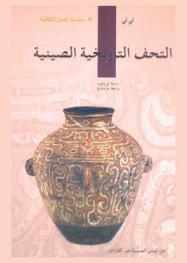
التحف التاريخية الصينية /
يتناول كتاب (التحف التاريخية الصينية) والذي قام بتأليفه (لي لي) في حوالي (141) صفحة من القطع المتوسط موضوع (التحف الصينية) مستعرضا المحتويات التالية : الفخار الملون (ظهور الفخار، تطور الفخار الملون)-اليشم-الحجر الجميل واليشم، الأدوات اليشمية لثقافة ليانغتشو-الأدوات البرونزية (تقنية البرونز)-الخزف-النحت-الرسم-الأثث-الأشغال الفنية (الأشغال الذهبية والفضية، الأوات المصنوعة بالبامبو والخشب والعاج والقرن الحيواني)-جمع وحفظ التحف التاريخية.
Book

Chronic colitis exacerbates NLRP3-dependent neuroinflammation and cognitive impairment in middle-aged brain
Background
Neuroinflammation is a major driver of age-related brain degeneration and concomitant functional impairment. In patients with Alzheimer’s disease, the most common form of age-related dementia, factors that enhance neuroinflammation may exacerbate disease progression, in part by impairing the glymphatic system responsible for clearance of pathogenic beta-amyloid. Inflammatory bowel diseases (IBDs) induce neuroinflammation and exacerbate cognitive impairment in the elderly. The NACHT-LRR and pyrin (PYD) domain-containing protein 3 (NLRP3) inflammasome has been implicated in neuroinflammation. Therefore, we examined if the NLRP3 inflammasome contributes to glymphatic dysfunction and cognitive impairment in an aging mouse model of IBD.
Methods
Sixteen-month-old C57BL/6J and NLRP3
knockout
(KO) mice received 1% wt/vol dextran sodium sulfate (DSS) in drinking water to model IBD. Colitis induction was confirmed by histopathology. Exploratory behavior was examined in the open field, associative memory by the novel-object recognition and Morris water maze tests, glymphatic clearance by in vivo two-photon imaging, and neuroinflammation by immunofluorescence and western blotting detection of inflammatory markers.
Results
Administration of DSS induced colitis, impaired spatial and recognition memory, activated microglia, and increased A1-like astrocyte numbers. In addition, DSS treatment impaired glymphatic clearance, aggravated amyloid plaque accumulation, and induced neuronal loss in the cortex and hippocampus. These neurodegenerative responses were associated with increased NLRP3 inflammasome expression and accumulation of gut-derived T lymphocytes along meningeal lymphatic vessels. Conversely, NLRP3 depletion protected against cognitive dysfunction, neuroinflammation, and neurological damage induced by DSS.
Conclusions
Colitis can exacerbate age-related neuropathology, while suppression of NLRP3 inflammasome activity may protect against these deleterious effects of colitis.
Journal Article

Memory, fluid identity, and the politics of remembering : the representations of the Chinese Cultural Revolution in English-speaking countries
\"The Chinese Cultural Revolution is the single most important internal social event in contemporary Chinese history. The plethora of historical, literary, and artistic representations inspired by this event are critical to our understanding of the diversified, often contested, interpretations of contemporary China. Li Li's critical examination of autobiographic, filmic and fictional presentations in Memory, Fluid Identity, and the Politics of Remembering : The Representations of the Chinese Cultural Revolution in English-speaking Countries demonstrates that 'memory works' not only reflect memories of those who lived through that period, but memories about their past, and, more importantly, about their identity remapping and artistic negotiation in a cross-cultural environment\"--Provided by publisher.
Book

The effect of Clostridium butyricum on symptoms and fecal microbiota in diarrhea-dominant irritable bowel syndrome: a randomized, double-blind, placebo-controlled trial
Irritable bowel syndrome (IBS) is a common disorder in gastrointestinal system and impairs the quality of life of the patients.
Clostridium butyricum
(
CB
) is a probiotics that has been used in several gastrointestinal diseases. The efficacy of
CB
in treating IBS is still unknown. This prospective, multi-centre, randomized, double-blind, placebo-controlled trial aimed to assess the efficacy and safety of
CB
in treating diarrhea-predominant IBS (IBS-D) and analyze the fecal microbiota after treatment. Two hundred patients with IBS-D were recruited and were given
CB
or placebo for 4 weeks. End points included change from baseline in IBS symptoms, quality of life, stool consistency and frequency. Compared with placebo,
CB
is effective in improving the overall IBS-D symptoms (−62.12 ± 74.00 vs. −40.74 ± 63.67,
P
= 0.038) as well as quality of life (7.232 ± 14.06 vs. 3.159 ± 11.73,
P
= 0.032) and stool frequency (−1.602 ± 1.416 vs. −1.086 ± 1.644,
P
= 0.035). The responder rates are found higher in
CB
compared with the placebo (44.76% vs. 30.53%,
P
= 0.042). The change in fecal microbiota was analyzed and function pathways of
CB
in treating IBS-D were predicted. In conclusion,
CB
improves overall symptoms, quality of life and stool frequency in IBS-D patients and is considered to be used as a probiotics in treating IBS-D clinically.
Journal Article


A phase 1, open-label study of LCAR-B38M, a chimeric antigen receptor T cell therapy directed against B cell maturation antigen, in patients with relapsed or refractory multiple myeloma
Background
Chimeric antigen receptor (CAR) T cell therapy has demonstrated proven efficacy in some hematologic cancers. We evaluated the safety and efficacy of LCAR-B38M, a dual epitope-binding CAR T cell therapy directed against 2 distinct B cell maturation antigen epitopes, in patients with relapsed/refractory (R/R) multiple myeloma (MM).
Methods
This ongoing phase 1, single-arm, open-label, multicenter study enrolled patients (18 to 80 years) with R/R MM. Lymphodepletion was performed using cyclophosphamide 300 mg/m
2
. LCAR-B38M CAR T cells (median CAR+ T cells, 0.5 × 10
6
cells/kg [range, 0.07 to 2.1 × 10
6
]) were infused in 3 separate infusions. The primary objective is to evaluate the safety of LCAR-B38M CAR T cells; the secondary objective is to evaluate the antimyeloma response of the treatment based on the general guidelines of the International Myeloma Working Group.
Results
At data cutoff, 57 patients had received LCAR-B38M CAR T cells. All patients experienced ≥ 1 adverse events (AEs). Grade ≥ 3 AEs were reported in 37/57 patients (65%); most common were leukopenia (17/57; 30%), thrombocytopenia (13/57; 23%), and aspartate aminotransferase increased (12/57; 21%). Cytokine release syndrome occurred in 51/57 patients (90%); 4/57 (7%) had grade ≥ 3 cases. One patient reported neurotoxicity of grade 1 aphasia, agitation, and seizure-like activity. The overall response rate was 88% (95% confidence interval [CI], 76 to 95); 39/57 patients (68%) achieved a complete response, 3/57 (5%) achieved a very good partial response, and 8/57 (14%) achieved a partial response. Minimal residual disease was negative for 36/57 (63%) patients. The median time to response was 1 month (range, 0.4 to 3.5). At a median follow-up of 8 months, median progression-free survival was 15 months (95% CI, 11 to not estimable). Median overall survival for all patients was not reached.
Conclusions
LCAR-B38M CAR T cell therapy displayed a manageable safety profile and demonstrated deep and durable responses in patients with R/R MM.
Trial registration
ClinicalTrials.gov
,
NCT03090659
; Registered on March 27, 2017, retrospectively registered
Journal Article