
Catalogue Search | MBRL


Are you sure you want to remove the book from the shelf?

{{itemTitle}}
1,504,253
result(s) for
"Li Li"
Sort by:


Blocking ATM-dependent NF-κB pathway overcomes niche protection and improves chemotherapy response in acute lymphoblastic leukemia
Bone marrow (BM) niche responds to chemotherapy-induced cytokines secreted from acute lymphoblastic leukemia (ALL) cells and protects the residual cells from chemotherapeutics in vivo. However, the underlying molecular mechanisms for the induction of cytokines by chemotherapy remain unknown. Here, we found that chemotherapeutic drugs (e.g., Ara-C, DNR, 6-MP) induced the expression of niche-protecting cytokines (GDF15, CCL3 and CCL4) in both ALL cell lines and primary cells in vitro. The ATM and NF-κB pathways were activated after chemotherapy treatment, and the pharmacological or genetic inhibition of these pathways significantly reversed the cytokine upregulation. Besides, chemotherapy-induced NF-κB activation was dependent on ATM-TRAF6 signaling, and NF-κB transcription factor p65 directly regulated the cytokines expression. Furthermore, we found that both pharmacological and genetic perturbation of ATM and p65 significantly decreased the residual ALL cells after Ara-C treatment in ALL xenograft mouse models. Together, these results demonstrated that ATM-dependent NF-κB activation mediated the cytokines induction by chemotherapy and ALL resistance to chemotherapeutics. Inhibition of ATM-dependent NF-κB pathway can sensitize ALL to chemotherapeutics, providing a new strategy to eradicate residual chemo-resistant ALL cells.
Journal Article


Traditional Herbal Medicine: A Potential Therapeutic Approach for Adjuvant Treatment of Non-small Cell Lung Cancer in the Future
Lung carcinoma is the primary reason for cancer-associated mortality, and it exhibits the highest mortality and incidence in developed and developing countries. Non-small cell lung cancer (NSCLC) and SCLC are the 2 main types of lung cancer, with NSCLC contributing to 85% of all lung carcinoma cases. Conventional treatment mainly involves surgery, chemoradiotherapy, and immunotherapy, but has a dismal prognosis for many patients. Therefore, identifying an effective adjuvant therapy is urgent. Historically, traditional herbal medicine has been an essential part of complementary and alternative medicine, due to its numerous targets, few side effects and substantial therapeutic benefits. In China and other East Asian countries, traditional herbal medicine is increasingly popular, and is highly accepted by patients as a clinical adjuvant therapy. Numerous studies have reported that herbal extracts and prescription medications are effective at combating tumors. It emphasizes that, by mainly regulating the P13K/AKT signaling pathway, the Wnt signaling pathway, and the NF-κB signaling pathway, herbal medicine induces apoptosis and inhibits the proliferation and migration of tumor cells. The present review discusses the anti-NSCLC mechanisms of herbal medicines and provides options for future adjuvant therapy in patients with NSCLC.
Journal Article
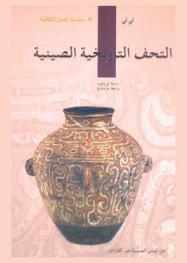
التحف التاريخية الصينية /
يتناول كتاب (التحف التاريخية الصينية) والذي قام بتأليفه (لي لي) في حوالي (141) صفحة من القطع المتوسط موضوع (التحف الصينية) مستعرضا المحتويات التالية : الفخار الملون (ظهور الفخار، تطور الفخار الملون)-اليشم-الحجر الجميل واليشم، الأدوات اليشمية لثقافة ليانغتشو-الأدوات البرونزية (تقنية البرونز)-الخزف-النحت-الرسم-الأثث-الأشغال الفنية (الأشغال الذهبية والفضية، الأوات المصنوعة بالبامبو والخشب والعاج والقرن الحيواني)-جمع وحفظ التحف التاريخية.
Book

The effect of Clostridium butyricum on symptoms and fecal microbiota in diarrhea-dominant irritable bowel syndrome: a randomized, double-blind, placebo-controlled trial
Irritable bowel syndrome (IBS) is a common disorder in gastrointestinal system and impairs the quality of life of the patients.
Clostridium butyricum
(
CB
) is a probiotics that has been used in several gastrointestinal diseases. The efficacy of
CB
in treating IBS is still unknown. This prospective, multi-centre, randomized, double-blind, placebo-controlled trial aimed to assess the efficacy and safety of
CB
in treating diarrhea-predominant IBS (IBS-D) and analyze the fecal microbiota after treatment. Two hundred patients with IBS-D were recruited and were given
CB
or placebo for 4 weeks. End points included change from baseline in IBS symptoms, quality of life, stool consistency and frequency. Compared with placebo,
CB
is effective in improving the overall IBS-D symptoms (−62.12 ± 74.00 vs. −40.74 ± 63.67,
P
= 0.038) as well as quality of life (7.232 ± 14.06 vs. 3.159 ± 11.73,
P
= 0.032) and stool frequency (−1.602 ± 1.416 vs. −1.086 ± 1.644,
P
= 0.035). The responder rates are found higher in
CB
compared with the placebo (44.76% vs. 30.53%,
P
= 0.042). The change in fecal microbiota was analyzed and function pathways of
CB
in treating IBS-D were predicted. In conclusion,
CB
improves overall symptoms, quality of life and stool frequency in IBS-D patients and is considered to be used as a probiotics in treating IBS-D clinically.
Journal Article

Memory, fluid identity, and the politics of remembering : the representations of the Chinese Cultural Revolution in English-speaking countries
\"The Chinese Cultural Revolution is the single most important internal social event in contemporary Chinese history. The plethora of historical, literary, and artistic representations inspired by this event are critical to our understanding of the diversified, often contested, interpretations of contemporary China. Li Li's critical examination of autobiographic, filmic and fictional presentations in Memory, Fluid Identity, and the Politics of Remembering : The Representations of the Chinese Cultural Revolution in English-speaking Countries demonstrates that 'memory works' not only reflect memories of those who lived through that period, but memories about their past, and, more importantly, about their identity remapping and artistic negotiation in a cross-cultural environment\"--Provided by publisher.
Book

Two-billion-year-old volcanism on the Moon from Chang’e-5 basalts
The Moon has a magmatic and thermal history that is distinct from that of the terrestrial planets
1
. Radioisotope dating of lunar samples suggests that most lunar basaltic magmatism ceased by around 2.9–2.8 billion years ago (Ga)
2
,
3
, although younger basalts between 3 Ga and 1 Ga have been suggested by crater-counting chronology, which has large uncertainties owing to the lack of returned samples for calibration
4
,
5
. Here we report a precise lead–lead age of 2,030 ± 4 million years ago for basalt clasts returned by the Chang’e-5 mission, and a
238
U/
204
Pb ratio (
µ
value)
6
of about 680 for a source that evolved through two stages of differentiation. This is the youngest crystallization age reported so far for lunar basalts by radiometric dating, extending the duration of lunar volcanism by approximately 800–900 million years. The
µ
value of the Chang’e-5 basalt mantle source is within the range of low-titanium and high-titanium basalts from Apollo sites (
µ
value of about 300–1,000), but notably lower than those of potassium, rare-earth elements and phosphorus (KREEP) and high-aluminium basalts
7
(
µ
value of about 2,600–3,700), indicating that the Chang’e-5 basalts were produced by melting of a KREEP-poor source. This age provides a pivotal calibration point for crater-counting chronology in the inner Solar System and provides insight on the volcanic and thermal history of the Moon.
Basalt samples returned from the Moon by the Chang’e-5 mission are revealed to be two billion years old by radioisotopic dating, providing insight on the volcanic history of the Moon.
Journal Article


Research progress of bile biomarkers and their immunoregulatory role in biliary tract cancers
Biliary tract cancers (BTCs), including cholangiocarcinoma and gallbladder carcinoma, originate from the biliary epithelium and have a poor prognosis. Surgery is the only choice for cure in the early stage of disease. However, most patients are diagnosed in the advanced stage and lose the chance for surgery. Early diagnosis could significantly improve the prognosis of patients. Bile has complex components and is in direct contact with biliary tract tumors. Bile components are closely related to the occurrence and development of biliary tract tumors and may be applied as biomarkers for BTCs. Meanwhile, arising evidence has confirmed the immunoregulatory role of bile components. In this review, we aim to summarize and discuss the relationship between bile components and biliary tract cancers and their ability as biomarkers for BTCs, highlighting the role of bile components in regulating immune response, and their promising application prospects.
Journal Article