
Catalogue Search | MBRL


Are you sure you want to remove the book from the shelf?

{{itemTitle}}
89,188
result(s) for
"Liang, Li"
Sort by:


Sub-burst-resolved Classification and Characteristics of Double-trigger Gamma-Ray Bursts
Over the past two decades, Swift and Fermi have detected a handful of gamma-ray bursts (GRBs) that produced two independent onboard triggers separated by a quiescent interval long enough for the trigger system to reset (“double-trigger” events). Consistent sky localizations indicate that the two triggers originated from the same astrophysical transient. Here we examine whether standard prompt-emission diagnostics remain stable across sub-bursts in confirmed double-trigger events, focusing on three well-observed cases: GRB 091024A, GRB 110709B, and GRB 220627A. Treating each triggered episode as an individual sub-burst, we compare its duration (T90), hardness ratio, minimum variability timescale (MVT), spectral lag (τlag), peak energy (Ep), and energetics with those of typical long-duration GRBs (LGRBs) and with single-trigger LGRBs that exhibit extended quiescent periods. We find that all sub-bursts are phenomenologically consistent with the LGRB population across the adopted diagnostics. We therefore interpret confirmed double-trigger GRBs not as a physically distinct burst class but as observationally selected, clean realizations of long-quiescent, multiepisode long GRBs. These results suggest that LGRB central engines can undergo extended dormancy and subsequent reactivation.
Journal Article
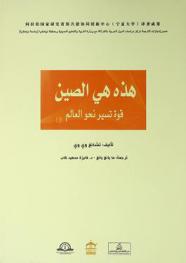
هذه هي الصين : قوة تسير نحو العالم
يركز كتاب \"هذه هي الصين\" على سرد قصص تنمية الصين في العصر الجديد. وقد غير الدكتور تشانغ وي وي طريقته المعروفة بالتوجيه والإرشاد في البرامج الأيديولوجية والنظرية في الماضي، وعبر عنها بلغة شعبية سائغة، وحجج منطقية صارمة، وبيانات حقيقية، وتصادمات صريحة للأفكار، وتقنيات عرض مبتكرة لمساعدة الجمهور على فهم النموذج الصيني والطريق الصيني، وتعزيز ثقتهم بمستقبل الصين.
Book

Internet use and frailty in middle-aged and older adults: findings from developed and developing countries
Background
With increasing trend of internet use in all age groups, whether internet use can prevent frailty in middle-aged and older adults remains unclear.
Methods
Five cohorts, including Health and Retirement Study (HRS), China Health and Retirement Longitudinal Study (CHARLS), the Survey of Health, Ageing and Retirement in Europe (SHARE), English Longitudinal Study of Aging (ELSA), and Mexican Health and Aging Study (MHAS), were used in this study. Internet use, social isolation, and frailty status was assessed using similar questions. The Generalized estimating equations models, random effects meta-analysis, COX regression, and mediation analysis were utilized.
Results
In the multicohort study, a total of 155,695 participants were included in main analysis. The proportion of internet use was varied across countries, ranging from 5.56% in China (CHARLS) to 83.46% in Denmark (SHARE). According to the generalized estimating equations models and meta-analysis, internet use was inversely associated with frailty, with the pooled ORs (95%CIs) of 0.72 (0.67,0.79). The COX regression also showed that participants with internet use had a lower risk of frailty incidence. Additionally, the association was partially mediated by social isolation and slightly pronounced in participants aged 65 and over, male, not working for payment, not married or partnered, not smoking, drinking, and not co-residence with children.
Conclusions
Our findings highlight the important role of internet use in preventing frailty and recommend more engagements in social communication and activities to avoid social isolation among middle-aged and older adults.
Journal Article


Revisiting the Spectral Energy Correlations of GRBs with Fermi Data. I. Model-wise Properties
Gamma-ray bursts (GRBs) exhibit a diversity of spectra. Several spectral models (e.g., Band, cutoff power law (CPL), and blackbody) and their hybrid versions (e.g., Band+blackbody) have been widely used to fit the observed GRB spectra. Here, we attempt to collect all the bursts detected by Fermi/GBM with known redshifts from 2008 July to 2022 May, having been motivated to (i) provide a parameter catalog independent of the official Fermi/GBM team and (ii) achieve a “clean” model-based GRB spectral energy correlation analysis. A nearly complete GRB sample is created, containing 153 such bursts (136 long GRBs and 17 short GRBs). Using the sample and by performing detailed spectral analysis and model comparisons, we investigate two GRB spectral energy correlations: the correlation of the cosmological rest-frame peak energy (E p,z ) of the ν F ν prompt emission spectrum with (i) the isotropic-bolometric-equivalent emission energy E γ,iso (the Amati relation) and (ii) the isotropic-bolometric-equivalent peak luminosity L p,iso (the Yonetoku relation). From a linear regression analysis, a tight correlation between E p,z and E γ,iso (and L γ,iso) is found for both Band-like and CPL-like bursts (except for CPL-like long burst E p,z –E γ,iso correlation). More interestingly, CPL-like bursts do not fall on the Band-like burst Amati and Yonetoku correlations, suggesting distinct radiation processes, and pointing to the fact that these spectral energy correlations are tightly reliant on the model-wise properties.
Journal Article


Catalytic enantioselective C(sp3)–H functionalization involving radical intermediates
Recently, with the boosted development of radical chemistry, enantioselective functionalization of C(
sp
3
)–H bonds via a radical pathway has witnessed a renaissance. In principle, two distinct catalytic modes, distinguished by the steps in which the stereochemistry is determined (the radical formation step or the radical functionalization step), can be devised. This Perspective discusses the state-of-the-art in the area of catalytic enantioselective C(
sp
3
)–H functionalization involving radical intermediates as well as future challenges and opportunities.
Enantioselective functionalization of ubiquitous C(sp
3
)–H bonds via radical species has witnessed a renaissance in the past years. Here, the authors summarize the main achievements in the field by identifying two main reaction pathways determining the stereochemistry and give an outlook on future challenges and opportunities.
Journal Article

Cancer-derived exosomal miR-25-3p promotes pre-metastatic niche formation by inducing vascular permeability and angiogenesis
Cancer-derived exosomes are considered a major driver of cancer-induced pre-metastatic niche formation at foreign sites, but the mechanisms remain unclear. Here, we show that miR-25-3p, a metastasis-promoting miRNA of colorectal cancer (CRC), can be transferred from CRC cells to endothelial cells via exosomes. Exosomal miR-25-3p regulates the expression of VEGFR2, ZO-1, occludin and Claudin5 in endothelial cells by targeting KLF2 and KLF4, consequently promotes vascular permeability and angiogenesis. In addition, exosomal miR-25-3p from CRC cells dramatically induces vascular leakiness and enhances CRC metastasis in liver and lung of mice. Moreover, the expression level of miR-25-3p from circulating exosomes is significantly higher in CRC patients with metastasis than those without metastasis. Our work suggests that exosomal miR-25-3p is involved in pre-metastatic niche formation and may be used as a blood-based biomarker for CRC metastasis.
The mechanisms underlying pre-metastatic niche formation by cancer derived exosomes is unclear. Here they show that colorectal cancer (CRC) derived exosomal miR-25-3p promotes vascular leakiness and angiogenesis, CRC metastasis, and is upregulated in CRC pateints with metastasis, and suggest miR-25-3p as a biomarker for CRC metastasis.
Journal Article