
Catalogue Search | MBRL


Are you sure you want to remove the book from the shelf?

{{itemTitle}}
66
result(s) for
"Liebenberg, Ian"
Sort by:

(Trans-) grense, talighede, boeken bloedrefleksies
This contribution surveys recent works on the Border War /Angolan War (1960–1990). It contrasts writings by political theorists, media analysts and literary scholars with works written by soldiers who fought in the war and recollections by embedded journalists. The article’s main focus is on Gary Baines and Peter Vale’s collection of essays entitled Beyond the Border War: New Perspectives on Southern Africa’s Late Cold War Conflicts (Unisa Press, 2008).
Journal Article
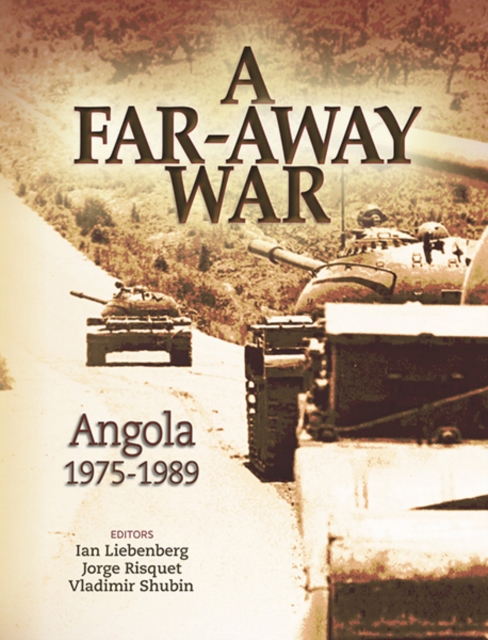
Far-Away War
South Africa's armed forces invaded Angola in 1975, setting off a war that had consequences for the whole region that are still felt today. A Far-Away War contributes to a wider understanding of this war in Angola and Namibia. The book does not only look at the war from an \"old\" South African (Defence Force) perspective, but also gives a voice to participants \"on the other side\" - emphasising the role of the Cubans and Russians. This focus is supplemented by the inclusion of many never-before-published photographs from Cuban and Russian archives, and a comprehensive bibliography.
eBook

Defence Diplomacy and National Security Strategy
The post-cold war era presented security challenges that at one level are a continuation of the cold war era; at another level, these phenomena manifested in new forms. Whether the issues of economics and trade, transfer of technologies, challenges of intervention, or humanitarian crisis, the countries of the South (previously pejoratively labelled “Third World\" or “developing\" countries) have continued to address these challenges within the framework of their capabilities and concerns. The volume explores defence diplomacies, national security challenges and strategies, dynamics of diplomatic manoeuvers and strategic resource management of Latin American, southern African and Asian countries.
eBook

Penetrating global consciousness: Art, killing as art, art as subversion, peace and the inversion of speed and power
War chariots and armoured beasts of war played a major role in wars and influenced the outcomes of battles. The industrial era and age of total war saw new transmutations of this tool of war. When the first tanks rolled out at the battle of the Somme in September 1916, and a year later, an entire tank corps at Cambrai, a mobile tool of war was born that would weave itself deeply into battle space and global social consciousness, in fact humanity itself. Usually, the tank is viewed as the concrete manifestation of speed, mobility, all-round protection and firepower on the modern battlefield. It received attention in terms of design, armament and upgrades, as well as strategy and tactics. The tank redesigned battle space and impacted on national psyches and collective memory. Earmarked for killing, this object penetrated social consciousness, art, political discourse and issues of morality and peacemaking. This article reflects on the broader socio-economic, political and sociological outcomes of this invention. At a time of high technocracy, hyperglobalisation and transhumanity amidst increased global fragmentation, alienation, oppression and poverty, this tool still plays a problematic role. The tank constitutes a central component of the global industrial-military complex as much as it forms part of the (dis-)fragmentation of current society and political discourse, it invokes critical reflection.
Journal Article
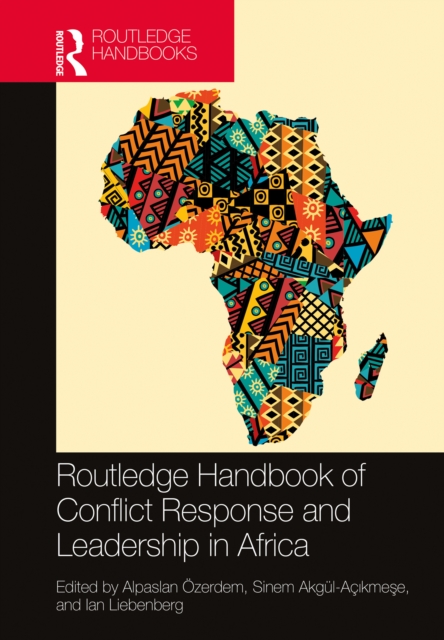
Routledge Handbook of Conflict Response and Leadership in Africa
This handbook explores the challenges and opportunities for leadership and conflict response in the context of Africa at several levels.
Leadership plays a vital role in affecting conflict response but is frequently only examined at the macro level of state, government, and international organizations. This handbook addresses the need to explore challenges and opportunities for leadership at several levels: macro (global, regional, national), meso (NGOs, religious groups, academics), and micro (civil society organizations, youth groups, women's organizations). Analysis from multiple levels provides a broader explanation of conflict dynamics and helps to fit localized conflict transformation approaches into wider national or regional structures. The multidisciplinary essays presented in this volume encompass the psychological, political, and structural dimensions of conflict response and demonstrate how its success is fundamentally linked to the style of effectiveness of leadership, among other factors.
The volume is divided into four thematic sections:
Part I: The theory and dynamics of conflict response and leadership
Part II: Macro-level leadership experiences in conflict response
Part III: Meso-/micro-level leadership experiences in conflict response
Part IV: Recommendations for improved leadership in conflict response
This book will be of much interest to students of conflict resolution, peace studies, African politics, security studies, and international relations, in general.
eBook

Food security, wheat production and policy in South Africa : reflections on food sustainability and challenges for a market economy
The traditional concept of security has broadened over the past decades. Food security in South Africa is an imperative for human and non-human survival. In the contemporary political economy, there is a real nexus between globalisation, exploitation, the state, scarcity of resources, the market, peoples’ need to feel secure, notions of state responsibility and food production. Political economy and human security in theoretical debates and face-to-face politics are intrinsically linked. The notion of a ‘secure community’ changed. Food security and the right to quality living became a social imperative. Understanding current agricultural economics requires the ability to link security and access to food for all. In this case study, wheat production in South Africa is addressed against the interface of the global and the local including South Africa’s transition to a democratic and constitutional state with a Bill of Rights. The current security approach represents a more comprehensive understanding of what security is meant to be and include, amongst others, housing security, medical security, service delivery and food security, as set out in the Millennium Development Goals and the subsequent Sustainable Development Goals. The issue of food security is addressed here with particular reference to wheat production, related current government policies and the market economy. The authors chose to limit their socio-economic focus to a specific sector of the agricultural market, namely wheat, rather than discuss food security in South Africa in general. Wheat was chosen as a unit of analysis because as a crop, wheat used in bread is one of the staples for the majority of South Africans and given the current negative economic developments, wheat as a staple is likely to remain integral, if not increasing its status of dependability.
Journal Article

Leadership, Conflict, and Negotiating Sustainable Socio-Political Frameworks in Africa
Africa experienced a tortuous history in terms of violent conflict. Large contested spaces worsened conflicts, the subjugation of communities, small and large violent clashes on class and racial grounds, and a geo-space of scarce and contested resources by imposters and frequently by Africans themselves. The Cold War averted war between states in Europe due to a bipolar stalemate in conventional arms and mutually assured destruction in nuclear parity as a haunting spectre. Africa saw two periods of colonization, one starting around 600 years after the birth of Christ if using the Christian calendar. The legacy started earlier. In Europe, the feudal state and an era of monarchs and rule by the royalty were gradually replaced by the nation state's formation. The nation state's transition frequently took place through the mobilization for and enactment of internal wars in Europe. The power of the nation state was almost always achieved through organized or military violence.
Book Chapter
Into the future : Donkergat Military Training Area and the Langebaan Ramsar site
Militaries need natural areas for offensive and defensive combat-readiness programmes. Here soldiers, war machinery and munitions are employed to prepare forces to execute warfighting tactics. Integration of environmental considerations into military activities is a growing global challenge. This study is based on a qualitative approach underpinned by an extensive literature review. The potential for the contribution of the military to a sensitive and diminishing wetland on the West Coast of South Africa (SA) is addressed. Donkergat Military Training Area (DMTA) in the Western Cape province, SA, provides diverse, seaborne training and warfighting facilities for the South African Special Forces (SASF), a specialist branch of the South African National Defence Force (SANDF). This facility borders the Atlantic Ocean and Langebaan Lagoon, a Ramsar site (no. 398). One of only 15 island ecosystems on the southern African coastline, lies within the boundaries of the area. Saldanha Bay was identified as an economic development node by the national government. The 4 Special Forces Regiment (4 SFR) is thus obliged to contribute to the conservation of these environmental assets. Industrial development includes Operation Phakisa by the Department of Agriculture, Forestry and Fisheries (DAFF) that envisages expanded aquaculture practices in Saldanha Bay. Developers of fish and bivalve farms are allowed up-scaling aquaculture operations. These result in the loss of ecological attributes of the Langebaan Lagoon Wetland system. In the study, we recommend that parts of DMTA should be incorporated in the Ramsar definition for the Langebaan Lagoon Wetland system. Ecosystem indicators monitoring bird life, water and sediment quality, fish and rocky intertidal macrofauna in the DMTA waters should be intensified. The DMTA as a benchmark ecosystem in the Saldanha Bay area will facilitate environmentally sound planning amidst recent developments. Integrating sections of the Langebaan Lagoon that is part of the DMTA into the existing internationally recognised wetland area, the military can contribute significantly to wetland conservation. Management of these areas should be formulated in a Military Integrated Environmental Management (MIEM) plan by incorporating international guidelines.
Journal Article
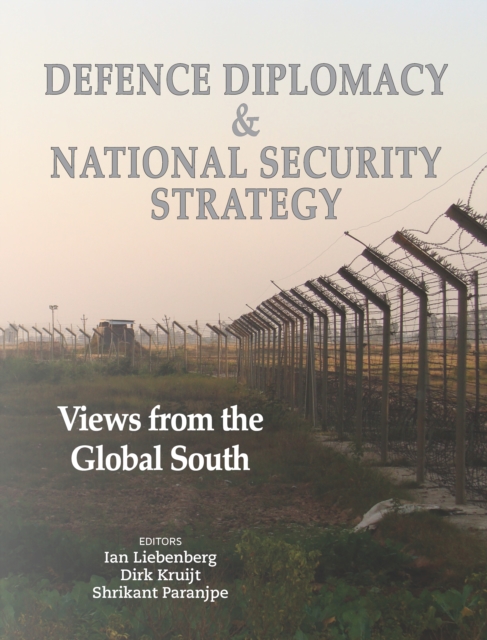
Defence Diplomacy and National Security Strategy
The post-cold war era presented security challenges that at one level are a continuation of the cold war era; at another level, these phenomena manifested in new forms. Whether the issues of economics and trade, transfer of technologies, challenges of intervention, or humanitarian crisis, the countries of the South (previously pejoratively labelled Third World or developing countries) have continued to address these challenges within the framework of their capabilities and concerns. The volume explores defence diplomacies, national security challenges and strategies, dynamics of diplomatic manoeuvers and strategic resource management of Latin American, southern African and Asian countries.
eBook

Into the future : Donkergat military training area and the Langebaan Ramsar site
The original publication is available at https://td-sa.net
Journal Article