
Catalogue Search | MBRL


Are you sure you want to remove the book from the shelf?

{{itemTitle}}
166
result(s) for
"Liebersohn, Harry"
Sort by:

The return of the gift : European history of a global idea
\"This book is a history of European interpretations of the gift from the mid seventeenth to the early twentieth century. Reciprocal gift exchange, pervasive in traditional European society, disappeared from the discourse of nineteenth-century social theory only to return as a major theme in twentieth-century anthropology, sociology, history, philosophy and literary studies. Modern anthropologists encountered gift exchange in Oceania and the Pacific Northwest and returned the idea to European social thought; Marcel Mauss synthesized their insights with his own readings from remote times and places in his famous 1925 essay on the gift, the starting-point for subsequent discussion. The Return of the Gift demonstrates how European intellectual history can gain fresh significance from global contexts\"--Provided by publisher.
Book


Introduction: The Civilizing Mission
The phrase civilizing mission invites cliche. As a label for a style of thought during the nineteenth century, it embodied the simplification of diverse peoples and historical experiences into conceptual boxes like savage and barbaric -- suffocating containers that led to misjudgments by would-be rulers and inspired repudiation and revolt by their subjects. It was a style of thought whose high cost could be seen at home in Europe, with dramatic force on a national level in the enthusiasm for civilizing one's fellow citizens in the rush of enthusiasm that followed from political unification in Italy and Germany. Taken at this level of discursive stereotype (which is only the point of departure for Hubner's and Thurman's rich essays), the phrase \"civilizing mission is little more than ideological superstructure. In that case it would simply be a disguise for the real economic and political motives driving nineteenth-century societies.
Journal Article
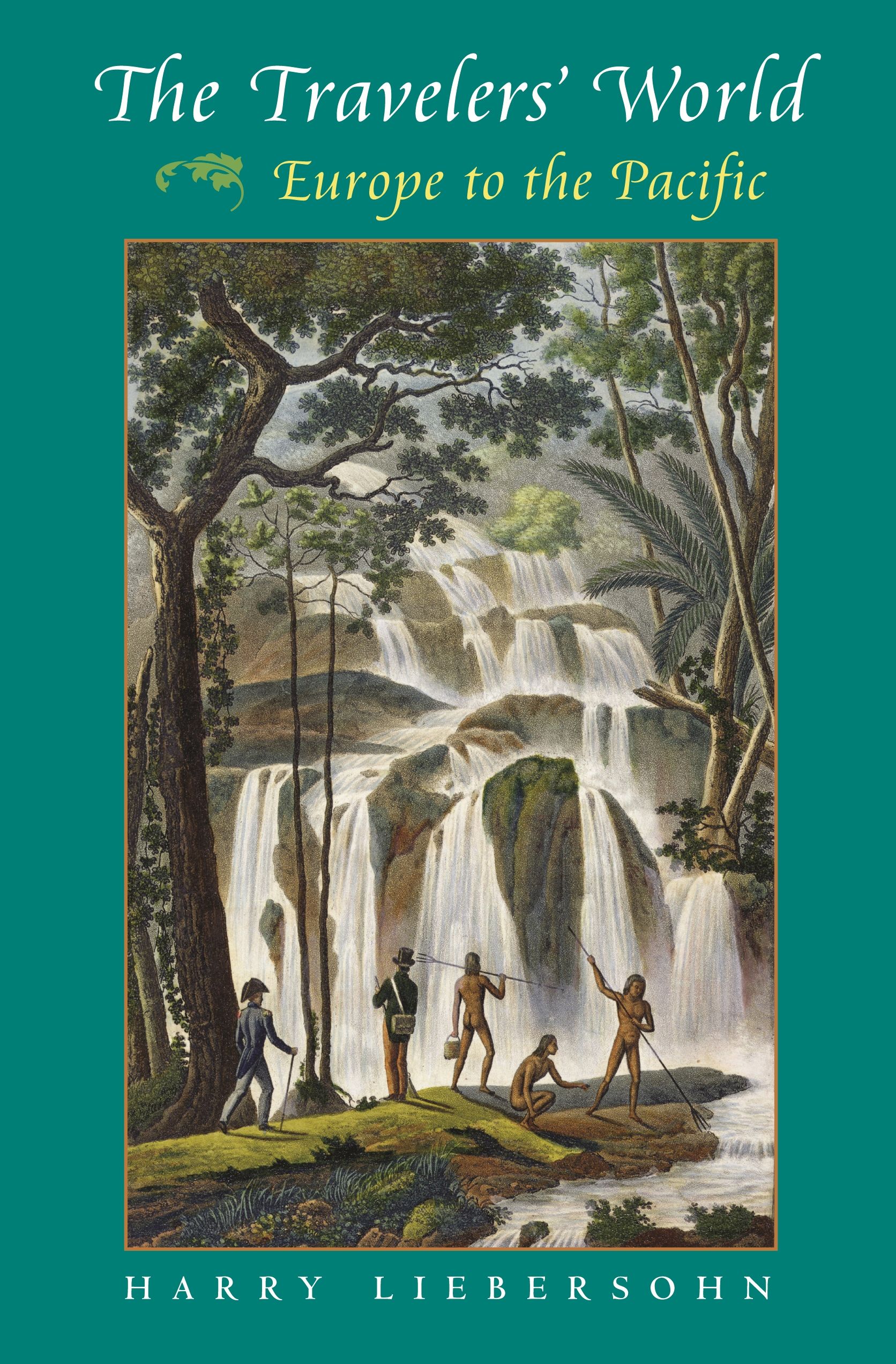
The travelers' world : Europe to the Pacific
In a beautifully crafted narrative that transports the reader from the salons of Europe to the shores of Tahiti, Harry Liebersohn examines the transformation of global knowledge during the great age of scientific exploration. He moves beyond the traditional focus on British and French travelers to include Germans, Russians, and some Americans, as well as the Tahitian, Hawaiian, and other Pacific islanders they encountered. Germany gets special attention because its travelers epitomized the era's cosmopolitanism and its philosophers engaged most fully in a multicultural understanding of humanity. Famous adventurers like Captain Cook make appearances, but it's the observations of such naturalists as Philibert Commerson, George Forster, and Adelbert von Chamisso that helped most to generate a new understanding of these far-flung societies. These European travelers saw non-Europeans neither as \"savages\" nor as projections of colonial fantasies. Instead the explorers accumulated a rich storehouse of perceptions through negotiations with patrons at home, collaborators abroad, salon philosophers, and missionary rivals. Liebersohn illuminates the transformative nature of human connections. He examines the expectations these servants of empire brought to the peoples they encountered, and acknowledges the effects of Oceanian behaviors, including unexpected notions of sexuality, on the Europeans. Equally important, he details the reception of these travelers upon their return home. An unforgettable voyage filled with delightful characters, dramatic encounters, and rich cultural details, The Travelers' World heralds a moment of intellectual preparation for the modern global era. We now travel effortlessly to distant places, but the questions about perception, truth, and knowledge that these intercontinental mediators faced still resonate.
eBook


The Krannert Center for the Performing Arts
When I first visited the University of Illinois campus for my job interview in the spring of 1989, the distinguished diplomatic historian Paul Schroeder, one of my future colleagues, urged me to visit the Krannert Center for the Performing Arts before I left. It wasn’t on my schedule, and in the normal order of things I wouldn’t have been able to follow his advice. But luckily—as I now view it in retrospect—I missed my return flight and had to stay an extra day. And that gave me my first chance to visit a magical performance space that exerts
Book Chapter
