
Catalogue Search | MBRL


Are you sure you want to remove the book from the shelf?

{{itemTitle}}
4
result(s) for
"Light, Richard, 1951- author"
Sort by:

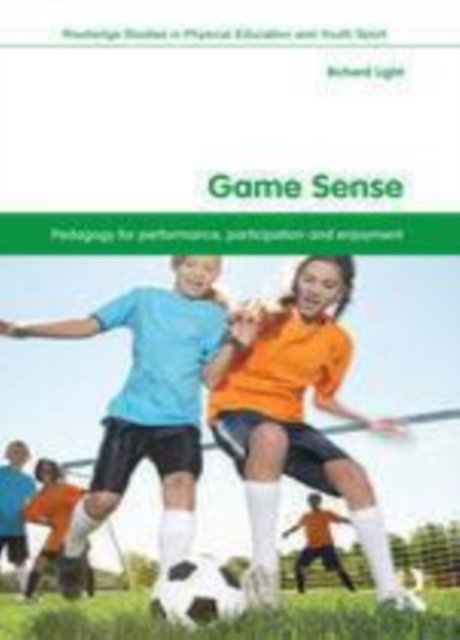
Game Sense
Game Sense is an exciting and innovative approach to coaching and physical education that places the game at the heart of the session. It encourages the player to develop skills in a realistic context, to become more tactically aware, to make better decisions and to have more fun. Game Sense is a comprehensive, research-informed introduction to the Game Sense approach that defines and explores key concepts and essential pedagogical theory, and that offers an extensive series of practical examples and plans for using Game Sense in real teaching and coaching situations.
The first section of the book helps the reader to understand how learning occurs and how this informs player-centred pedagogy. It also explains the relationship between Game Sense and other approaches to Teaching Games for Understanding. The second section of the book demonstrates how the theory can be applied in practice, providing a detailed, step-by-step guide to using Game Sense in eleven sports, including soccer, basketball, field hockey and softball.
No other book explores the Game Sense approach in such depth, or combines theory and innovative practical techniques. Game Sense is invaluable reading for all students of physical education or sports coaching, any in-service physical education teacher or any sports coach working with children or young people.
eBook

Ethics in youth sport
The influence of professional, adult sport on youth sport is now a global concern. Children are involved in high-stakes competitive sport at national and international levels at an increasingly young age. In addition, the use of sport as a medium for positive youth development by governments and within the community has fuelled ambitious targets for young people's participation in sport at all levels. In this important study of ethical issues in and around youth sport, leading international experts argue for the development of strong ethical codes for the conduct of youth sport and for effective policy and pedagogical applications to ensure that the positive benefits of sport are optimized and the negative aspects diminished. At the heart of the discussion are the prevailing standards and expectations of youth sport in developed societies, typically consisting of the development of motor competence, the development of a safe and healthy lifestyle and competitive style, and the development of a positive self-image and good relationship skills. The book examines the recommendations emerging from the 'Panathlon Declaration' and the debates that have followed, and covers a wide range of key ethical issues, including: - emotional and physical abuse - aggression and violence - doping and cheating - values and norms - teaching and coaching - integrity management. Ethics in Youth Sport is focused on the application of ethical policy and pedagogies and is grounded in practice. It assumes no prior ethical training on the part of the reader and is essential reading for all students, researchers, policy makers and professionals working with children and young people in sport across school, community and professional settings. (Autor).
eBook