
Catalogue Search | MBRL


Are you sure you want to remove the book from the shelf?

{{itemTitle}}
13
result(s) for
"Lin, Ching-Ching, editor"
Sort by:

Inclusion, diversity, and intercultural dialogue in young people's philosophical inquiry
The ever-shifting cultural and linguistic landscapes in contemporary societies create new urgency for an intersectional thematic study of diversity, philosophy, and education. As educators, how do we transform the vision of cultural and linguistic diversity into a wealth of resources for learning? How do we actively engage cultural and linguistic diversities in philosophical inquiry with young people? How do we translate the philosophical notion of cultural and linguistic diversity into pedagogical practices? The chapters in this book respond to the task of teaching philosophy in the context of increased mobility in the new global reality. By complicating the situated and fluid nature of contemporary classrooms, this book challenges the normalizing tendency often associated with philosophy education. Each chapter offers a unique perspective in understanding the profound embeddedness of philosophy education in broader sociocultural contexts and prioritizes diversity in the classroom community of inquiry. By carefully incorporating a broad range of theoretical perspectives and empirical research, this book provides a rich resource for school teachers and educators who wish to engage diverse learners in philosophical inquiry. In doing so, it reaffirms the value of philosophy education as a proactive approach to democratic education.
Book
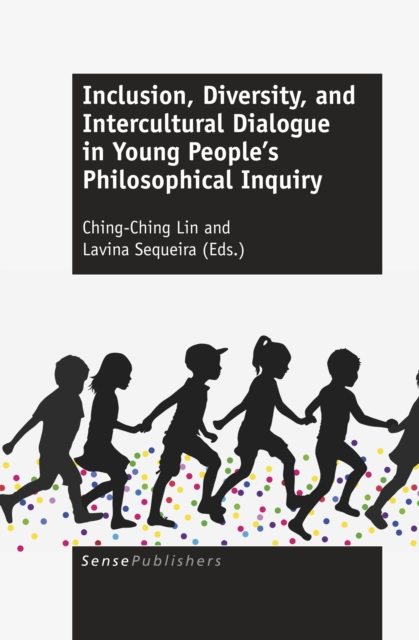
Inclusion, diversity, and intercultural dialogue in young people's philosophical inquiry
The ever-shifting cultural and linguistic landscapes in contemporary societies create new urgency for an intersectional thematic study of diversity, philosophy, and education. As educators, how do we transform the vision of cultural and linguistic diversity into a wealth of resources for learning? How do we actively engage cultural and linguistic diversities in philosophical inquiry with young people? How do we translate the philosophical notion of cultural and linguistic diversity into pedagogical practices?.
eBook

Applied Ethnomusicology
Over the past three decades, applied ethnomusicology has emerged as a major force in working with music, culture and communities worldwide, generating a wealth of new approaches and practices. Explicitly or implicitly, these often question the traditional role of the music researcher as merely an objective observer; they invite taking greater responsibility and deeper engagement with the people we work with.Highlighting an exciting diversity of local practices with global implications, this volume illustrates how to work of contemporary ethnomusicologists intersects with major issues such as social justice, education, representation, and intangible cultural heritage. With contributions from six different continents, the fourteen chapters in this volume constitute an important step in the international dialogue in scope, methods and goals of ethnomusicology in the 21st century.
eBook

Computational intelligence aided systems for healthcare domain
\"The text covers recent advances in artificial intelligence, smart computing, and their applications in augmenting medical and health care systems. It will serve as an ideal reference text for graduate students and academic researchers in diverse engineering fields including electrical, electronics and communication, computer, and biomedical\"-- Provided by publisher.
Book

Multimedia security technologies for digital rights management
Security is a major concern in an increasingly multimedia-defined universe where the Internet serves as an indispensable resource for information and entertainment. Digital Rights Management (DRM) is the technology by which network systems protect and provide access to critical and time-sensitive copyrighted material and/or personal information. This book equips savvy technology professionals and their aspiring collegiate protégés with the latest technologies, strategies and methodologies needed to successfully thwart off those who thrive on security holes and weaknesses. Filled with sample application scenarios and algorithms, this book provides an in-depth examination of present and future field technologies including encryption, authentication, copy control, tagging, tracing, conditional access and media identification. The authors present a diversified blend of theory and practice and focus on the constantly changing developments in multimedia applications thus providing an admirably comprehensive book. * Discusses state-of-the-art multimedia authentication and fingerprinting techniques * Presents several practical methodologies from industry, including broadcast encryption, digital media forensics and 3D mesh watermarking * Focuses on the need for security in multimedia applications found on computer networks, cell phones and emerging mobile computing devices
eBook

Living kinship in the Pacific (Pacific perspectives; volume 4)
Unaisi Nabobo-Baba observed that for the various peoples of the Pacific, kinship is generally understood as \"knowledge that counts.\" It is with this observation that this volume begins, and it continues with a straightforward objective to provide case studies of Pacific kinship. In doing so, contributors share an understanding of kinship as a lived and living dimension of contemporary human lives, in an area where deep historical links provide for close and useful comparison. The ethnographic focus is on transformation and continuity over time in Fiji, Tonga, and Samoa with the addition of three instructive cases from Tokelau, Papua New Guinea, and Taiwan. The book ends with an account of how kinship is constituted in day-to-day ritual and ritualized behavior.
eBook

First-Principles Calculations for Cathode, Electrolyte and Anode Battery Materials
This book presents the first-principles calculations that can be used to determine the essential chemical and physical characteristics of cathode, electrolyte and anode materials in ion-based batteries. It is ideal for researchers and senior graduate students working on the theory and fundamental science of battery materials.
eBook
Mesenchymal Stem Cells and Craniofacial Regeneration
This monograph provides a current and in-depth review of scholarly information about mesenchymal stem cells and their application in the craniofacial region of the human body. Chapters in this volume cover biological and conceptual information about mesenchymal stem cells, induced pluripotent stem cells, craniofacial regeneration, new methods of scaffold fabrication, tooth regeneration and three-dimensional printing in dentistry. The book is suitable for clinicians and cell biologists aiming to gain a better understanding of the promising field of craniofacial regenerative medicine.
eBook
Language Teaching and Learning
In every discussion on the role that language plays in our lives, every orator - from prominent politicians and corporate figures to linguists, educational experts, and others - concedes that language is important in all spheres of life. Language is both personal and introspective, as well as public and communal. Without it, we would not be able to communicate and articulate our thoughts and feelings to ourselves, to those in our inner circles, and to those in the world at large. Without it, we would not be able to establish partnerships and collaborations, and to unite peoples of diverse backgrounds and intrinsic values. Without it, too, we would not be able to learn new discoveries and gain new knowledge. The nurturing of a language learning culture is of the utmost importance to ensure that language teaching and learning supports the development of individuals, societies, nations, and populations. Language researchers, educators, and practitioners need to ensure that their learners are empowered to remain relevant. They need to produce critical and analytical thinkers, and successful language users in listening, speaking, reading, and writing.The collection of chapters in this volume addresses language teaching and learning dilemmas and draws attention to the challenges researchers have overcome and those they continue to face. The book chapters here reflect the transcendence by language teaching and learning of ordinary boundaries, especially with the advent of the digital revolution, and provide new perspectives, pedagogies, and approaches that help shape ethical, responsible, and sustainable policies. Readers of this volume, whether language practitioners, students, researchers, policy - and decision-makers, concerned educationists, or any interested individual, will gain new insights and experiences as they explore new identities, new
instructional media for interactive teaching and learning and new modes of meaning in diverse local and global contexts.
eBook