
Catalogue Search | MBRL


Are you sure you want to remove the book from the shelf?

{{itemTitle}}
3
result(s) for
"Linden, Eugene author"
Sort by:
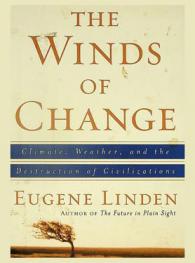
The winds of change : climate, weather, and the destruction of civilizations
Climate has been humanity's constant, if moody, companion. At times benefactor or tormentor, climate nurtured the first stirrings of civilization and then repeatedly visited ruin on empires and peoples. Environmental journalist Linden reveals a recurring pattern in which civilizations become prosperous and complacent during good weather, only to collapse when climate changes--either through its direct effects, such as floods or drought, or indirect consequences, such as disease, blight, and civil disorder. The science of climate change is still young, but the evidence mounts that climate loomed over the fate of societies from arctic Greenland to the Fertile Crescent and from the lost cities of the Mayans in Central America to the rain forests of Central Africa. The tragedy of New Orleans is but the latest instance in which a region prepared for weather disasters experienced in the past finds itself helpless when nature ups the ante--From publisher description.
It's our turn to face a climate drama, We aren't the first to sense doom from weather extremes. Yet, even with our better science, we do nothing
What with killer heat waves, killer hurricanes and killer droughts, it's arguable that we've already passed that point. Indeed, I had that feeling of foreboding in the last week of June as Washington, D.C., gradually surrendered ground and the routines of daily life to incessant rain: Cars floated down ordinarily meek Rock Creek, government buildings flooded, the Metro was disrupted and roads were closed. You may have the same feeling now, after power losses in Queens last month and with temperatures surging throughout the area. There's a distinct difference, though, between us and the Moche and the Norse, not to mention the Mayans, the Anasazi, the Akkadians and other players in previous episodes of climate chaos. All of them were victims of natural cycles; the evidence suggests that we wrote the script for this latest episode of climate roulette. It's easy to be condescending about past civilizations. They didn't have the science and technology that have enabled us to understand how climate works or to determine the role of climate in the collapse of their cultures in South America, the American Southwest and the Middle East. If only they knew what we now know about climate, maybe they would have adapted and survived.
Newspaper Article

Fire and flood : a people's history of climate change, from 1979 to the present
\"From a writer and climate-change expert who has been at the center of the fight for more than thirty years, a brilliant big-picture reckoning with the reasons for our shocking failure to this point, focusing on the malign power of key business interests, and arguing that those same interests could flip this story very quickly, if a looming economic catastrophe doesn't happen first. Eugene Linden wrote his first big cover story on climate change, for Time magazine, in 1988. In the years since, he has written many more investigative pieces, for many outlets, as well as served as an advisor for nonprofits, insurance companies, and other businesses in the cross-hairs of the disastrous impact of global warming. Fire and Flood represents his definitive case for the prosecution as to how and why we have arrived at our current dire pass, closing with his argument that the same forces that have so confused the public's mind and slowed the policy response are poised to pivot with astonishing speed, as long-term risks have become present-day realities and the cliff's edge is now within view. Starting with the 1980's, Linden tells the story decade by decade by looking at four clocks within each span that move at different speeds: the reality of climate change itself; the scientific consensus about it, which always lags reality; public opinion and political will, which lag farther still; and finally, what he argues is the most important clock, business and finance. Reality marches on at its own pace, but the public will and even the science are downstream from the money, and Fire and Flood shows vividly how devilishly effective the monied climate-change deniers have been at slowing and even reversing the progress of our collective awakening. When a threat means certain disaster at an unknown future point, but addressing it means certain lost profit in the present, capitalism's response is sadly predictable. Now, however, the seasons of fire and flood have crossed the threshold into plain view. Linden focuses in on the insurance industry as one loud canary in the coal mine: fire and flood zones in Florida and California, among other regions, are seeing insurers flee the market, and others demand government back-stops-\"climate redlining\" as many call it. The whole system is teetering on the brink, and the odds that in the next few years we have another housing collapse, for starters, are much higher than most people understand. There is a path back from the cliff, but we must pick up the pace. Fire and Flood shows us why, and how\"-- Provided by publisher.
Book