
Catalogue Search | MBRL


Are you sure you want to remove the book from the shelf?

{{itemTitle}}
13
result(s) for
"Linse, Angela"
Sort by:
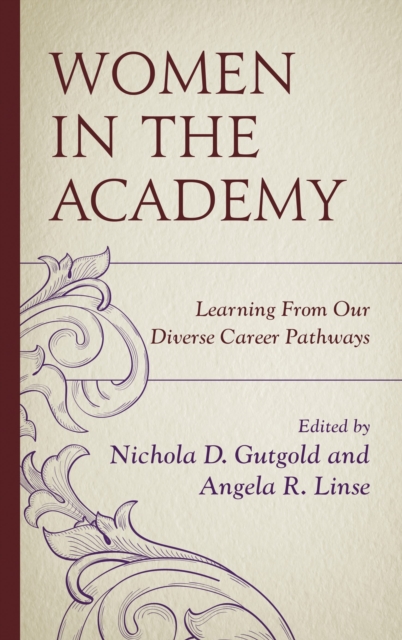
Women in the academy
This edited collection examines women's role in academies. Statistics show that women outnumber men in most universities and that women's pay still lags behind men's, but the numbers only hint at the broader story. Women in the Academy: Learning from our Diverse Career Pathways fills that gap with the stories of twelve women -- from part-time faculty to college presidents -- who answer key questions, such as why they pursued a career in the academy and how they handled childcare issues and sexism in the workplace. This book is recommended for burgeoning female scholars and for established scholars of any gender in women's studies, gender studies, higher education, and communication studies.
eBook

Investigating the Teaching Concerns of Engineering Educators
The teaching concerns of engineering educators offer one lens for thinking about how to support engineering educators' efforts to improve their teaching. In this study, we collected narrative accounts of teaching consultations between engineering educators and an instructional consultant. Transcripts of these accounts were coded for individual teaching concerns, which were then interpreted from the perspective of existing models and also aggregated into themes. We discuss our findings by using them to highlight ways in which engineering educators are already thinking effectively, to suggest how the adoption of innovation and professional problem‐solving can serve as promising frameworks for thinking about teaching activity, and to suggest that additional research on engineering teaching take advantage of distributed cognition models to truly understand how our students are taught.
Journal Article
Conclusion
Institutions of all types attend to their educational missions, but at a research university, the focus on good teaching feels countercultural. Teaching centers on research university campuses face unique challenges as they work to fulfill their mission of improving teaching and student learning. Institutional requests for faculty development programs that sponsor or support pedagogical innovations in general education, blended and online learning, first-year seminars, learning and teaching commons, and new classroom spaces have mushroomed over the last few years. The instructional consultants at the Schreyer Institute have implemented a variety of methods to increase faculty awareness and use of services. A key factor in the success of SciFri is building trust and community among faculty, all of whom are time-poor and overcommitted but care deeply about teaching. The common thread running through these narratives is the creativity and adaptability needed to make a teaching center flourish at a research university.
Book Chapter
Preparing Future Engineering Faculty Through Active Learning
This paper describes the development, presentation, evaluation, student feedback, and recommendations of a graduate level course for engineering students titled \"Active Learning in Engineering Education.\" The objective of the course was to provide engineering graduate students with information about the learning process and resources on teaching and academia to help them make informed decisions about teaching as a career and to help them be better teachers. We believe this course is unique because it provides a curriculum taught to graduate students by a graduate student. This work was funded by a Huckabay Teaching Fellowship, a program that provides support for teaching projects conducted by graduate students paired with mentors.1 I. Introduction Preparing engineering graduate students for a future in academia should include providing methods and support for teaching as well as guidance in research. While research guidance is typically provided within a department via a research advisor, teaching guidance can be provided at the college or inter-departmental level. Even though many campuses provide the opportunity for graduate teaching development at the university level (e.g., through campus teaching centers), it is also useful to approach graduate teaching development within an engineering context. Specific engineering examples of active learning help teaching assistants and graduate instructors understand how active learning can improve engineering student learning. Bonwell and Eison define active learning as “instructional activities involving students in doing things and thinking about what they are doing.”2 The work described here includes the development and presentation of a course on active learning for engineering graduate students. The course was developed with the support of a graduate teaching fellowship and the advice of mentors. Three of the motivating ideas inspiring the development and offering of this course in a graduate engineering curriculum are 1) to create a culture where talking about teaching is expected and useful; 2) to give engineering students access to a vocabulary for talking about education with members of other academic disciplines; and 3) to model active learning techniques and good teaching practices. The Huckabay fellowship program is part of the larger Preparing Future Faculty (PFF) program at the University of Washington (see web links for more information3,4). The Huckabay Teaching Fellowship was proposed by and awarded to Bates. Linse (Associate Director of the Proceedings of the 2003 American Society for Engineering Education Annual Conference & Exposition Copyright © 2003, American Society for Engineering Education
Conference Proceeding
Thermo Cd: An Electronic Text For The Introduction To Thermodynamics Course
Session 3213 Thermo-CD - An Electronic Text For The
Conference Proceeding

Settlement change documentation and analysis: A case study from the Mogollon region of the American Southwest
American archaeologists have been interested in changing patterns of prehistoric settlement for more than 50 years. Despite this interest, many settlement patterns remain poorly documented and unexplained. Adherence to the concepts of site and phase restrict the scales at which change is observed and explanations are sought. In this dissertation, I devise an alternative system for chronicling changes in prehistoric settlement. To justify the need for a new approach, I conduct an historical analysis of settlement research in a particular region, part of the Mogollon territory in New Mexico. The alternative strategy for settlement analysis differs from traditional approaches in three important ways. First, I alter the spatial scale of the unit of observation to the structure, the smallest unit of settlement in the area. Second, I examine data from a large area, which increases the sample size of available data and permits documentation of intraregional settlement variability. Third, I assign age-ranges to structures rather than sites, which improves the chronological resolution and makes possible identification of incremental, gradual, or short-term settlement change. This system for documenting settlement change permits me to use and make sense of settlement data from disparate sources for over 2000 excavated Mogollon structures. The utility of the approach is demonstrated when I use a portion of the newly compiled database to evaluate one of the most widely accepted settlement patterns in the study area—the abandonment of inaccessible landforms for accessible landforms at around A.D. 550. I evaluate whether the settlement shift occurred as proposed and investigate variables implicit in the definitions of accessible and inaccessible landforms. Although the settlement pattern is not supported by available data, two other settlement changes occur later in the temporal sequence. Additional analyses show that accessibility is a multivariate that includes relative elevation, distance to water, and possibly additional geomorphic variables. This research has implications for explanation of settlement changes within the Mogollon region and elsewhere settlement patterns are identified using a phase chronology and site-scale data collection. The approach is applicable in any area with discrete and archaeologically visible units of settlement.
Dissertation
Heat Transfer Online
Main Menu Session 3413 Heat Transfer On-Line William B. Baratuci, Angela R. Linse University of Washington Department of Chemical Engineering / Center for Engineering Learning and Teaching
Conference Proceeding
Exploring The Teaching Challenges Of Engineering Faculty: What Do They Really Want To Know?
The engineering education community currently focuses a great deal of attention on helping engineering educators adopt effective teaching practices. While strategies in current use have had an impact on engineering teaching and learning, the persistence of engineering courses in which lecture is the primary teaching method indicates that there is room for improvement. We suggest that the success of current strategies is limited by the knowledge we have about the concerns of engineering educators. To address this, we are conducting research on engineering educator teaching challenges. To collect data, we are tapping a unique source — a program that has been highly successful in supporting engineering faculty as they implement effective instructional methods in their courses. This paper reports on this work to date. Introduction Ensuring excellence in engineering education is an important goal (National Science Foundation & U.S. Department of Education, 1980; National Research Council, 1995, 1996; National Science Foundation, 1996). In response, the engineering education community has become increasingly committed and responsive to requests for changes in the way that we educate and prepare engineers for the future. For example, a number of organizations and stakeholders have sponsored initiatives focused on defining new goals, developing materials, and providing resources. Such efforts include NEEDS – the National Engineering Education Database (a digital library of educational technologies), the NSF Course Curriculum and Laboratory Improvement program (that supports resource development projects), the new ABET outcome-based accreditation policy, and the NSF Coalitions program (that brought together institutions around coalition-specific missions and large-scale curricular reform). Work directly with faculty has been a key element of efforts to enhance engineering education. Such efforts to support faculty with their teaching activities can be collectively termed instructional development. Strategies for supporting faculty include workshops, one-on-one consultations, support at campus-wide centers, support at engineering specific centers for teaching and learning, and creation of large scale communities (e.g., the coalitions). There are clearly a number of tradeoffs among these various strategies. Workshops are a common practice in instructional development; however their success has been limited (Mann, 2001). Although individual consultations may be more effective for fostering lasting change than workshops (Gillespie et al., 2002; Lewis and Povlacs Lunde, 2001), workshops can reach much larger numbers of faculty. Although many universities have a campus-wide instructional development centers offering a variety of services, relatively few engineering faculty participate in campus-wide instructional development programs, in part because they are perceived as irrelevant or useless (Brent et Felder, 1999). Thus, campus teaching centers have had relatively little impact on how engineering faculty teach (Brent et al., 1999) and the practice of spending time and effort
Conference Proceeding
Engineering Change
Calls for change abound in engineering education. The community is responding with innovations at many different levels. The effectiveness and long-term \"staying power\" of any new development is likely to increase if the innovators are explicit about the model of change they are adopting. Many such models are relevant for the engineering education community. In this paper we present a list of change models, describe three of them in detail, and briefly describe how we are conceptualizing one approach to change we are taking in the newly funded Center for the Advancement of Engineering Education. Introduction Calls for change in engineering education are a common theme among leaders in engineering education (Bordogna, 2003; Fromm, 2003; Jackson, 2003; Wulf, 1998, 2002; Wulf and Fisher, 2002). One of the authors of this article, Karl Smith, began exploring changes in engineering education about 10 years ago and gave a series of keynote presentations with titles such as “Engineering education: Pressures to change, current trends and future directions.” Smith listed the pressures to change from the following organizations and groups at the Australasian Engineering Education Conference in 1998: • Legislators (in public institutions) • National Science Foundation: Career Development Award, Shaping the Future • Professional Accreditation – ABET: Assessment, Synthesis & Design • Financial – especially the growing gap between the falling public support and the rising costs • Employers and Workforce Development Agencies: Workplace Basics, Global Engineer • University Administration Professional Organizations: Renewing the Covenant, Greater Expectations • Boyer Commission Reports: Educating Undergraduates in the Research Universities, Scholarship Reconsidered • Educational Research: Active, Interactive & Cooperative Learning, Inquiry & Problem- Based Learning Comparison of the old and new paradigms of engineering education also implies and provides grounds for change. In 1991 Johnson, Johnson & Smith provided the initial comparison of old and new paradigms of engineering education. Smith and Waller (1997) updated the comparison and both have become widely-cited in the engineering education community (Table 1). Proceedings of the 2004 American Society for Engineering Education Annual Conference & Exposition Copyright © 2004, American Society for Engineering Education
Conference Proceeding
Preparing Future Engineering Faculty: Initial Outcomes Of An Innovative Teaching Portfolio Program
Engineering graduate students have few opportunities to explore and develop scholarly approaches to teaching compared to graduates in other fields. As part of an NSF funded teaching and learning center, we have developed the Engineering Teaching Portfolio Program (ETPP). Our initial step has been to design the program and conduct a formal study of how two independent groups experienced the program. We are currently using the data to gain insight on the impact of the program and learn how to improve it. We demonstrate the experiences of participants and the impacts of the program through case studies of participants. Introduction Engineering graduate students have few opportunities explore and develop scholarly approaches to teaching compared to graduates in other fields. There are at least two reasons to support this population in getting more preparation on teaching. First, graduate students represent the future faculty in engineering education. Thus, helping these students become more effective educators provides one means of promoting effective teaching in engineering (a widely accepted national goal). Second, teaching is an important aspect of the faculty career. Providing engineering graduate students with opportunities to focus on teaching is one way to prepare future faculty for their faculty career (also a widely accepted national goal). In this paper, we focus on a program we have created that addresses these two observations. This program, the Engineering Teaching Portfolio Program, is devoted to helping engineering graduate students advance their teaching ability. The Engineering Teaching Portfolio Program (ETPP) is only one of many efforts of the National Science Foundation (NSF) Center for the Advancement of Engineering Education (CAEE). The ETPP is the primary program through which the CAEE achieves one of the primary goals of the National Science Foundation Centers for Learning and Teaching program: to provide “professional development for graduate and postdoctoral students in STEM disciplines to develop their skills as educators”1. The most important outcome for the graduate students who participate in the ETPP is creation of a complete draft of a teaching portfolio, which includes a teaching philosophy, a diversity statement, and 2-3 annotated artifacts. The program also provides a forum for participants to discuss teaching issues and an opportunity to develop a teaching-focused peer network. Proceedings of the 2004 American Society for Engineering Education Annual Conference & Exposition Copyright © 2004, American Society for Engineering Education
Conference Proceeding