
Catalogue Search | MBRL


Are you sure you want to remove the book from the shelf?

{{itemTitle}}
146
result(s) for
"Lippe, Richard"
Sort by:

Robin Wood on the horror film : collected essays and reviews
Robin Wood's writing on the horror film, published over five decades, collected in one volume.
Robin Wood—one of the foremost critics of cinema—has laid the groundwork for anyone writing about the horror film in the last half-century. Wood's interest in horror spanned his entire career and was a form of popular cinema to which he devoted unwavering attention. Robin Wood on the Horror Film: Collected Essays and Reviews compiles over fifty years of his groundbreaking critiques.
In September 1979, Wood and Richard Lippe programmed an extensive series of horror films for the Toronto International Film Festival and edited a companion piece: The American Nightmare: Essays on the Horror Film — the first serious collection of critical writing on the horror genre. Robin Wood on the Horror Film now contains all of Wood's writings from The American Nightmare and nearly everything else he wrote over the years on horror—published in a range of journals and magazines—gathered together for the first time. It begins with the first essay Wood ever published, \"Psychoanalysis of Psycho, \" which appeared in 1960 and already anticipated many of the ideas explored later in his touchstone book, Hitchcock's Films. The volume ends, fittingly, with, \"What Lies Beneath?, \" written almost five decades later, an essay in which Wood reflects on the state of the horror film and criticism since the genre's renaissance in the 1970s. Wood's prose is eloquent, lucid, and convincing as he brings together his parallel interests in genre, authorship, and ideology. Deftly combining Marxist, Freudian, and feminist theory, Wood's prolonged attention to classic and contemporary horror films explains much about the genre's meanings and cultural functions.
Robin Wood on the Horror Film will be an essential addition to the library of anyone interested in horror, science fiction, and film genre.
eBook

Arthur Penn
Arthur Penn—director of The Miracle Worker, Bonnie and Clyde, Alice's Restaurant, and Little Big Man —was at the height of his career when Robin Wood's analysis of the American director was originally published in 1969. Although Wood then considered Penn's career only through Little Big Man, Arthur Penn remains the most insightful discussion of the director yet published. In this new edition, editor Barry Keith Grant presents the full text of the original monograph along with additional material, showcasing Wood's groundbreaking and engaging analysis of the director. Of all the directors that Wood profiled, Penn is the only one with whom he developed a personal relationship. In fact, Penn welcomed Wood on the set of Little Big Man (1969), where he interviewed the director during production of the film and again years later when Penn visited Wood at home. Both interviews are included in this expanded edition of Arthur Penn, as are five other pieces written over a period of sixteen years, including the extended discussion of The Chase that was the second chapter of Wood's later important book Hollywood from Vietnam to Reagan. The volume also includes a complete filmography and a foreword by Barry Keith Grant. The fourth classic monograph by Wood to be republished by Wayne State University Press, this volume will be welcomed by film scholars and readers interested in American cinematic and cultural history.
eBook

Hitchcock's Vertigo
Making the event even more an occasion, Kim Novak, providing genuine movie star glamour, attended the screening, introducing the film and holding a Q & A session afterwards. Vertigo is arguably Hitchcock's masterpiece and was named the greatest film of all time by a Sight and Sound 2012 polling. Since the early 60s, I Iitchcock has been internationally recognized as an auteur. According to historian Dan Auiler, Hitchcock screened The Eddy Duchin Story in the fall of 1956 which was roughly six months before Miles quit the project. The revival of the film should have led seemingly to an appreciative response to Novak's indelible contribution to the film's emotional impact and it's devastating resolution; instead, Novak is recognized for her movie star status.
Magazine Article
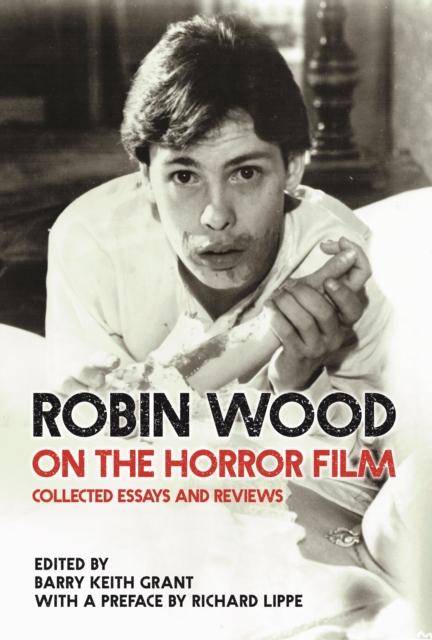
Robin Wood On the Horror Film
Robin Wood-one of the foremost critics of cinema-has laid the groundwork for anyone writing about the horror film in the last half-century. Wood's interest in horror spanned his entire career and was a form of popular cinema to which he devoted unwavering attention. Robin Wood on the Horror Film: Collected Essays and Reviews compiles over fifty years of his groundbreaking critiques. In September 1979, Wood and Richard Lippe programmed an extensive series of horror films for the Toronto International Film Festival and edited a companion piece: The American Nightmare: Essays on the Horror Film - the first serious collection of critical writing on the horror genre. Robin Wood on the Horror Film now contains all of Wood's writings from The American Nightmare and nearly everything else he wrote over the years on horror-published in a range of journals and magazines-gathered together for the first time. It begins with the first essay Wood ever published, Psychoanalysis of Psycho, which appeared in 1960 and already anticipated many of the ideas explored later in his touchstone book, Hitchcock's Films. The volume ends, fittingly, with, What Lies Beneath?, written almost five decades later, an essay in which Wood reflects on the state of the horror film and criticism since the genre's renaissance in the 1970s. Wood's prose is eloquent, lucid, and convincing as he brings together his parallel interests in genre, authorship, and ideology. Deftly combining Marxist, Freudian, and feminist theory, Wood's prolonged attention to classic and contemporary horror films explains much about the genre's meanings and cultural functions. Robin Wood on the Horror Film will be an essential addition to the library of anyone interested in horror, science fiction, and film genre.
eBook
Lars Von Trier an Melancholia
[...]the Overture contains an overhead shot of Dunst wearing a wedding dress and holding a bridal bouquet as she floats in water, surrounded by greenery; the shot and others connect her to nature and death and reinforce the feel of a decadent 19th century Romanticism. In Part One, Von Trier alternates screwball comedy, such as Justine's at times seemingly absurdist behaviour, Gaby's unexpected speech, Claire's husband John's unsuccessful attempts to restore order to the evening's proceedings, with Justine's frequent displays of anxiety and desperation.2 The unease this produces is enhanced by his continual use of a hand held camera and editing which further unsettles the narrative's flow. Breaking the Waves, Dancer in the Dark and Melancholia share the concept of two female characters who are opposites in their respective personalities: in the first, Emily Watson, imaginative and romantic, is contrasted to Katrin Cartlidge, her rational sister-in-law; in the second, Bjork's self-sacrificing mother exists in relation to Catherine Deneuve's sceptical co-worker and friend; in Melancholia Kirsten Dunst's rebelliousness poses a challenge Charlotte Gainsbourg's acquiescence to societal dictates. [...]he selected images that would become an Overture. 2 In an interview, Cineplex Magazine Volume 121 Number 11, 201 1, Kirsten Dunst comments on Von Trier's preparation for the actors: \"He had us watch [lngmar Bergman's] Persona and he wanted us to watch The Philadelphia Story.\"
Journal Article
Maximilian Schell
Perhaps because of his casting in diverse roles pertaining to WWII, for example, a war criminal in Man in a Glass Booth, or a resistance fighter in Julia, he evokes the Germany of the war and its aftermath, and the conflicted feelings associated with a man of Austrian descent in that time frame. In CineAction #15, Winter 88/89, we co-authored an article entitled, \"Falling In Love Again: Notes on Film Criticism and Marlene\" which offers an analysis of Schell's Marlene (1984), a documentary on the career and star image of Marlene Dietrich. The fact that both are professional actors who had successful careers in Europe and America contributes to the complex and rich meditation that Marlene offers, on both performance and the position of the international star in the preand post -war years.
Journal Article