
Catalogue Search | MBRL


Are you sure you want to remove the book from the shelf?

{{itemTitle}}
73,037
result(s) for
"Liu, Yi-yi"
Sort by:


A code within the genetic code: codon usage regulates co-translational protein folding
The genetic code is degenerate, and most amino acids are encoded by two to six synonymous codons. Codon usage bias, the preference for certain synonymous codons, is a universal feature of all genomes examined. Synonymous codon mutations were previously thought to be silent; however, a growing body evidence now shows that codon usage regulates protein structure and gene expression through effects on co-translational protein folding, translation efficiency and accuracy, mRNA stability, and transcription. Codon usage regulates the speed of translation elongation, resulting in non-uniform ribosome decoding rates on mRNAs during translation that is adapted to co-translational protein folding process. Biochemical and genetic evidence demonstrate that codon usage plays an important role in regulating protein folding and function in both prokaryotic and eukaryotic organisms. Certain protein structural types are more sensitive than others to the effects of codon usage on protein folding, and predicted intrinsically disordered domains are more prone to misfolding caused by codon usage changes than other domain types. Bioinformatic analyses revealed that gene codon usage correlates with different protein structures in diverse organisms, indicating the existence of a codon usage code for co-translational protein folding. This review focuses on recent literature on the role and mechanism of codon usage in regulating translation kinetics and co-translational protein folding.
5xoCminnRXUHneYwYekFPK
Video abstract
Journal Article
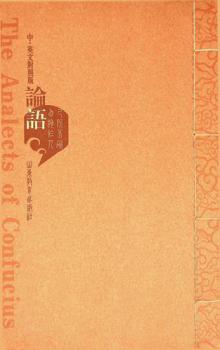
Lun yu = The Analects of Confucius
Ben shu cai yong ying han dui zhao de xing shi shou lu. shi zhong guo gu dai ru jia de yi bu zhong yao jing dian, Shi kong zi di zi ji qi zai chuan di zi guan yu kong zi yan xing de ji lu.
Book

Solution structures of multiple G-quadruplex complexes induced by a platinum(II)-based tripod reveal dynamic binding
DNA G-quadruplexes are not only attractive drug targets for cancer therapeutics, but also have important applications in supramolecular assembly. Here, we report a platinum(II)-based tripod (Pt-tripod) specifically binds the biological relevant hybrid-1 human telomeric G-quadruplex (Tel26), and strongly inhibits telomerase activity. Further investigations illustrate Pt-tripod induces the formation of monomeric and multimeric Pt-tripod‒Tel26 complex structures in solution. We solve the 1:1 and the unique dimeric 4:2 Pt-tripod–Tel26 complex structures by NMR. The structures indicate preferential binding of Pt-tripod to the 5ʹ-end of Tel26 at a low Pt-tripod/Tel26 ratio of 0–1.0. After adding more Pt-tripod, the Pt-tripod binds the 3ʹ-end of Tel26, unexpectedly inducing a unique dimeric 4:2 structure interlocked by an A:A non-canonical pair at the 3ʹ-end. Our structures provide a structural basis for understanding the dynamic binding of small molecules with G-quadruplex and DNA damage mechanisms, and insights into the recognition and assembly of higher-order G-quadruplexes.
DNA G-quadruplexes occur in oncologically relevant regions, thus are interesting targets for cancer research and treatment. Here, the authors solved the 1:1 and 4:2 (ligand/DNA) NMR structures of human telomeric DNA in complex with platinum(II)-tripod ligand and show that the binding is dynamic.
Journal Article

\الحزام والطريق\ : مبادرة نحو عولمة شاملة
هذا الكتاب هو الأول من نوعه الذي يتناول مفهوم العولمة الشاملة في ضوء مبادرة \"الحزام والطريق\" الصينية التي أعلن عنها الرئيس الصيني عام 2013، وهو يضم تفسيرات شاملة للعولمة الاقتصادية التي تعد المحور الأساسي لمفهوم العولمة الشاملة، ويستعرض هذا الكتاب في قسمين رئيسيين، الخلفية التاريخية لمبادرة الحزام والطريق، منذ نشأة طريق الحرير القديم، كما يتناول مفهوم العولمة الاقتصادية وقيودها، والتوسع الاقتصادي العالمي قبل الحرب العالمية الثانية، وحدود العولمة الاقتصادية وإمكاناتها، بالإضافة إلى تغيرات نمط الاقتصاد العالمي، وتحولات التنمية الصينية، وفكر ودلالة بناء \"الحزام والطريق\"، بما في ذلك الدلالة الجغرافية والاقتصادية والتجارية وغيرها، كما يتناول العلاقة بين بناء \"الحزام والطريق\" و\"استراتيجية التنمية الإقليمية\"، وبناء ممرات نقل برية عابرة للحدود، وصناعة نموذج \"استراتيجية الانطلاق العالمية\"، وبناء منصة للانفتاح على العالم، بالإضافة إلى التعاون الثقافي بين البلدان الواقعة على طول الحزام والطريق. أما القسم الثاني من الكتاب فيضم عددا من الدراسات والبحوث الأكاديمية التي تتناول المحتوى العلمي لمبادرة \"الحزام والطريق\" وتعزيز السلام والتنمية العالمية من خلال \"روح طريق الحرير\" وكذلك نقاط سوء الفهم حول المبادرة، بالإضافة إلى لقاءات مع مراسلي أكبر الشبكات الإعلامية الصينية، التي تناولت قيادة حقبة جديدة من العولمة الشاملة من أجل بناء هيكل اقتصادي عالمي أكثر توازنا وشمولا.
Book

The relationship between live streamers’ self-disclosure and consumers’ purchase intention: The parallel mediating role of psychological distance and perceived homophily
As live streaming commerce continues to expand rapidly, the role of live streamers has emerged as a crucial factor. In an online environment with increasingly fierce competition and increasingly rich emotional needs of consumers, live streamers have gradually shown more self-disclosure to attract more consumers’ attention. While existing studies have indicated that the communication styles adopted by live streamers constitute a key factor influencing consumers’ purchasing behaviors, little is known about live streamers’ self-disclosure, a specific communication mechanism, is associated with consumers’ purchase intention, as well as the roles that psychological distance and perceived homophily between consumers and live streamers play in this process. Drawing on Social Penetration Theory, this study investigates the association between live streamers’ self-disclosure and consumers’ purchase intention, and analyzes the parallel mediating roles of psychological distance and perceived homophily in this relationship. The investigation employs regression analysis to examine 306 survey responses gathered from Chinese consumers. The results reveal that live streamers’ self-disclosure is positively associated with consumers’ purchase intention by diminishing the psychological distance between live streamers and consumers and enhancing perceived homophily; notably, psychological distance and perceived homophily exert significant parallel mediating effects in the association between live streamers’ self-disclosure and consumers’ purchase intention. Live streamers’ self-disclosure is linked to reduced audience psychological defensiveness via increased closeness, and to stronger identification through heightened similarity perception; both pathways are equally important in relation to higher purchase intention. This study contributes to a better understanding of how live streamers’ self-disclosure in live streaming contexts relates to consumers’ purchase intention, as well as the roles of psychological distance and perceived homophily between consumers and live streamers. It also provides a theoretical basis and practical implications for live streamers to engage in positive self-disclosure, to build closer connections and identification with consumers by reducing psychological distance and enhancing perceived homophily, and ultimately to support higher consumers’ purchase intention as well as the competitiveness of e-commerce platforms and enterprises.
Journal Article

تعرف إلى عادات الشعب الصيني
يبين هذا الكتاب الاختلافات الثقافية بين الصينيين والغربيين، لكنه يذكرنا أيضاً بوجود الكثير من أوجه الشبه. فنحن نملك جميعاً أحلاماً وطموحات ورغبات، ونحتاج جميعاً إلى أن نحظى بالحب والاحترام. ونريد جميعاً السلام والاستقرار، وكذلك حياة أفضل لأنفسنا ولعائلاتنا، كل شعار ألعاب بيجيغ الأولمبية لسنة 2008 هو عالم واحد، حلم واحد وهذا يشير إلى أن الأشخاص من ثقافات مختلفة يملكون العديد من الأهداف نفسها، وإنما يستخدمون طرقاً مختلفة لبلوغها.
Book

The Protective Effects of Osteocyte‐Derived Extracellular Vesicles Against Alzheimer's Disease Diminished with Aging
Both Alzheimer's disease (AD) and osteoporosis (OP) are common age‐associated degenerative diseases and are strongly correlated with clinical epidemiology. However, there is a lack of clear pathological relationship between the brain and bone in the current understanding. Here, it is found that young osteocyte, the most abundant cells in bone, secretes extracellular vesicles (OCYYoung‐EVs) to ameliorate cognitive impairment and the pathogenesis of AD in APP/PS1 mice and model cells. These benefits of OCYYoung‐EVs are diminished in aged osteocyte‐derived EVs (OCYAged‐EVs). Based on the self‐constructed OCY‐EVs tracer transgenic mouse models and the in vivo fluorescent imaging system, OCY‐EVs have been observed to be transported to the brain under physiological and pathological conditions. In the hippocampal administration of Aβ40 induced young AD model mice, the intramedullary injection of Rab27a‐shRNA adenovirus inhibits OCYYoung‐EVs secretion from bone and aggravates cognitive impairment. Proteomic quantitative analysis reveals that OCYYoung‐EVs, compared to OCYAged‐EVs, enrich multiple protective factors of AD pathway. The study uncovers the role of OCY‐EV as a regulator of brain health, suggesting a novel mechanism in bone‐brain communication. It is found that the osteocyte‐derived extracellular vesicles (OCY‐EVs) isolated from young osteocytes can ameliorate cognitive impairment and pathogenies of AD, but not OCY‐EVs isolated from aged osteocytes. OCY‐EV can transfer to the brain under physiological and pathological conditions. The study uncovers the role of OCY‐EVs as a regulator of brain, suggesting a novel mechanism in bone‐brain communication.
Journal Article

Contribution of semi-arid ecosystems to interannual variability of the global carbon cycle
The unusually large land carbon sink reported in 2011 can mostly be attributed to semi-arid vegetation growth in the Southern Hemisphere following increased rainfall and long-term greening trends.
Australia driving carbon uptake
Land and ocean take up around half of the annual anthropogenic carbon emissions, and a thorough understanding of this process is important for predicting future greenhouse gas concentrations and thus climate change. This study investigates the largest uptake of land carbon since atmospheric CO
2
measurements began in 1958. Three independent methods of global carbon budget determination point to an exceptionally large land carbon sink in response to extraordinary La Niña rainfall in semi-arid regions in the Southern Hemisphere, with almost 60% of carbon uptake attributed to the Australian ecosystem and an increase in the sensitivity of continental net carbon uptake to precipitation. Tropical rainforests have been thought to dominate the terrestrial processes driving global carbon cycle interannual variability, but this work suggests that semi-arid biomes might become the dominant drivers in future.
The land and ocean act as a sink for fossil-fuel emissions, thereby slowing the rise of atmospheric carbon dioxide concentrations
1
. Although the uptake of carbon by oceanic and terrestrial processes has kept pace with accelerating carbon dioxide emissions until now, atmospheric carbon dioxide concentrations exhibit a large variability on interannual timescales
2
, considered to be driven primarily by terrestrial ecosystem processes dominated by tropical rainforests
3
. We use a terrestrial biogeochemical model, atmospheric carbon dioxide inversion and global carbon budget accounting methods to investigate the evolution of the terrestrial carbon sink over the past 30 years, with a focus on the underlying mechanisms responsible for the exceptionally large land carbon sink reported in 2011 (ref.
2
). Here we show that our three terrestrial carbon sink estimates are in good agreement and support the finding of a 2011 record land carbon sink. Surprisingly, we find that the global carbon sink anomaly was driven by growth of semi-arid vegetation in the Southern Hemisphere, with almost 60 per cent of carbon uptake attributed to Australian ecosystems, where prevalent La Niña conditions caused up to six consecutive seasons of increased precipitation. In addition, since 1981, a six per cent expansion of vegetation cover over Australia was associated with a fourfold increase in the sensitivity of continental net carbon uptake to precipitation. Our findings suggest that the higher turnover rates of carbon pools in semi-arid biomes are an increasingly important driver of global carbon cycle inter-annual variability and that tropical rainforests may become less relevant drivers in the future. More research is needed to identify to what extent the carbon stocks accumulated during wet years are vulnerable to rapid decomposition or loss through fire in subsequent years.
Journal Article