
Catalogue Search | MBRL


Are you sure you want to remove the book from the shelf?

{{itemTitle}}
40
result(s) for
"Livingstone, Rodney"
Sort by:

Theodor W. Adorno
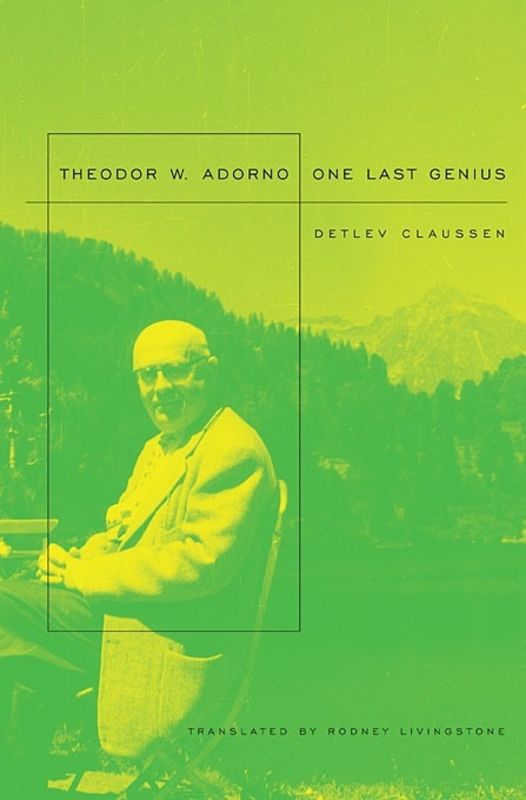
He was famously hostile to biography as a literary form. And yet this life of Adorno by one of his last students is far more than literary in its accomplishments, giving us our first clear look at how the man and his moment met to create \"critical theory.\" An intimate picture of the quintessential twentieth-century transatlantic intellectual, the book is also a window on the cultural ferment of Adorno's day—and its ongoing importance in our own. The biography begins at the shining moment of the German bourgeoisie, in a world dominated by liberals willing to extend citizenship to refugees fleeing pogroms in Eastern Europe. Detlev Claussen follows Theodor Wiesengrund Adorno (1903–1969) from his privileged life as a beloved prodigy to his intellectual coming of age in Weimar Germany and Vienna; from his exile during the Nazi years, first to England, then to the United States, to his emergence as the Adorno we know now in the perhaps not-so-unlikely setting of Los Angeles. There in 1943 with his collaborator Max Horkheimer, Adorno developed critical theory, whose key insight—that to be entertained is to give one's consent—helped define the intellectual landscape of the twentieth century. In capturing the man in his complex relationships with some of the century's finest minds—including, among others, Arnold Schoenberg, Walter Benjamin, Thomas Mann, Siegfried Kracauer, Georg Lukács, Hannah Arendt, and Bertolt Brecht—Claussen reveals how much we have yet to learn from Theodor Adorno, and how much his life can tell us about ourselves and our time.
eBook

Distant love : personal life in the global age
Love and family life in the global age: grandparents in Salonika and their grandson in London speak together every evening via Skype. A U.S. citizen and her Swiss husband fret over large telephone bills and high travel costs. A European couple can finally have a baby with the help of an Indian surrogate mother.
Book

Form in the New Music
Rodney Livingstone's translation of Theodor W. Adorno's \"Form in the New Music,\" which was originally published as \"Form in der neuen Musik\" in 1966. In it, he discusses the meaning of form as it pertains to contemporary music. He asserts that prior to the contemporary era, the simplest tonal relations as concentrated in the cadence were the prototypes of what unfolded in the form which was itself the synthesis of form and content. The weak point of an autonomous form arising purely from the matter itself, stripped of every borrowing, was the recapitulation. In the later phases of musical empancipation, following the demise of tonality, the recapitulation came into open conflict with an uncommonly intensified sensitivity to what was materially appropriate. In the context of the difficulties of formal construction in contemporary music, the highly legitimate resistance to abstract formal constants has led to the tendency of form to disintegrate.
Journal Article

Theodor W. Adorno
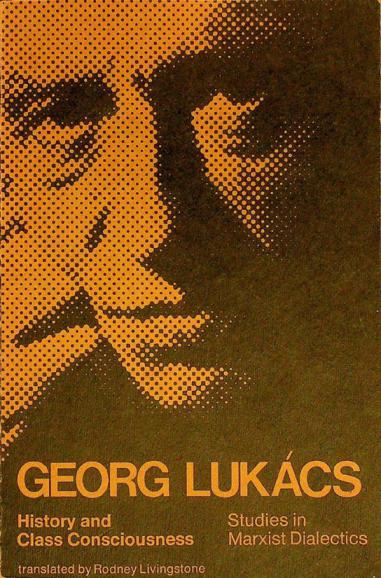
This book gives us our first clear look at how the man and his moment met to create \"critical theory.\" An intimate picture of the quintessential twentieth-century transatlantic intellectual, the book is also a window on the cultural ferment of Adorno's day-and its ongoing importance in our own.
eBook


Not all of us are obsessed by sport
Sir, I trust I am not the only reader to have been appalled by Anna Zoebeley's plea (Letters, May 10) for greater coverage of the snooker championship.
Newspaper Article