
Catalogue Search | MBRL


Are you sure you want to remove the book from the shelf?

{{itemTitle}}
323
result(s) for
"Lock, James"
Sort by:


Exploration of interoceptive capabilities in avoidant/restrictive food intake disorder and anorexia nervosa
Objective
This proof-of-concept study explores the role of aberrant interoception as a possible mechanism underlying restrictive eating symptoms in avoidant/restrictive food intake disorder (ARFID) compared to anorexia nervosa (AN) and healthy comparisons (HC).
Method
We report preliminary normative adolescent interoceptive data in HCs (n = 100) compared to adolescents with ARFID (n = 30) and AN (N = 23). Adolescents (12–18) participated in a one-time virtual visit to assess heartrate guessing accuracy (interoceptive accuracy), correlation between confidence in heartrate guess and accuracy (interoceptive awareness), and self-reported interoception (interoceptive sensibility).
Results
HC adolescents had comparable interoceptive outcomes relative to published adult norms, consistent with existing literature. Data suggest that adolescents with ARFID have poor heartbeat guessing accuracy and experience challenges deciphering interoceptive signals, possibly contributing to symptoms. While adolescents with AN have
greater
heartbeat guessing accuracy, they cite difficulty trusting body cues, perhaps contributing to their lack of confidence in interoceptive cue detection.
Conclusions
Preliminary results reflect differences in interoception between the three groups.
Plain English summary
In this study, we wanted to understand how individuals with restrictive eating disorders, like avoidant/restrictive food intake disorder (ARFID) and anorexia nervosa (AN), sense and respond to different signals in their body, such as heartbeat. This process is called interoception. Difficulty sensing body signals can lead to various mental health disorders, such as eating disorders. We asked adolescent participants without an eating disorder and adolescents with ARFID and AN to guess their heartbeat while wearing a finger pulse oximeter, to track interoceptive accuracy (or how accurate their heartbeat guesses were). We also measured their self-reported sense of interoception and overall metacognitive awareness of their ability to accurately interpret body signals. Our data replicate findings in existing healthy teenagers. For teens with eating disorders, those with ARFID had difficulty with interoceptive accuracy and listening to their bodies, but they had good awareness overall of their accuracy. Teens with AN had better accuracy but were more unsure about trusting their body and body signaling. Overall, our initial findings suggest that how individuals with eating disorders sense, interpret, and respond to body signals might help explain their eating habits. More research is needed in this area.
Journal Article

Eating disorders in children and adolescents : a clinical handbook
\"Eating disorders typically first appear during childhood and adolescence. Despite this early age of onset, edited volumes on eating disorders have not focused on this age cohort. One of the primary purposes of this book is to redress this imbalance and target the unique issues that pertain to the development, assessment, and treatment of eating disorders in children and adolescents, a period of heightened vulnerability to the these disorders and to the potential damage they can cause\"--Provided by publisher.
Book

Pilot study of responsive nucleus accumbens deep brain stimulation for loss-of-control eating
Cravings that precede loss of control (LOC) over food consumption present an opportunity for intervention in patients with the binge eating disorder (BED). In this pilot study, we used responsive deep brain stimulation (DBS) to record nucleus accumbens (NAc) electrophysiology during food cravings preceding LOC eating in two patients with BED and severe obesity (trial registration no. NCT03868670). Increased NAc low-frequency oscillations, prominent during food cravings, were used to guide DBS delivery. Over 6 months, we observed improved self-control of food intake and weight loss. These findings provide early support for restoring inhibitory control with electrophysiologically-guided NAc DBS. Further work with increased sample sizes is required to determine the scalability of this approach.
Nucleus accumbens, low-frequency, responsive deep brain stimulation improved self-control of food intake and weight loss in two patients with binge eating disorder and severe obesity
Journal Article


Understanding outcomes in family-based treatment for adolescent anorexia nervosa: a network approach
Family-based treatment (FBT) is the first-line treatment for adolescent anorexia nervosa (AN). Yet, remission is not achieved for about half of adolescents with AN receiving FBT. Understanding patient- and parent-level factors that predict FBT response may inform treatment development and improve outcomes.
Network analysis was used to identify the most central symptoms of AN in adolescents who completed the Eating Disorder Examination (EDE) prior to FBT (
= 409). Bridge pathways between adolescent AN and parental self-efficacy in facilitating their child's recovery from AN were identified in a subset of participants (
= 184). Central and bridge symptoms were tested as predictors of early response (⩾2.4 kg weight gain by the fourth session of FBT) and end-of-treatment weight restoration [⩾95% expected body weight (EBW)] and full remission (⩾95% EBW and EDE score within 1 standard deviation of norms).
The most central symptoms of adolescent AN included desiring weight loss, dietary restraint, and feeling fat. These symptoms predicted early response, but not end-of-treatment outcomes. Bridge symptoms were parental beliefs about their responsibility to renourish their child, adolescent discomfort eating in front of others, and adolescent dietary restraint. Bridge symptoms predicted end-of-treatment weight restoration, but not early response nor full remission.
Findings highlight the prognostic utility of core symptoms of adolescent AN. Parent beliefs about their responsibility to renourish their child may maintain associations between parental self-efficacy and AN psychopathology. These findings could inform strategies to adapt FBT and improve outcomes.
Journal Article

Aberrant impulse control circuitry in obesity
The ventromedial prefrontal cortex (vmPFC) to nucleus accumbens (NAc) circuit has been implicated in impulsive reward-seeking. This disinhibition has been implicated in obesity and often manifests as binge eating, which is associated with worse treatment outcomes and comorbidities. It remains unclear whether the vmPFC-NAc circuit is perturbed in impulsive eaters with obesity. Initially, we analyzed publicly available, high-resolution, normative imaging data to localize where vmPFC structural connections converged within the NAc. These structural connections were found to converge ventromedially in the presumed NAc shell subregion. We then analyzed multimodal clinical and imaging data to test the a priori hypothesis that the vmPFC-NAc shell circuit is linked to obesity in a sample of female participants that regularly engaged in impulsive eating (i.e., binge eating). Functionally, vmPFC-NAc shell resting-state connectivity was inversely related to body mass index (BMI) and decreased in the obese state. Structurally, vmPFC-NAc shell structural connectivity and vmPFC thickness were inversely correlated with BMI; obese binge-prone participants exhibited decreased vmPFC-NAc structural connectivity and vmPFC thickness. Finally, to examine a causal link to binge eating, we directly probed this circuit in one binge-prone obese female using NAc deep brain stimulation in a first-in-human trial. Direct stimulation of the NAc shell subregion guided by local behaviorally relevant electrophysiology was associated with a decrease in number of weekly episodes of uncontrolled eating and decreased BMI. This study unraveled vmPFC-NAc shell circuit aberrations in obesity that can be modulated to restore control over eating behavior in obesity.
Journal Article

National implementation of guided self-help family-based treatment for youth with eating disorders: a study protocol
Background
Guided self-help family-based treatment (GSH-FBT) is emerging as a promising, more efficient alternative to traditional family-based treatment (FBT). The present study is designed to examine the real-world implementation of GSH-FBT at pediatric treatment sites across nine provinces in Canada.
Methods
Implementation teams at each site consisting of a GSH-FBT coach, a medical provider, and a program administrator will be formed. Clinician coaches will be trained in this new modality and supported with weekly GSH-FBT consultation. Each site will recruit ten families with an adolescent with anorexia nervosa and the parents will undergo ten virtual GSH-FBT sessions. The implementation approach will be evaluated using qualitative and quantitative methods. Outcomes of interest include (1) treatment fidelity, (2) treatment wait times, (3) change in adolescent symptoms and parent/caregiver self-efficacy, (4) change in provider readiness, attitudes, and confidence towards the intervention, and (5) the overall experience of the implementation of the intervention from the perspective of the provider teams, and participant families.
Discussion
The findings of this study will help to identify factors important to the acceptability and implementation of GSH-FBT in real-world clinical settings.
Trial registration
This study was first registered with clinicaltrials.gov (registration # NCT06851273) on February 12, 2025 (url:
https://clinicaltrials.gov/study/NCT06851273?id=NCT06851273&rank=1
).
Journal Article

Attention networks in adolescent anorexia nervosa
Anorexia nervosa (AN) usually develops during adolescence when considerable structural and functional brain changes are taking place. Neurocognitive inefficiencies have been consistently found in adults with enduring AN and were suggested to play a role in maintaining the disorder. However, such findings are inconsistent in children and adolescents with AN. The current study conducted a comprehensive assessment of attention networks in adolescents with AN who were not severely underweight during the study using an approach that permits disentangling independent components of attention. Twenty partially weight-restored adolescents with AN (AN-WR) and 24 healthy adolescents performed the Attention Network Test which assesses the efficiency of three main attention networks—executive control, orienting, and alerting. The results revealed abnormal function in the executive control network among adolescents with AN-WR. Specifically, adolescents with AN-WR demonstrated superior ability to suppress attention to task-irrelevant information while focusing on a central task. Moreover, the alerting network modulated this ability. No difference was found between the groups in the speed of orienting attention, but reorienting attention to a target resulted in higher error rates in the AN-WR group. The findings suggest that adolescents with AN have attentional abnormalities that cannot be explained by a state of starvation. These attentional dysregulations may underlie clinical phenotypes of the disorder such as increased attention of details.
Journal Article
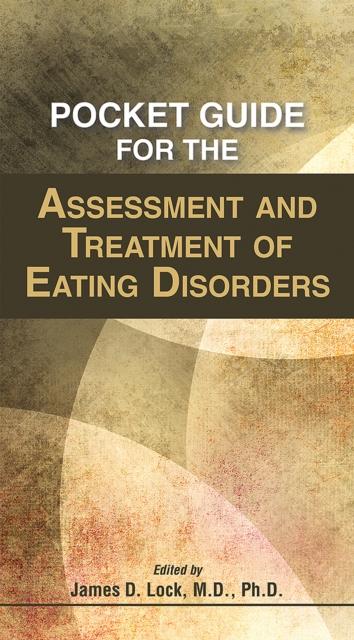
Pocket Guide for the Assessment and Treatment of Eating Disorders
An exceptionally practical book for clinicians who are interested in evaluating and treating eating disorders in children and adults, Pocket Guide for the Assessment and Treatment of Eating Disorders, provides expert guidance in a succinct and accessible format. Most people with eating disorders lack access to specialty services, leaving the majority undiagnosed and untreated. The editors and contributors, Stanford University researchers and clinicians, have written the book for nonspecialists in hopes that it will foster the development of relevant clinical skills and allow them to help patients with eating disorders in their practices. This book is squarely aimed at the big picture while highlighting the most important additional details. The first chapter provides an overview of all the major eating disorders and also includes a discussion of issues related to screening, race, culture, and gender that are cross-cutting and applicable to all the diagnostically themed chapters. Each of the remaining chapters focuses on a specific diagnostic group and is organized systematically to allow the reader to easily identify comparable elements across diagnostic groupings quickly.Helpful features of the book include: • Consistent chapter structure for ease of access. Each chapter begins with a brief introduction, followed by a key diagnostic checklist, diagnostic rule outs, risks and epidemiology, psychiatric and medical comorbidity, clinical presentations, evidence-based interventions, treatments illustrated, a clinical decision-making flow chart, common outcomes, resources and further readings, and references.• Stand-alone chapters, allowing the user to access all the pertinent information without prerequisite preparation.• Short narrative vignettes describing each of the major evidence-based interventions for each diagnostic grouping. These model effective practitioner-patient interactions and help readers improve their clinical skills. In addition, there are vignettes across the age spectrum, affording the reader valuable exposure to a full range of cases.• Emphasis on evidence-based treatments. Evidential support is graded based on slightly modified criteria developed by the American Psychological Association, with Levels 1 to 4 -- from established treatments to those of questionable efficacy.• Generous use of tables and figures, comprising all the major content in a concise, easily understandable fashion.
Authoritative, accessible, and designed to fit in a lab coat pocket, Pocket Guide for the Assessment and Treatment of Eating Disorders is a practical book which will help busy clinicians quickly find the most relevant and updated information, without overwhelming them with detail.
eBook