
Catalogue Search | MBRL


Are you sure you want to remove the book from the shelf?

{{itemTitle}}
81
result(s) for
"Locke, Rachel"
Sort by:

What drives career choice in allied health professions in England? Insights from a national questionnaire
Background
In July 2025, the NHS (National Health Service) Plan was published signalling the need for strong workforce supply pipelines to support shifts towards care in the community and early access to diagnostics and treatment. Allied Health Professionals (AHPs) are vital to diagnostic pathways, in and out patient care, rehabilitation and home care as well as public health and prevention, thereby keeping people independent, and participating in society. Conducting a national analysis of AHP career choices can inform targeted recruitment strategies for the AHP workforce and individual professions to meet this need. The aim of this study was to understand the influence of sources driving career choices and the stage in which AHP students in England choose their profession to identify recommendations for stimulating demand for AHP careers.
Methods
An online questionnaire was disseminated to undergraduate and postgraduate students and apprentices on pre-registration AHP courses in England.
Results
A total of 1,318 participants completed the questionnaire with all professions represented. The majority of AHP students make their career choice after a first career (32.5%) or during college/sixth form (26.6%).
Conducting your own research
,
impact of a role model
and
university open days and information
were the most influential sources. Conversely, a
careers advisor
, or
print and television adverts
appeared as some of the least influential sources.
Conclusions
Qualified AHPs should continue to be utilised and better supported as role models in particular in acting as ambassadors when disseminating learning about their profession to patients, for schools and in outreach work to target career changers. The role of universities in acting as a source of influence is wide-ranging and includes engaging more with schools to promote the AHPs as part of the curriculum and engaging with current university students about an AHP career choice. Careers advisors should be supported to deliver effective career advice about the AHPs. These three stakeholders should be backed by the NHS, AHP professional bodies and healthcare organisations to act as key sources of influence.
Journal Article
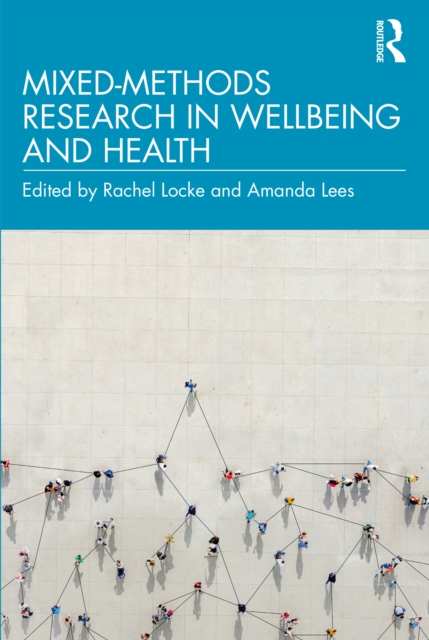
Mixed-Methods Research in Wellbeing and Health
Mixed-Methods Research in Wellbeing and Health brings together nine examples of high-quality research into wellbeing and health using a range of mixed methods. Research that employs mixed methods can yield robust data that is both more reliable and valid than that arising from a single-method approach.
Mixed-methods research is a vital component in responding to recent changes to the more complex needs of an increasingly diverse society and its health sector. This book covers how mixed-methods research can be designed creatively and applied sensitively in the context of wellbeing and health research. The editors have included a set of bespoke questions for reflection at the end of each chapter. The expert editorial commentary highlights the benefits and methodological challenges of mixed-methods research as well as 'thinking points' for researchers as they plan and carry out mixed-methods research on wellbeing and health topics. Within a holistic view of wellbeing and health, the mixed-methods research designs are applied appropriately in both practice and community settings. The research can be shaped by pragmatism and the actual needs of a study rather than purely theoretical considerations.
This practical book makes high-quality, mixed-methods research design and execution guidance readily accessible to health-care practitioners and researchers working in the fields of health, social care and wellbeing services and to undergraduate and postgraduate students in courses in research and health-care studies, as well as health management.
eBook

Motivations, sources of influence and barriers to being a podiatrist: a national questionnaire of student views
Background
Podiatry is an allied health profession which has seen a substantial decline in numbers in recent years. Every effort is required to recruit more students to reverse this diminishing supply and meet national foot health needs. To increase the number of applications to podiatry courses and encourage individuals to choose podiatry careers, the aim of this study was to understand the key motivations, sources of influence and barriers to choosing a podiatry career among current podiatry students, and consider the influence of choosing podiatry before or after a first career.
Methods
An online questionnaire, comprising mainly Likert-scale questions, was disseminated to podiatry students in England between February and March 2021. Respondents to the questionnaire were categorised as individuals who had either decided to engage in the profession ‘before’ or ‘after’ a first career. Mann-Whitney U non-parametric difference tests were performed to compare outcome questions relating to motivations, sources of influence and barriers between groups.
Results
One hundred and fifteen students completed the questionnaire. Overall, the study demonstrated many similarities between the groups (before and after a first career). However, there were distinct differences when considering some of the motivations (i.e., intellectually stimulating, student bursaries), sources of influence (i.e., own patient experience) and barriers (i.e., financial, job availability) associated with engaging in the podiatry profession. Overall, altruistic reasons were the key motivations for choosing podiatry. Personal sources of influence such as conducting own research, was the most important source of influence. Similar to other studies, a lack of awareness of the podiatry profession and what it entails remains problematic.
Conclusions
This is the first national questionnaire investigating career choice decision-making for podiatry students in England or in any other country. The similarities suggest that marketing is applicable to both groups. However, an absolute must is a future national strategy that makes educational sources more impactful. Additionally, following the Covid-19 pandemic, the increased interest in health and care professions suggests now is the right time to market podiatry to individuals looking for a career change. Finally, the influence of personal encounters with podiatrists shows the transformational role podiatrists can have in recruiting to the profession.
Journal Article

Evaluation of a novel augmented reality educational tool and its effects on patient experience: A randomized controlled trial
ABSTRACT
Introduction:
Patient education is an essential element of the treatment pathway. Augmented reality (AR), with disease simulations and three-dimensional visuals, offers a developing approach to patient education. We aim to determine whether this tool can increase patient understanding of their disease and post-visit satisfaction in comparison to current standard of care (SOC) educational practices in a randomized control study.
Methods:
Our single-site study consisted of 100 patients with initial diagnoses of kidney masses or stones randomly enrolled in the AR or SOC arm. In the AR arm, a physician used AR software on a tablet to educate the patient. SOC patients were educated through traditional discussion, imaging, and hand-drawn illustrations. Participants completed pre- and post-physician encounter surveys adapted from the Press Ganey® patient questionnaire to assess understanding and satisfaction. Their responses were evaluated in the Readability Studio® and analyzed to quantify rates of improvement in self-reported understanding and satisfaction scores.
Results:
There was no significant difference in participant education level (P = 0.828) or visit length (27.6 vs. 25.0 min, P = 0.065) between cohorts. Our data indicate that the rate of change in pre- to post-visit self-reported understanding was similar in each arm (P ≥ 0.106 for all responses). The AR arm, however, had significantly higher patient satisfaction scores concerning the educational effectiveness and understanding of images used during the consultation (P < 0.05).
Conclusions:
While AR did not significantly increase self-reported patient understanding of their disease compared to SOC, this study suggests AR as a potential avenue to increase patient satisfaction with educational tools used during consultations.
Journal Article

The development of clinical thinking in trainee physicians: the educator perspective
Background
An important element of effective clinical practice is the way physicians think when they encounter a clinical situation, with a significant number of trainee physicians challenged by translating their learning into professional practice in the clinical setting. This research explores the perceptions of educators about how trainee physicians develop their clinical thinking in clinical settings. It considers what educators and their colleagues did to help, as well as the nature of the context in which they worked.
Method
A qualitative approach was used in this study with in depth interviews carried out with educators as key informants. Rich data derived from 15 interview transcripts were analysed thematically in a rigorous and iterative process.
Results
Three broad and overlapping themes were identified: working in an educationally minded culture; proximity of the educator to the trainee physician; and trajectory of the trainee physician. The departments in which these educators worked emphasised the importance for the education of trainee physicians. All members of the team were responsible for education of the team, and all members, particularly senior nurses, were able to give feedback upon the trainee physicians’ progress. Educators described working side by side with their trainee physician and frequently being in close proximity to them which means that the educator was both easily accessible and spent more time with their trainee physicians. They described a trajectory of the trainee physicians through the placement with close monitoring and informal assessment throughout.
Conclusion
Recommendations are made as to how trainee physicians can be supported to develop their clinical thinking. Educators and managers can analyse their own and their department’s practice and select the recommendations relevant to their local circumstances in order to make change. This study adds the educator perspective to a body of literature about the importance of context and supportive learning environments. As such the discussion is applicable to the education of other health professionals.
Journal Article

A Mihalisin–Klee Theorem for Fans
The Mihalisin–Klee Theorem states that an orientation of a 3-polytopal graph is induced by an affine function on some 3-polytope realizing the graph if the orientation is acyclic, has a unique source and a unique sink, and admits three independent monotone paths from the source to the sink. We replace the requirement that the orientation is acyclic with the assumption that it has no directed cycle contained in a face of the orientation, and show that such orientations are induced by 3-dimensional fans.
Journal Article

Unleashing the Creativity and Innovation of Our Greatest Resource—The Governmental Public Health Workforce
Creativity and innovation in the governmental public health workforce will be required to generate new ideas to solve complex problems that extend beyond traditional public health functions such as disease surveillance and monitoring. Creativity and innovation can promote and advance necessary organizational transformation as well as improve organizational culture and workplace environment by motivating employees intrinsically. However, there is little empirical evidence on how rewarding creativity and innovation in governmental public health departments is associated with organizational culture and workplace environments.
This study describes (1) the degree to which creativity and innovation are rewarded in governmental public health agencies and (2) associations between rewarding creativity and innovation and worker satisfaction, intent to leave, and workplace characteristics.
The cross-sectional Public Health Workforce Interests and Needs Survey (PH WINS) was administered using a Web-based platform in fall 2017.
Data used for these analyses were drawn from the 2017 PH WINS of governmental health department employees. This included state health agency and local health department staff. PH WINS included responses from 47 604 staff members, which reflected a 48% overall response rate. PH WINS excludes local health departments with fewer than 25 staff or serving fewer than 25 000 people.
Fewer than half of all workers, regardless of demographic group and work setting, reported that creativity and innovation were rewarded in their workplace. Most measures of worker satisfaction and workplace environment were significantly more positive for those who reported that creativity and innovation were rewarded in their workplace.
This research suggests that promoting creativity and innovation in governmental public health agencies not only could help lead the transformation of governmental public health agencies but could also improve worker satisfaction and the workplace environment in governmental public health agencies.
Journal Article

Introduction
This introduction presents an overview of the key concepts discussed in the subsequent chapters of this book. The book highlights the complexity of choosing a research design capable of investigating creative and emergent practice whilst also meeting the demands of the clinical institutions within which research and practice take place. It reflects on a cluster of three mixed-methods studies concerned with supporting doctors in their practice. The book lays out some of the challenges for trialists with regards to recruitment and retention of participants and signals the potential of mixed-methods designs incorporating qualitative elements before, during or post-trial to enhance the design and conduct of randomised control trials. It describes various studies that took place between 2002 and 2017 on the subject of mentoring for doctors' wellbeing. The book also describes a participatory, qualitatively driven, mixed-methods study of water, sanitation and hygiene and wellbeing in rural Eswatini, southern Africa.
Book Chapter
Conclusion
The complexity of the real world is reflected in the challenges that researchers encountered in undertaking mixed-methods research in wellbeing and health. Ethics are important in any research. It can be that in undertaking mixed methods, the researcher is entering new territory as their particular combination of mixed methods has not been tried before or not with a particular topic or population. Additionally, we would reiterate here the potential of mixed-methods approaches to access the voices of those who are harder to reach in research terms and, therefore, their potential to address issues of social transformation and justice. This in turn may necessitate even more careful thinking about ethics and the sensitive application of research designs. The chapter also presents some closing thoughts on the key concepts discussed in the preceding chapters of this book.
Book Chapter