
Catalogue Search | MBRL


Are you sure you want to remove the book from the shelf?

{{itemTitle}}
8
result(s) for
"Locust, Carol"
Sort by:


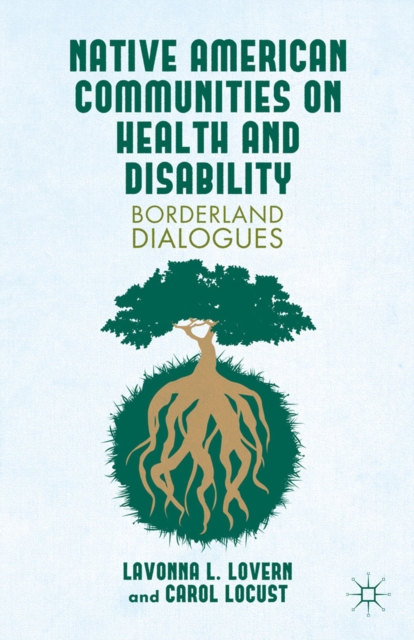
Native American communities on health and disability : a borderland dialogue
This volume examines concepts of disability and wellness in Native American communities, prominently featuring the life's work of Dr. Carol Locust. Authors Locust and Lovern confront the difficulties of translating not only words but also entire concepts between Western and Indigenous cultures, and by increasing the cultural competency of those unfamiliar with Native American ways of being are able to bring readers from both cultures into a more equal dialogue. The three sections contained herein focus on intercultural translation; dialogues with Native American community members; and finally a discussion of being in the world gently as caregivers.
eBook

Wounding the Spirit: Discrimination and Traditional American Indian Belief Systems
Differences in belief systems are seldom considered when educators debate the effects of cultural differences on educational practice. It is argued that fundamental differences exist between the belief systems of American Indians and those of non-Indians.
Journal Article

Walking in two worlds: Native Americans and the VR system
An overview of the American Indian life is presented in order to assist the vocational rehabilitation (VR) counselor in understanding the Indian VR client. Native Americans with disabilities often need someone from their own culture to advocate for them.
Journal Article

WRITTEN REGULATIONS AND POLICIES GOVERNING THE EDUCATIONAL PLACEMENTS AND SERVICES PROVIDED FOR HANDICAPPED AMERICAN INDIAN CHILDREN
Since the enactment of Public Law 94-142, the Education for All Handicapped Children Act, 1975, the Office of Special Education (OSE) within the United States Department of Education (USDE) has channeled funds directly into services for handicapped American Indian children. Despite the multiple service providers and the funds available, services provided for handicapped Indian children do not seem to be adequate. Bureau of Indian Affairs' (BIA) studies show that Indian children have a higher than average incidence of handicaps but are not afforded the services necessary to deal with these handicaps. A paucity of information exists about services for Indian youth, and research on the adequacy of services provided by the multiple service agencies appears to be limited. Various service components such as identification, evaluation, placement, and service continuum may be administered by different agencies and complicates systematic accountability in the care of handicapped children. Reservations generally have five main service providers: (1) state and local education agencies (SEAs and LEAs); (2) Bureau of Indian Affairs (BIA); (3) Health and Human Services (HHS); (4) Indian Health Service (IHS); and (5) Tribal agencies. This study analyzed policies of the five agencies and the legal provisions under which they operate. The study also offers some solutions to the chronic problems in education that are confronted by handicapped Indian children on Arizona Indian Reservations.
Dissertation

