
Catalogue Search | MBRL


Are you sure you want to remove the book from the shelf?

{{itemTitle}}
41,764
result(s) for
"Lopez, J"
Sort by:


A methodological framework for model selection in interrupted time series studies
Interrupted time series (ITS) is a powerful and increasingly popular design for evaluating public health and health service interventions. The design involves analyzing trends in the outcome of interest and estimating the change in trend following an intervention relative to the counterfactual (the expected ongoing trend if the intervention had not occurred). There are two key components to modeling this effect: first, defining the counterfactual; second, defining the type of effect that the intervention is expected to have on the outcome, known as the impact model. The counterfactual is defined by extrapolating the underlying trends observed before the intervention to the postintervention period. In doing this, authors must consider the preintervention period that will be included, any time-varying confounders, whether trends may vary within different subgroups of the population and whether trends are linear or nonlinear. Defining the impact model involves specifying the parameters that model the intervention, including for instance whether to allow for an abrupt level change or a gradual slope change, whether to allow for a lag before any effect on the outcome, whether to allow a transition period during which the intervention is being implemented, and whether a ceiling or floor effect might be expected. Inappropriate model specification can bias the results of an ITS analysis and using a model that is not closely tailored to the intervention or testing multiple models increases the risk of false positives being detected. It is important that authors use substantive knowledge to customize their ITS model a priori to the intervention and outcome under study. Where there is uncertainty in model specification, authors should consider using separate data sources to define the intervention, running limited sensitivity analyses or undertaking initial exploratory studies.
Journal Article

Positive psychology : the scientific and practical explorations of human strengths
\"Shane Lopez and Jennifer Teramoto Pedrotti offer comprehensive coverage of the science and application of positive psychology and present new frameworks for understanding positive emotions and human strengths. The authors bring positive psychology to life by tackling issues such as how positive psychology can help improve schooling and the workplace, as well as promote cooperative lifestyles among people. Further, the book covers Western and Eastern approaches to understanding human strengths, along with the cultural and developmental influences on positive functioning. The authors also explore various positive conditions such as happiness and well-being, along with other processes related to mindfulness, wisdom, courage, and spirituality\"-- Provided by publisher.
Book

Recent Progress in Micro- and Nanotechnology-Enabled Sensors for Biomedical and Environmental Challenges
Micro- and nanotechnology-enabled sensors have made remarkable advancements in the fields of biomedicine and the environment, enabling the sensitive and selective detection and quantification of diverse analytes. In biomedicine, these sensors have facilitated disease diagnosis, drug discovery, and point-of-care devices. In environmental monitoring, they have played a crucial role in assessing air, water, and soil quality, as well as ensured food safety. Despite notable progress, numerous challenges persist. This review article addresses recent developments in micro- and nanotechnology-enabled sensors for biomedical and environmental challenges, focusing on enhancing basic sensing techniques through micro/nanotechnology. Additionally, it explores the applications of these sensors in addressing current challenges in both biomedical and environmental domains. The article concludes by emphasizing the need for further research to expand the detection capabilities of sensors/devices, enhance sensitivity and selectivity, integrate wireless communication and energy-harvesting technologies, and optimize sample preparation, material selection, and automated components for sensor design, fabrication, and characterization.
Journal Article


Mitochondrial apoptosis: killing cancer using the enemy within
Apoptotic cell death inhibits oncogenesis at multiple stages, ranging from transformation to metastasis. Consequently, in order for cancer to develop and progress, apoptosis must be inhibited. Cell death also plays major roles in cancer treatment, serving as the main effector function of many anti-cancer therapies. In this review, we discuss the role of apoptosis in the development and treatment of cancer. Specifically, we focus upon the mitochondrial pathway of apoptosis—the most commonly deregulated form of cell death in cancer. In this process, mitochondrial outer membrane permeabilisation or MOMP represents the defining event that irrevocably commits a cell to die. We provide an overview of how this pathway is regulated by BCL-2 family proteins and describe ways in which cancer cells can block it. Finally, we discuss exciting new approaches aimed at specifically inducing mitochondrial apoptosis in cancer cells, outlining their potential pitfalls, while highlighting their considerable therapeutic promise.
Journal Article
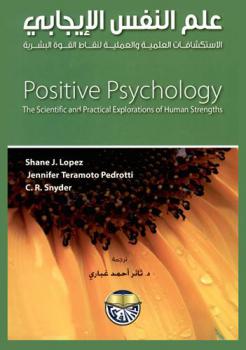
علم النفس الإيجابي : الاستكشافات العلمية والعملية لنقاط القوة البشرية
يتناول الكتاب في جزئه الأول النظر إلى علم النفس من منظور إيجابي-الفصل الأول (مرحبا بك في علم النفس الإيجابي) ونقدم هذا المجال إليكم. في الفصل الثاني نستعرض خلفيات المجال الشرقية والغربية وأفكار حول فرج أسلوبي أنا ونحن. بعد ذلك، في الفصل الثالث (تصنيفات ومقاييس نقاط القوة والمخرجات الإيجابية) نشرح محاولات تصيف الموضوعات المختلفة بالمجال. في الجزء الثاني-علم النفس الإيجابي في السياق-نناقش الحياة الإيجابية. في الفصل الرابع (دور الثقافة في تنمية نقاط القوة والعيش جيدا) نستعرض دور العوامل الثقافة في تحديد ما هو إيجابي وفي الفصل الخامس (العيش جيدا فعند كل مرحلة من الحياة) نتعقب عملية نقاط القوة البشرية. الجزء الثالث-الحالات والعمليات الانفعالية الإيجابية-يتكون من فصلين الفصل السادس-مبادئ المتعة : فهم الوجدان الإيجابي والانفعالاتي الإيجابية والسعادة وحسن الحال-نناقش ما تعلمناه حول الانفعالات والسعادة وفي الفصل السابع-استخلاص أقصى فائدة من الخبرات الانفعالية : التوافق المتمركز حول الانفعال والذكاء الانفعالي والانتقائية الاجتماعية الانفعالية ورواية القصة الانفعالية-نكشف النتائج الأخيرة حول كيف يمكن للانفعالات أن تسهم بشكل إيجابي في التوافق الانفعالي بالحياة. الجزء الرابع- الحالات والعمليات المعرفية الإيجابية-الفصل الثامن (رؤية مستقبلنا عبر فعاليات الذات والتفاؤل والأمل) يغطي الحالات المعرفية والدافعية الإيجابية الأكثر قوة. في الفصل التاسع (الحكمة والشجاعة : خصائص الحكيم والشجاع)، نقدم النتائج حول الناس في أفضل حالاتهم تحت ظروف صعبة أحيانا، الفصل العاشر (يقظة الذهن والتدفق والروحانية : في البحث عن الخبرات الأمثل). الجزء الخامس السلوك النافع للمجتمع. في الفصل الحادي عشر (التقمص الانفعالي والأنانية : أبوب إلى الإيثار والعرفان والغفران) والفصل الثاني عشر التعلق والحب والعلاقات المزدهرة)، في الجزء السادس- فهم وتغيير السلوك البشري-نقدم استبصارا حول تحسين حياة الفرد في الفصل الثالث عشر (التصورات المتوازنة للصحة النفسية والسلوك) والفصل الرابع عشر (الوقاية من السيئ وتعزيز الجيد). في الجزء السابع-البيئات الإيجابية-نصف كيف تعمل المدرسة والعمل (الفصل الخامس عشر) التعليم المدرسي الإيجابي والعمل الجيد : سيكولوجية الوظيفة المربحة والتعليم الذي يوصلنا إلى هناك.
BOOK

A density-independent rigidity transition in biological tissues
Cell migration is important in many biological processes, including embryonic development, cancer metastasis and wound healing. In these tissues, a cell’s motion is often strongly constrained by its neighbours, leading to glassy dynamics. Although self-propelled particle models exhibit a density-driven glass transition, this does not explain liquid-to-solid transitions in confluent tissues, where there are no gaps between cells and therefore the density is constant. Here we demonstrate the existence of a new type of rigidity transition that occurs in the well-studied vertex model for confluent tissue monolayers at constant density. We find that the onset of rigidity is governed by a model parameter that encodes single-cell properties such as cell–cell adhesion and cortical tension, providing an explanation for liquid-to-solid transitions in confluent tissues and making testable predictions about how these transitions differ from those in particulate matter.
Cells moving in a tissue undergo a rigidity transition resembling that of active particles jamming at a critical density—but the tissue density stays constant. A new type of rigidity transition implicates the physical properties of the cells.
Journal Article

Parker : to get away clean, you have to play dirty
Parker is a thief who has an unusual code. He doesn't steal from the poor or hurt innocent people. He is asked to join four other guys, one of whom is related to a known mobster. They pull off the job flawlessly and Parker wants to part ways with them. When he refuses to join them for another job, they try to kill him. They dispose of his body, but someone finds him ... still alive. After recovering, he sets out to get back at the ones who tried to kill him, another one of his codes.
DVD

Development and validation of a clinical score for early diagnosis of constipation in critically ill children
Constipation affects almost 50% of critically ill pediatric patients and is related to their morbidity and mortality. However, little attention is paid to it and it is diagnosed late and when there are already complications. The objective of this study is to develop and validate a score to identify critically ill children with high risk of constipation 48 h after admission. A single center two phase-study was carried out; the first one (retrospective observational study) to develop the score and the second one to validate it in another prospective observational study. Children between 15 days of life and 18 years old admitted to the PICU for more than 3 days were included. Demographic and clinical data during the first 48 h after PICU admission were collected. Univariate and multivariate analysis and ROC curves were used to develop and validate the score. Data from 145 patients (62.8% boys) with a mean age of 34.9 ± 7.3 months were used to develop the score. Independent factors identified to develop the score were: weight > 7 kg, admission to PICU after surgery, need of vasoconstrictors, doses of fentanyl ≥ 2 mcg/kg/h, and initiation of enteral nutrition later than 48 h after admission. Two cut-off values were identified to set low constipation risk (< 5.7 points) and high constipation risk (> 6.2 points). This score was validated in 124 patients showing a sensibility of 63.2%, specificity of 95.5% and a positive/negative predictive values (P/NPV) of 100% and 82.1% respectively to identify constipated patients. This is the first score to identify high constipation risk in critically ill children. This score is easy to apply, and internal validation has shown a PPV of 100%.
Journal Article