
Catalogue Search | MBRL


Are you sure you want to remove the book from the shelf?

{{itemTitle}}
28
result(s) for
"Lopez, Russ"
Sort by:

Building American public health : urban planning, architecture, and the quest for better health in the United States
\"From the industrial revolution in the nineteenth century to the rise of the obesity epidemic after 1980, a long series of reformers and advocates have sought to protect and promote health by manipulating how we build housing and neighborhoods. This book is a history of using urban planning and architecture to better public health in the United Sates. It highlights the work of tenement reformers, zoning advocates, modernist architects, new urbanists, and members of the new built environment and health movement, among others, to improve the health and social conditions of their time by modifying the environment around them\"--Provided by publisher.
Book

Urban Sprawl and Risk for Being Overweight or Obese
Objectives. I examined the association between urban sprawl and the risk for being overweight or obese among US adults. Methods. A measure of urban sprawl in metropolitan areas was derived from the 2000 US Census; individual-level data were obtained from the Behavioral Risk Factor Surveillance System. I used multilevel analysis to assess the association between urban sprawl and obesity. Results. After I controlled for gender, age, race/ethnicity, income, and education, for each 1-point rise in the urban sprawl index (0–100 scale), the risk for being overweight increased by 0.2% and the risk for being obese increased by 0.5%. Conclusions. The current obesity epidemic has many causes, but there is an association between urban sprawl and obesity.
Journal Article
Public Health, the APHA, and Urban Renewal
Joint efforts by fields of public health in the last decade have advocated use of the built environment to protect health. Past involvement by public health advocates in urban policy, however, has had mixed results. Although public health has significantly contributed to health improvements, its participation in urban renewal activities was problematic. Health advocates and the American Public Health Association produced guidelines that were widely used to declare inner-city areas blighted and provided a scientific justification for demolishing neighborhoods and displacing mostly poor and minority people. Furthermore, health departments failed to uphold their legal responsibility to ensure that relocated families received safe, affordable housing alternatives. These failures have important implications for future health-related work on the built environment and other core public health activities.
Journal Article
Posters for Housing and Health
Overall, the Works Progress Administration program produced posters dedicated to everything from travel and tourism to book readings and war bonds.4 Many of the posters had designs similar to the one pictured here with simple graphics; clean, bold lettering; and socially oriented messages.5 The idea for this publicly funded program to support unemployed artists began in New York City as an initiative by Mayor Fiorello La- Guardia; in 1935, President Franklin Roosevelt's New Deal took over the program and expanded it across the United States.
Journal Article


Segregation and Black/White Differences in Exposure to Air Toxics in 1990
I examined non-Hispanic Black and non-Hispanic White differences in exposure to noncriteria air pollutants in 44 U.S. Census Bureau-defined metropolitan areas with populations greater than one million, using data on air toxics concentrations prepared for the U.S. Environmental Protection Agency as part of its Cumulative Exposure Project combined with U.S. census data. I measured differences in exposure to air toxics through the calculation of a net difference score, which is a statistical measure used in income inequality analysis to measure inequality over the whole range of exposures. The scores ranged from 11.52 to 83.60. In every metropolitan area, non-Hispanic Blacks are more likely than non-Hispanic Whites to be living in tracts with higher total modeled air toxics concentrations. To assess potential reasons for such a wide variation in exposure differences, I performed a multiple regression analysis with the net difference score as the dependent variable. Independent variables initially included were as follows: the dissimilarity index (to measure segregation), Black poverty/White poverty (to control for Black/White economic differences), population density and percentage of persons traveling to work who drive to work (alone and in car pools), and percentage of workforce employed in manufacturing (factors affecting air quality). After an initial analysis I eliminated from the model the measures of density and the persons driving to work because they were statistically insignificant, they did not add to the predictive power of the model, and their deletion did not affect the other variables. The final model had an R2of 0.56. Increased segregation is associated with increased disparity in potential exposure to air pollution.
Journal Article
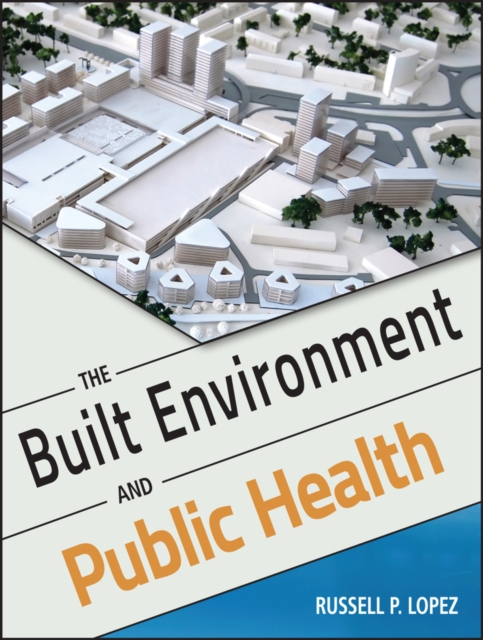
The built environment and public health
The Built Environment and Public Health The Built Environment and Public Health explores the impact on our health of the environments we build for ourselves, and how public health and urban planning can work together to build settings that that promote healthy living. This comprehensive text covers origins and foundations of the built environment as a public health focus and its joint history with urban planning, transportation and land use, infrastructure and natural disasters, assessment tools, indoor air quality, water quality, food security, health disparities, mental health, social capital, and environmental justice. The Built Environment and Public Health explores such timely issues as: Basics of the built environment and evidence for its influences How urban planning and public health intersect How infrastructure improvements can address chronic diseases and conditions Meeting the challenges of natural disasters Policies to promote walking and mass transit Approaches to assess and improve air quality and our water supply Policies that improve food security and change how Americans get their food How the built environment can address needs of vulnerable populations Evidence-based design practices for hospitals and health care facilities Mental health, stressors, and health care environments Theories and programs to improve social capital of low-income communities How the built environment addresses issues of health equity and environmental justice This important textbook and resource includes chapter learning objectives, summaries, questions for discussion, and listings of key terms. Companion Web site: www.josseybass.com/go/lopez.
eBook

Black-White Residential Segregation and Physical Activity
This multilevel study explores the potential relationship between Black-White residential segregation and physical activity. It combines data on physical activity from the 2001 Behavioral Risk Factor Surveillance System (BRFSS), a national telephone survey of adults overseen by the Centers for Disease Control and Prevention (CDC), with a measure of racial segregation. Using hierarchical linear modeling, it controlled for age, sex, Black race, Hispanic ethnicity, education, income, and amount of urban sprawl. For each one-point increase in the Black-White Dissimilarity Index (on a 0–100 scale), the modeled risk of being physically inactive increased by .7% (odds ratio [OR] =1.007, 95% confidence interval [CI] =1.003, 1.011). The relationship between segregation and physical activity was similar for Blacks and Whites, though not statistically significant for the Black-only analysis. This finding may imply that the pathway between segregation and ill health includes physical inactivity.
Journal Article

Integrating Environmental and Human Health Databases in the Great Lakes Basin: Themes, Challenges and Future Directions
Many government, academic and research institutions collect environmental data that are relevant to understanding the relationship between environmental exposures and human health. Integrating these data with health outcome data presents new challenges that are important to consider to improve our effective use of environmental health information. Our objective was to identify the common themes related to the integration of environmental and health data, and suggest ways to address the challenges and make progress toward more effective use of data already collected, to further our understanding of environmental health associations in the Great Lakes region. Environmental and human health databases were identified and reviewed using literature searches and a series of one-on-one and group expert consultations. Databases identified were predominantly environmental stressors databases, with fewer found for health outcomes and human exposure. Nine themes or factors that impact integration were identified: data availability, accessibility, harmonization, stakeholder collaboration, policy and strategic alignment, resource adequacy, environmental health indicators, and data exchange networks. The use and cost effectiveness of data currently collected could be improved by strategic changes to data collection and access systems to provide better opportunities to identify and study environmental exposures that may impact human health.
Journal Article

Is obesity contagious?
Evaluation of: Christakis N, Fowler J. The spread of obesity in a large social network over 32 years. N. Engl. J. Med. 357(4), 370-379 (2007).
A recent article using longitudinal data from the Framingham Heart Study found that weight gain was similar between friends. The influence of friends was found to be stronger than that of siblings or spouses. If this association reflects an underlying relationship, it implies that social norms, shared experiences and similar environments might be more important in weight gain than underlying strict biologic or genetic factors. It may also imply that new intervention strategies that use social marketing or peer-group efforts to reduce obesity might lead to successful weight control. A goal should be to enlist the help of friends to assist people to keep from gaining weight. Given the high prevalence of obesity in the USA and elsewhere, this study provides an interesting alternative foundation for addressing this important public health concern.
Journal Article