
Catalogue Search | MBRL


Are you sure you want to remove the book from the shelf?

{{itemTitle}}
10
result(s) for
"Lovelock, James, 1919-"
Sort by:
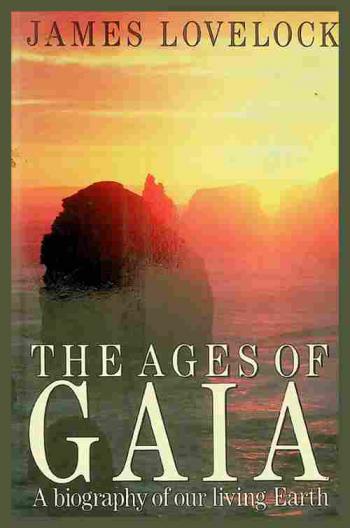

The vanishing face of gaia : a final warning
The global temperature is rising, the ice caps are melting, and levels of pollution across the world have reached unprecedented heights. According to eminent scientist James Lovelock, in order to survive an assault from her dependents, the Earth is lurching ever closer to a permanent hot state.\" Within the next century, we will almost certainly be forced to give up many of the comforts of western living as supplies are threatened. Only the fittestand the smartestwill survive. A reluctant jeremiad from one of the environmental movement's elder statesmen, The Vanishing Face of Gaia offers an essential wake-up call for the human race.
eBook


Gaia: a new look at life on Earth
In this classic work that continues to inspire its many readers, Jim Lovelock puts forward his idea that life on earth functions as a single organism. Written for non-scientists, Gaia is a journey through time and space in search of evidence with which to support a new and radically different model of our planet. In contrast to conventional belief that living matter is passive in the face of threats to its existence, the book explores the hypothesis that the earth's living matter air, ocean, and land surfaces forms a complex system that has the capacity to keep the Earth a fit place for life. Since Gaia was first published, many of Jim Lovelock's predictions have come true and his theory has become a hotly argued topic in scientific circles. In a new Preface to this reissued title, he outlines his present state of the debate.
eBook

Novacene : the coming age of hyperintelligence
\"The originator of the Gaia theory offers the vision of a future epoch in which humans and artificial intelligence together will help the Earth survive. James Lovelock, creator of the Gaia hypothesis and the greatest environmental thinker of our time, has produced an astounding new theory about future of life on Earth. He argues that the Anthropocene;the age in which humans acquired planetary-scale technologies is, after 300 years, coming to an end. A new age the Novacene has already begun. In the Novacene, new beings will emerge from existing artificial intelligence systems. They will think 10,000 times faster than we do and they will regard us as we now regard plants. But this will not be the cruel, violent machine takeover of the planet imagined by science fiction. These hyperintelligent beings will be as dependent on the health of the planet as we are. They will need the planetary cooling system of Gaia to defend them from the increasing heat of the sun as much as we do. And Gaia depends on organic life. We will be partners in this project. It is crucial, Lovelock argues, that the intelligence of Earth survives and prospers. He does not think there are intelligent aliens, so we are the only beings capable of understanding the cosmos. Perhaps, he speculates, the Novacene could even be the beginning of a process that will finally lead to intelligence suffusing the entire cosmos. At the age of 100, James Lovelock has produced the most important and compelling work of his life.\"--Publisher's website.
Book

The revenge of Gaia : earth's climate in crisis and the fate of humanity
A call to address a major threat to our collective future.
eBook


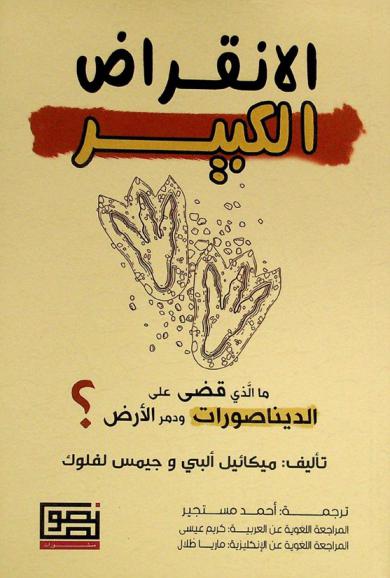
الانقراض الكبير : ما الذي قضى على الديناصورات ودمر الأرض ؟
كتاب الانقراض الكبير هو كتاب علمي مثير يتناول أحد أكبر الألغاز في تاريخ الحياة على الأرض : ما الذي أدى إلى انقراض الديناصورات والعديد من الكائنات الحية الأخرى قبل 65 مليون سنة ؟ يستعرض المؤلفان ميكائيل ألبي وجيمس لفلوك أحدث النظريات والأدلة العلمية التي تشير إلى أن سبب الانقراض الكبير كان اصطدام نيزك ضخم بالأرض. يرويان بأسلوب شيق ومبسط كيف تم اكتشاف هذه الحقيقة المذهلة وما هي التداعيات البيئية والجيولوجية والتطورية لهذا الحدث الفريد في تاريخ كوكبنا. كتاب الانقراض الكبير هو كتاب مميز لأنه يجمع بين العلم والتاريخ والإثارة في قصة رائعة عن أصول ومصير الحياة على الأرض.
BOOK

Earthy realism : the meaning of Gaia
GAIA, named after the ancient Greek mother-goddess, is the notion that the Earth and the life on it form an active, self-maintaining whole. By its use of personification it attacks the view that the physical world is inert and lifeless. It has a scientific side, as shown by the new university departments of earth science which bring biology and geology together to study the continuity of the cycle. It also has a visionary or spiritual aspect. What the contributors to this book believe is needed is to bring these two angles together. With global warming now an accepted fact, the lessons of GAIA have never been more relevant and urgent.
eBook