
Catalogue Search | MBRL


Are you sure you want to remove the book from the shelf?

{{itemTitle}}
86
result(s) for
"Low, Ee-Ling"
Sort by:

Empowered educators in Singapore : how high-performing systems shape teaching quality
Delves into Singapore's rapid rise to educational excellence on a global scale and the national effort that drives it. Singaporean students routinely outperform their peers from around the world, placing first or second in international assessments, particularly in math and science. This book describes the interwoven strategies that merge context, quality, governance, and continual evolution into a consistently high-achieving student population.
Book

Education in a democratic and meritocratic society: Moving beyond thriving to flourishing
Following multiple disruptions and crises, global education stakeholders grapple with the issue of how to prepare learners for a future wrought with uncertainty and unpredictability. During the COVID-19 pandemic that caused global school closures, disruptions to learning occurred in differing scopes and magnitudes across different countries. International organisations reported that some students have incurred a 1-to-3-year learning loss, which might have ramifications on their holistic development and, further down the line, their socioeconomic prospects. An equitable solution must be sought for the world to move beyond recovering to flourishing. This article attempts to elucidate the underlying principles of Singapore’s education system through Dewey’s concept of democracy and education, defined from an apolitical stance. For Singapore, democracy is also balanced with pragmatic meritocracy, which is upheld as a means to provide equal opportunities for all, regardless of socioeconomic background. This paper describes Singapore’s democratic and meritocratic society, setting the backdrop for an education system that seeks to develop its citizens into resilient, values-anchored, and lifelong learners ready to confront the challenges of the future.
Journal Article
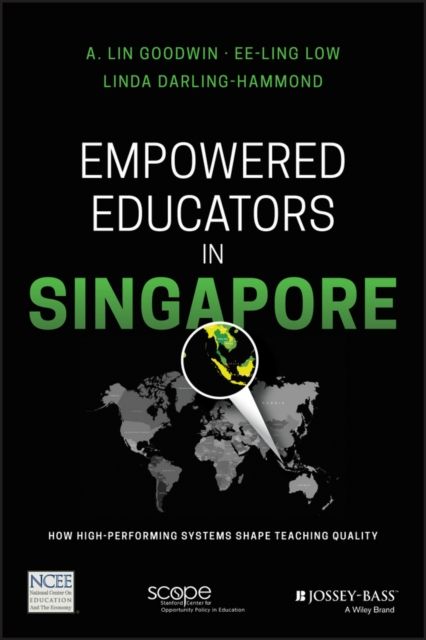
Empowered Educators in Singapore
BEST PRACTICES FROM SINGAPORE'S HIGH-PERFORMING SCHOOL SYSTEM Empowered Educators in Singapore is one volume in a series that explores how high-performing educational systems from around the world achieve strong results.
eBook
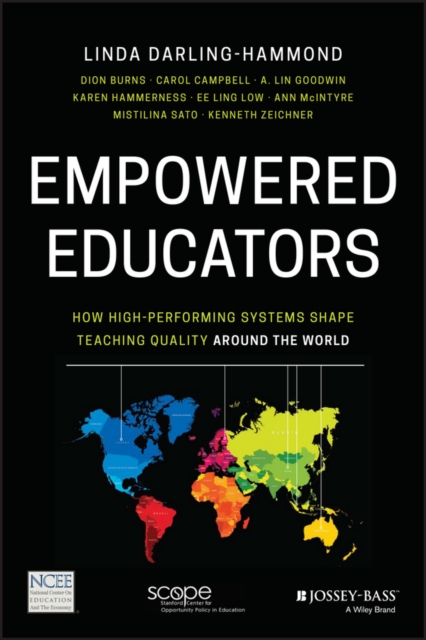
Empowered Educators
Discover how high-performing systems shape teaching quality around the world
Producing highly skilled and committed teachers is not the work of a single innovative school or the aggregation of heroic individuals who succeed against the odds. In high-performing countries, the opportunities for teachers to learn sophisticated practices and continue to improve are embedded systemically in education policies and practices. Empowered Educators describes how this seemingly magical work is done—how a number of forward-thinking educational systems create a coherent set of policies designed to ensure quality teaching in all communities... and how the results are manifested in practice.
Spanning three continents and five countries, Empowered Educators examines seven jurisdictions that have worked to develop comprehensive teaching policy systems: Singapore and Finland, the states of New South Wales and Victoria in Australia, the provinces of Alberta and Ontario in Canada, and the province of Shanghai in China. Renowned education expert Linda Darling-Hammond and a team of esteemed scholars offer lessons learned in a number of areas that shape the teaching force and the work of teachers, shedding unprecedented light on areas such as teacher recruitment, preparation, induction and mentoring, professional learning, career and leadership development, and more.
* Find out how quality teaching is developed and conducted across the globe
* Discover a common set of strategies for developing, supporting, and sustaining the ongoing learning and development of teachers and school leaders
* See how high-performing countries successfully recruit and train educators
* Understand why the sharing of expertise among teachers and administrators within and across schools is beneficial
A fascinating read for researchers, policymakers, administrators, teacher educators, pre-service teachers and leaders, and anyone with an interest in education, this book offers a rare glimpse into the systems that are shaping quality teaching around the world.
eBook

Phonological patterning for English as a lingua franca in Asia: Implications for norms and practice in multilingual Asia
With the rapid economic development and the increasing activities in trade, education, cultural events, and tourism in Asia, more and more people are using English as a lingua franca (ELF). The Asian Corpus of English (ACE) project has, as one of its defining goals, the collection of a million-word corpus of naturally occurring speech in order to analyse and describe the distinctive linguistic features of Asian ELF and to identify shared features if any. However, little research has been done hitherto on the features of ELF in the Asian context. This paper, therefore, presents a description of the phonological patterns found in ELF. Specifically, the paper focuses, inter alia, on the monophthong vowels and rhythmic patterning in the spoken interactions of ELF speakers from the data as well as the implications for policy and practice of ELF in multilingual Asia. The study is based on the Asian Corpus of English (ACE) data collected in Singapore by the National Institute of Education (NIE) team. Participants in the study include speakers from China, Singapore, the Philippines, Indonesia and India. The paper aims to deepen the boundaries of thinking about shared pronunciation patternings of ELF speakers in Asia and considers the implications of such shared patternings and norms on practice in multilingual Asia.
Journal Article

Quantitative Characterizations of Speech Rhythm: Syllable-Timing in Singapore English
Explores the acoustic nature of Singapore English. In directly comparable samples of British and Singapore English, two types of acoustic measurements were taken--calculation of a variability index reflecting changes in vowel length over utterances, and measurements reflecting vowel quality. Findings provide acoustic data that support the hypothesized cross-varietal difference in rhythmic patterning. (Author/VWL)
Journal Article

Why I want to teach and how I feel about teaching : formation of teacher identity from pre-service to the beginning teacher phase
This study investigates the formation of student teachers' teacher identity from pre-service to the end of the initial year in teaching. The authors explored why student teachers in Singapore chose to enter teaching and tracked changes in their attitudes and beliefs towards teaching at three time points: entry and exit of the initial teacher preparation program and after 1 year of teaching. The findings showed that, in agreement with previous research, those who are attracted to the teaching profession were mainly motivated by altruistic or intrinsic factors. They also entered the initial training program with a positive perception of the profession. However, at the point of exit, perceptions towards teaching showed a significant dip. After the first year of teaching, attitudes remained the same as they were at the point of exit. These factors influence the emerging sense of teaching identity. [Author abstract]
Journal Article
Rhythmic Patterning in Malaysian and Singapore English
Previous work on the rhythm of Malaysian English has been based on impressionistic observations. This paper utilizes acoustic analysis to measure the rhythmic patterns of Malaysian English. Recordings of the read speech and spontaneous speech of 10 Malaysian English speakers were analyzed and compared with recordings of an equivalent sample of Singaporean English speakers. Analysis was done using two rhythmic indexes, the PVI and VarcoV. It was found that although the rhythm of read speech of the Singaporean speakers was syllable-based as described by previous studies, the rhythm of the Malaysian speakers was even more syllable-based. Analysis of the syllables in specific utterances showed that Malaysian speakers did not reduce vowels as much as Singaporean speakers in cases of syllables in utterances. Results of the spontaneous speech confirmed the findings for the read speech; that is, the same rhythmic patterning was found which normally triggers vowel reductions.
Journal Article
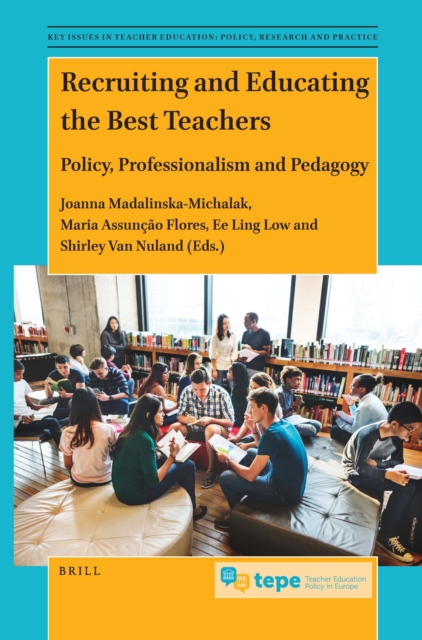
Recruiting and Educating the Best Teachers
What does the best teacher education program look like? How should we look at the area of attracting the best teachers at teacher education program and at the schools? How should we look at the area of recruitment into teacher education at different stages of a teacher's career and into the teaching profession? This book answers these questions, demonstrating that policy, professionalism, and pedagogy are integral to the development of the best teachers that our students deserve. The empirical quantitative and qualitative studies and narratives presented in this volume show that strong analyses are needed to drive decisions on policy and practice.Contributors are: Tania Alonso-Sainz, Satya Samhita Balanagu, Aimie Brennan, Angela Canny, Bee Leng Chua, Stefanie Yen Leng Chye, Kurt Clausen, Melanie Nì Dhuinn, Reina Ferrández-Berrueco, Maria Assunção Flores, Marilde Queiroz Guedes, Rosalyn Hyde, Tandeep Kaur, Mary Knight, Jennifer Liston, Erika Löfström, Ee Ling Low, Joanna Madalinska-Michalak, Suzanne O'Keeffe, Diana Petrarca, Mark Prendergast, Lucìa Sánchez-Tarazaga, Paola Sangster, Bianca Thoilliez, Luìs Tinoca and Shirley Van Nuland.
eBook
Bringing Singapore's teacher education beyond its shores
In recent years, education systems around the world have been keeping a keen eye on rankings of student achievement as measured by internationally benchmarked tests. This has led to considerable attention being paid to teasing out success factors that may account for countries that have emerged top of the ranks or those that have shown the most rapid improvement from one test period to the next. Singapore's education system, which has consistently emerged as one of the higher ranking countries has garnered much international attention as a consequence. Even as other nations are learning more about Singapore, it is timely for Singapore to share its expertise and experience to benefit other systems. In this article, one such effort of internationalisation is focused on i. e., teacher education and professional development programs. The underpinning philosophy of internationalisation is to serve the global educational community. Three models of internationalisation are expounded upon, namely; building the local capacity of Singapore's partner countries, training the trainers, and the offering of executive leadership training programs to an international market. The past and future challenges of internationalisation are also discussed. The article ends with how it began, in terms of examining Singapore's internationalisation of its teacher education and professional development programs in the light of whether it are indeed, paving the Fourth Way as espoused by Hargreaves and (2009). [Author abstract]
Journal Article