
Catalogue Search | MBRL


Are you sure you want to remove the book from the shelf?

{{itemTitle}}
5,928
result(s) for
"Lu, Tong"
Sort by:
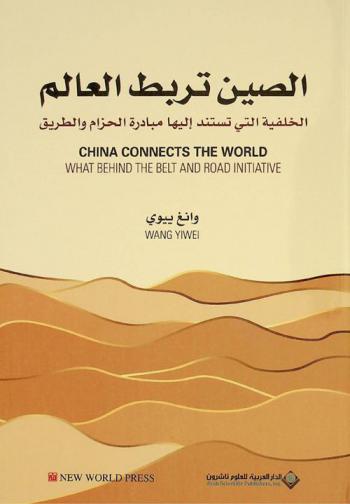
الصين تربط العالم : الخلفية التي تستند إليها مبادرة الحزام والطريق = China connects the world : what behind the belt and road initiative /
يتناول كتاب (الصين تربط العالم : الخلفية التي تستند إليها مبادرة الحزام والطريق) والذي قام بتأليفه (وانغ ييوي) في حوالي (350) صفحة من القطع المتوسط موضوع (العلاقات الاقتصادية الخارجية للصين) مستعرضا أبرز المحتويات التالية : الفصل الأول : العالم المترابط، الفصل الثاني : مبادرة الحزام والطريق : منطق العولمة، الفصل الثالث : مبادرة الحزام والطريق : منطق الحضارة، الفصل الرابع : مبادرة الحزام والطريق : المنطق الاستراتيجي.
Book

A broadband and strong visible-light-absorbing photosensitizer boosts hydrogen evolution
Developing broadband and strong visible-light-absorbing photosensitizer is highly desired for dramatically improving the utilization of solar energy and boosting artificial photosynthesis. Herein, we develop a facile strategy to co-sensitize Ir-complex with Coumarins and boron dipyrromethene to explore photosensitizer with a broadband covering ca. 50% visible light region (Ir-4). This type of photosensitizer is firstly introduced into water splitting system, exhibiting significantly enhanced performance with over 21 times higher than that of typical Ir(ppy)
2
(bpy)
+
, and the turnover number towards Ir-4 reaches to 115840, representing the most active sensitizer among reported molecular photocatalytic systems. Experimental and theoretical investigations reveal that the Ir-mediation not only achieves a long-lived boron dipyrromethene-localized triplet state, but also makes an efficient excitation energy transfer from Coumarin to boron dipyrromethene to trigger the electron transfer. These findings provide an insight for developing broadband and strong visible-light-absorbing multicomponent arrays on molecular level for efficient artificial photosynthesis.
Converting solar energy to hydrogen fuel requires light-absorbers that well-match the wavelengths of incoming sunlight. Here, authors prepare a broadband visible-light-absorbing molecular complex that efficiently produces hydrogen from water.
Journal Article
Facile electron delivery from graphene template to ultrathin metal-organic layers for boosting CO2 photoreduction
Metal-organic layers with ordered structure and molecular tunability are of great potential as heterogeneous catalysts due to their readily accessible active sites. Herein, we demonstrate a facile template strategy to prepare metal-organic layers with a uniform thickness of three metal coordination layers (ca. 1.5 nm) with graphene oxide as both template and electron mediator. The resulting hybrid catalyst exhibits an excellent performance for CO
2
photoreduction with a total CO yield of 3133 mmol g
–1
MOL
(CO selectivity of 95%), ca. 34 times higher than that of bulky Co-based metal-organic framework. Systematic studies reveal that well-exposed active sites in metal-organic layers, and facile electron transfer between heterogeneous and homogeneous components mediated by graphene oxide, greatly contribute to its high activity. This work highlights a facile way for constructing ultrathin metal-organic layers and demonstrates charge transfer pathway between conductive template and catalyst for boosting photocatalysis.
While solar-to-fuel energy conversion is appealing, materials require accessible active sites for reactants and rapid electron transfer steps. Here, authors support ultrathin metal-organic layers with graphene oxide as both template and electron mediator to boost CO
2
photoreduction performance.
Journal Article
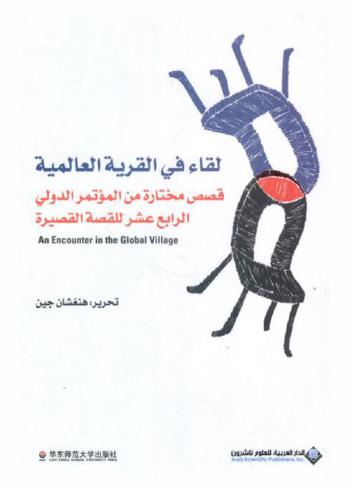
لقاء في القرية العالمية = An encounter in the global village : قصص مختارة من المؤتمر الدولي الرابع عشر للقصة القصيرة
هذا الكتاب يحتوي على قصص مختارة من المؤتمر الدولي الرابع عشر للقصة القصيرة وهذا اللقاء الذي نظم من قبل جمعية دراسة القصص القصيرة الإنجليزية (أس أس أس أس إي) وهي جمعية عالمية أنشئت في الولايات المتحدة عام 1992 وينعقد كل عامين ويعتبر اللقاء العالمي الوحيد الذي يركز بشكل خاص على دراسات القصة القصيرة أما القصص المشاركة في اللقاء فهي مكتوبة من قبل 29 كاتبا ينتمون إلى عشرة دول هي الصين وتايوان والهند والولايات المتحدة وكندا ونيوزلندا وفرنسا وإيرلندا والنمسا وسنغافورا وجامايكا.
BOOK

Chitosan-Based Composite Materials for Prospective Hemostatic Applications
Effective hemostasis is vital to reduce the pain and mortality of patients, and the research and development of hemostatic materials are prerequisite for effective hemostasis. Chitosan (CS), with good biodegradability, biocompatibility and non-toxicity, has been widely applied in bio-medicine, the chemical industry, the food industry and cosmetics. The excellent hemostatic properties of CS have been extensively studied. As a result, chitosan-based composite hemostatic materials have been emerging. In this review, the hemostatic mechanism of chitosan is briefly discussed, and then the progress of research on chitosan-based composite hemostatic materials with multiple forms such as films, sponges, hydrogels, particles and fibers are introduced. Finally, future perspectives of chitosan-based composite hemostatic materials are given. The objective of this review is to provide a reference for further research and development of effective hemostatic materials.
Journal Article
Hydrogen-bonded organic frameworks for photocatalytic synthesis of hydrogen peroxide
Photocatalysis provides a sustainable and environment-friendly strategy to produce H
2
O
2
, yet the catalytic efficiency of H
2
O
2
overall photosynthesis (O
2
+ 2H
2
O → 2H
2
O
2
) needs to be further improved, especially in the absence of additional cocatalysts, photosensitizers and sacrificial agents. Here we find that hydrogen-bonded organic frameworks can serve as photocatalysts for H
2
O
2
overall photosynthesis under the above-mentioned conditions. Specifically, we constructed a donor–acceptor hydrogen-bonded organic framework that exhibits a high photocatalytic activity for H
2
O
2
overall photosynthesis, with a production rate of 681.2 μmol g
-1
h
-1
. The control experiments and theoretical calculation revealed that the hydrogen-bonded organic frameworks with donor–acceptor structures can not only accelerate the charge separation and transfer but also optimize the reaction pathways, which significantly boosts the photocatalytic efficiency in H
2
O
2
overall photosynthesis. This work provides insights into the design and development of efficient photocatalysts for overall H
2
O
2
photosynthesis.
A series of hydrogen-bonded frameworks were developed for photocatalytic H
2
O
2
production. These materials are shown to facilitate charge separation and transfer and optimize the reaction pathway toward H
2
O
2
.
Journal Article

Facile synthesis of C3N4-supported metal catalysts for efficient CO2 photoreduction
Facile synthesis of photocatalysts with highly dispersed metal centers is a high-priority target yet still a significant challenge. In this work, a series of Co-C
3
N
4
photocatalysts with different Co contents atomically dispersed on g-C
3
N
4
have been prepared via one-step thermal treatment of cobalt-based metal-organic frameworks (MOFs) and urea in the air. Thanks to the highly dispersed and rich exposed Co sites, as well as good charge separation efficiency and abundant mesopores, the optimal 25-Co-C
3
N
4
, in the absence of noble metal catalysts/sensitizers, exhibits excellent performance for photocatalytic CO
2
reduction to CO under visible light irradiation, with a high CO evolution rate of 394.4 µmol·g
−1
·h
−1
, over 80 times higher than that of pure g-C
3
N
4
(4.9 µmol·g
−1
·h
−1
). In addition, by this facile synthesis strategy, the atomically dispersed Fe and Mn anchoring on g-C
3
N
4
(Fe-C
3
N
4
and Mn-C
3
N
4
) have been also obtained, indicating the reliability and universality of this strategy in synthesizing photocatalysts with highly dispersed metal centers. This work paves a new way to develop cost-effective photocatalysts for photocatalytic CO
2
reduction.
Journal Article
Graphdiyene enables ultrafine Cu nanoparticles to selectively reduce CO2 to C2+ products
Reducing the size of heterogeneous nanocatalysts is generally conducive to improving their atomic utilization and activities in various catalytic reactions. However, this strategy has proven less effective for Cu-based electrocatalysts for the reduction of CO
2
to multicarbon (C
2+
) products, owing to the overly strong binding of intermediates on small-sized (< 15 nm) Cu nanoparticles (NPs). Herein, by incorporating pyrenyl-graphdiyne (Pyr-GDY), we successfully endowed ultrafine (∼ 2 nm) Cu NPs with a significantly elevated selectivity for CO
2
-to-C
2+
conversion. The Pyr-GDY can not only help to relax the overly strong binding between adsorbed H* and CO* intermediates on Cu NPs by tailoring the d-band center of the catalyst, but also stabilize the ultrafine Cu NPs through the high affinity between alkyne moieties and Cu NPs. The resulting Pyr-GDY-Cu composite catalyst gave a Faradic efficiency (FE) for C
2+
products up to 74%, significantly higher than those of support-free Cu NPs (C
2+
FE, ~ 2%), carbon nanotube-supported Cu NPs (CNT-Cu, C
2+
FE, ~ 18%), graphene oxide-supported Cu NPs (GO-Cu, C
2+
FE, ~ 8%), and other reported ultrafine Cu NPs. Our results demonstrate the critical influence of graphdiyne on the selectivity of Cu-catalyzed CO
2
electroreduction, and showcase the prospect for ultrafine Cu NPs catalysts to convert CO
2
into value-added C
2+
products.
Journal Article

Fuzzy Assessment of Ecological Security on the Qinghai–Tibet Plateau Based on Pressure–State–Response Framework
Climate change and human activities have caused a wide range of ecological risks in the Qinghai–Tibet Plateau (QTP) over the past two decades, such as land degradation and biodiversity loss. Therefore, it is imperative to assess the ecological security and drivers for its sustainable development. However, there still lacks a spatial understanding of ecological security in the QTP, as well as the geographic driving forces. In this study, a pressure–state–response (PSR) framework and the coupled fuzzy and obstacle degree models were used to evaluate the spatial pattern and factors that modulate ecological security of the QTP. The southeast of the plateau exhibited high pressure and state levels, indicating that population and economic development activities were concentrated in these regions owing to the good natural conditions. The ecological security evaluation value of the QTP is moderately low, with a median value of 47.4 (the full mark is 100). Seven regions with low ecological security were identified where targeted planning and governance measures should be implemented based on the local natural and economic conditions. Population density, net primary productivity index (NPP) of vegetation, and GDP per unit area were the main factors that modulated ecological security in the QTP, with obstacles accounting for 17.52%, 13.20%, and 12.97%, respectively. These results improve our understanding of the major vulnerable areas and main driving forces of ecological security, providing key information for optimization of ecological security pattern in the QTP.
Journal Article