
Catalogue Search | MBRL


Are you sure you want to remove the book from the shelf?

{{itemTitle}}
47,941
result(s) for
"Lu, Yu"
Sort by:

Human–machine collaboration for improving semiconductor process development
One of the bottlenecks to building semiconductor chips is the increasing cost required to develop chemical plasma processes that form the transistors and memory storage cells
1
,
2
. These processes are still developed manually using highly trained engineers searching for a combination of tool parameters that produces an acceptable result on the silicon wafer
3
. The challenge for computer algorithms is the availability of limited experimental data owing to the high cost of acquisition, making it difficult to form a predictive model with accuracy to the atomic scale. Here we study Bayesian optimization algorithms to investigate how artificial intelligence (AI) might decrease the cost of developing complex semiconductor chip processes. In particular, we create a controlled virtual process game to systematically benchmark the performance of humans and computers for the design of a semiconductor fabrication process. We find that human engineers excel in the early stages of development, whereas the algorithms are far more cost-efficient near the tight tolerances of the target. Furthermore, we show that a strategy using both human designers with high expertise and algorithms in a human first–computer last strategy can reduce the cost-to-target by half compared with only human designers. Finally, we highlight cultural challenges in partnering humans with computers that need to be addressed when introducing artificial intelligence in developing semiconductor processes.
A virtual process game to benchmark the performance of humans and computers for the fabrication of semiconductors leads to a strategy combining human expert design with optimization algorithms to improve semiconductor process development.
Journal Article

Luke Him Sau, architect : China's missing modern
\"Luke Him Sau/Lu Qianshou (1904-1991) is best known internationally and in China as the architect of the iconic Bank of China Headquarters in Shanghai. One of the first Chinese students to be trained at the Architectural Association in London in the late 1920s, Luke's long, prolific and highly successful career in China and Hong Kong offers unique insights into an extraordinary period of Chinese political turbulence that scuppered the professional prospects and historical recognition of so many of his colleagues. Global interest in China has risen exponentially in recent times, creating an appetite for the country's history and culture. This book satiates this by providing a highly engaging and visual account of China's 20th-century architecture through the lens of one of the country's most distinguished yet overlooked designers. It features over 250 new colour photographs by Edward Denison of Luke's buildings and original archive material\"--Provided by publisher.
Book

Increased neutrophil extracellular traps promote metastasis potential of hepatocellular carcinoma via provoking tumorous inflammatory response
Background
The propensity of the activated neutrophils to form extracellular traps (NETs) is demonstrated in multiple inflammatory conditions. In this study, we investigated the roles of NETs in metastasis of hepatocellular carcinoma (HCC) and further explored the underlying mechanism of how NETs affect metastasis as well as the therapeutic value.
Methods
The neutrophils were isolated from the blood of human HCC patients and used to evaluate the formation of NETs. The expression of NET markers was detected in tumor specimens. A LPS-induced NET model was used to investigate the role of NETs on HCC metastasis. RNA-seq was performed to identify the key molecular event triggered by NETs, and their underlying mechanism and therapeutic significance were explored using both in vitro and in vivo assays.
Results
NET formation was enhanced in neutrophils derived from HCC patients, especially those with metastatic HCCs. NETs trapped HCC cells and subsequently induced cell-death resistance and enhanced invasiveness to trigger their metastatic potential, which was mediated by internalization of NETs into trapped HCC cells and activation of Toll-like receptors TLR4/9-COX2 signaling. Inhibition of TLR4/9-COX2 signaling abrogated the NET-aroused metastatic potential. A combination of DNase 1 directly wrecking NETs with anti-inflammation drugs aspirin/hydroxychloroquine effectively reduced HCC metastasis in mice model.
Conclusions
NETs trigger tumorous inflammatory response and fuel HCC metastasis. Targeting NETs rather than neutrophils themselves can be a practice strategy against HCC metastasis.
Journal Article
Observation of the exceptional-point-enhanced Sagnac effect
Exceptional points (EPs) are special spectral degeneracies of non-Hermitian Hamiltonians that govern the dynamics of open systems. At an EP, two or more eigenvalues, and the corresponding eigenstates, coalesce
1
–
3
. Recently, it was predicted that operation of an optical gyroscope near an EP results in improved response to rotations
4
,
5
. However, the performance of such a system has not been examined experimentally. Here we introduce a precisely controllable physical system for the study of non-Hermitian physics and nonlinear optics in high-quality-factor microresonators. Because this system dissipatively couples counter-propagating lightwaves within the resonator, it also functions as a sensitive gyroscope for the measurement of rotations. We use our system to investigate the predicted EP-enhanced Sagnac effect
4
,
5
and observe a four-fold increase in the Sagnac scale factor by directly measuring rotations applied to the resonator. The level of enhancement can be controlled by adjusting the system bias relative to the EP, and modelling results confirm the observed enhancement. Moreover, we characterize the sensitivity of the gyroscope near the EP. Besides verifying EP physics, this work is important for the understanding of optical gyroscopes.
precisely controllable integrated optical gyroscope based on stimulated Brillouin scattering is used to study non-Hermitian physics, revealing a four-fold enhancement of the Sagnac scale factor near exceptional points.
Journal Article

Early autoimmunity and outcome in virus encephalitis: a retrospective study based on tissue-based assay
To explore the autoimmune response and outcome in the central nervous system (CNS) at the onset of viral infection and correlation between autoantibodies and viruses.MethodsA retrospective observational study was conducted in 121 patients (2016–2021) with a CNS viral infection confirmed via cerebrospinal fluid (CSF) next-generation sequencing (cohort A). Their clinical information was analysed and CSF samples were screened for autoantibodies against monkey cerebellum by tissue-based assay. In situ hybridisation was used to detect Epstein-Barr virus (EBV) in brain tissue of 8 patients with glial fibrillar acidic protein (GFAP)-IgG and nasopharyngeal carcinoma tissue of 2 patients with GFAP-IgG as control (cohort B).ResultsAmong cohort A (male:female=79:42; median age: 42 (14–78) years old), 61 (50.4%) participants had detectable autoantibodies in CSF. Compared with other viruses, EBV increased the odds of having GFAP-IgG (OR 18.22, 95% CI 6.54 to 50.77, p<0.001). In cohort B, EBV was found in the brain tissue from two of eight (25.0%) patients with GFAP-IgG. Autoantibody-positive patients had a higher CSF protein level (median: 1126.00 (281.00–5352.00) vs 700.00 (76.70–2899.00), p<0.001), lower CSF chloride level (mean: 119.80±6.24 vs 122.84±5.26, p=0.005), lower ratios of CSF-glucose/serum-glucose (median: 0.50[0.13-0.94] vs 0.60[0.26-1.23], p=0.003), more meningitis (26/61 (42.6%) vs 12/60 (20.0%), p=0.007) and higher follow-up modified Rankin Scale scores (1 (0–6) vs 0 (0–3), p=0.037) compared with antibody-negative patients. A Kaplan-Meier analysis revealed that autoantibody-positive patients experienced significantly worse outcomes (p=0.031).ConclusionsAutoimmune responses are found at the onset of viral encephalitis. EBV in the CNS increases the risk for autoimmunity to GFAP.
Journal Article
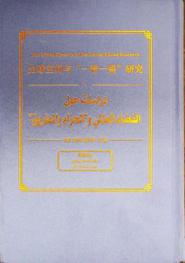
دراسات حول الفضاء العالمي و\الحزام والطريق\ : (مجلد الثقافة)
ينطلق هذا المجلد من العلاقة الهيكلية بين \"الفضاء\" و\"الثقافة\"، ويجمع بين مفهوم \"الفضاء\" في الجغرافيا ومفهوم \"السياق\" في الدراسات الثقافية وغيرهم من المفاهيم الأخرى، ويشرح نماذج ودلالات وأهداف مبادرة \"الحزام والطريق\" في سياق الحضارة الحديثة، ويصف صورة امتداد الحضارة على المحور التاريخي لـ \"الحزام والطريق\"، ويحلل الدلالة الثقافية في كل من اتجاه القيمة وبناء القوة الناعمة وإنشاء السياق الشرقي الخاصين بمبادرة \"الحزام والطريق\"، ويفسر علاقة الارتباط بين الثقافة الوطنية لـ \"الحزام والطريق\" والفضاء الوطني، ويكشف عن السرد عبر الفضاء للرموز الثقافية لـ \"الحزام والطريق\" ويوضح التعبير الرقمي والمرئي لواقع \"الحزام والطريق\"
Book

Green and Efficient Extraction of Phenolic Components from Plants with Supramolecular Solvents: Experimental and Theoretical Studies
The supramolecular solvent (SUPRAS) has garnered significant attention as an innovative, efficient, and environmentally friendly solvent for the effective extraction and separation of bioactive compounds from natural resources. However, research on the use of a SUPRAS for the extraction of phenolic compounds from plants, which are highly valued in food products due to their exceptional antioxidant properties, remains scarce. The present study developed a green, ultra-sound-assisted SUPRAS method for the simultaneous determination of three phenolic acids in Prunella vulgaris using high-performance liquid chromatography (HPLC). The experimental parameters were meticulously optimized. The efficiency and antioxidant properties of the phenolic compounds obtained using different extraction methods were also compared. Under optimal conditions, the extraction efficiency of the SUPRAS, prepared with octanoic acid reverse micelles dispersed in ethanol–water, significantly exceeded that of conventional organic solvents. Moreover, the SUPRAS method demonstrated greater antioxidant capacity. Confocal laser scanning microscopy (CLSM) images revealed the spherical droplet structure of the SUPRAS, characterized by a well-defined circular fluorescence position, which coincided with the position of the phenolic acids. The phenolic acids were encapsulated within the SUPRAS droplets, indicating their efficient extraction capacity. Furthermore, molecular dynamics simulations combined with CLSM supported the proposed method’s mechanism and theoretically demonstrated the superior extraction performance of the SUPRAS. In contrast to conventional methods, the higher extraction efficiency of the SUPRAS can be attributed to the larger solvent contact surface area, the formation of more types of hydrogen bonds between the extractants and the supramolecular solvents, and stronger, more stable interaction forces. The results of the theoretical studies corroborate the experimental outcomes.
Journal Article