
Catalogue Search | MBRL


Are you sure you want to remove the book from the shelf?

{{itemTitle}}
319
result(s) for
"Lucas, Bill"
Sort by:

Getting the improvement habit
If communication is truly effective and if those who lead the National Health Service and other health services across the world can create the conditions in which learning can flourish, then improvement capability, hand in hand with ongoing learning, should be being cultivated. [...]there is a rich seam of literature on matching learning methods to such desired outcomes. 15 The curious incident of the hands which did not get washed Reliably safe care giving requires workers who are knowledgeable and skilled. Acknowledgement: The author would like to thank Hadjer Nacer, Nick Barber and Helen Crisp at the Health Foundation for their many suggestions, improvement science fellows in the UK and in Sweden, many of the thoughtful educators who shared their experiences and Paul Batalden for many years of critical friendship and wisdom on this topic.
Journal Article


New kinds of smart: how the science of learnable intelligence is changing education
\"New Kinds of Smart is an intelligent book about intelligence, the many things that go into it, and how educators can help students to get more of the cornucopia.\" Professor David Perkins, Harvard University, USA \"This is an important and welcome book. It cuts through the hype about what the latest findings from cognitive neuroscience can, and more important, cannot tell us, and provides a comprehensive overview of what we know about learning.\" Professor Dylan Wiliam, Institute of Education, University of London \"This immensely readable book explains the developments of learning theory and then applies those developments to classroom practice and takes that next vital step of explaining what that means for a learner.\" Professor Mick Waters, Chairman of The Curriculum Foundation 20th Century schools presumed that students' intelligence was largely fixed. 21st century science says that intelligence is expandable - and in a variety of ways.New Kinds of Smartargues that this shift in the way we think about young minds opens up hitherto unexplored possibilities for education.For the first time ever,New Kinds of Smartbrings together all the main strands of research about intelligence in one book and explains these new ideas to practising teachers and educators. Each chapter presents practical examples, tools and templates so that each new strand of thinking can be woven into their work as teachers and into their lives as learners.Topics covered include: Composite intelligenceDistributed intelligenceExpandable intelligence Social intelligencePractical intelligenceStrategic intelligenceIntuitive intelligenceEthical intelligence
eBook

Developing pre-service primary teachers’ understanding of engineering through engineering habits of mind and engagement with engineers
This paper explores how primary teachers might be prepared through their pre-service training to feel more confident to include engineering in their teaching. Prompted by concerns about young people’s lack of interest in STEM subjects and careers, engineering is gradually gaining visibility in the primary curriculum in several forms, particularly through integrated STEM programmes. However, the status of engineering relative to science, technology and mathematics remains contested in schools and engineering has low visibility in pre-service preparation programmes for primary teachers. Therefore, this case-study investigated how two strategies might give students learning to be primary technology, computing and science teachers greater confidence to introduce the concept of engineering into their teaching. By reframing engineering as engineering habits of mind and by giving students experience of engaging with practising engineers, the study found that it was possible to enhance primary trainee teachers’ understanding of the world of engineering and increase their confidence to introduce engineering habits of mind in lessons with primary children. The paper concludes with some implications for practice of this approach.
Journal Article
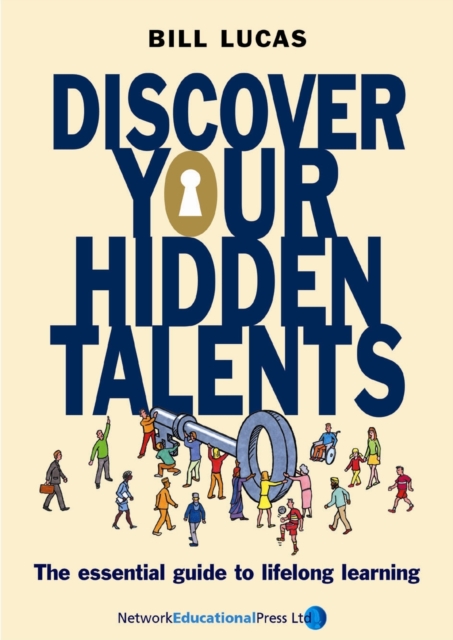
Discover Your Hidden Talents
Boost your learning power and release your full potential with Discover Your Hidden Talents.
eBook

New Kinds of Smart
How people think about education depends on how they understand the notion of 'intelligence'.Teaching reflects assumptions about what kinds of mental qualities are worth having, and about the extent to which those qualities are fixed or malleable.As the idea of 'intelligence' changes, so should the aims and methods of education.
eBook

Leadership Interventions in the Health Services that are Supported by the Health Foundation
The Health Foundation invests more than £7 million in developing leaders in the British health services. In February 2005 it invited external scrutiny of its approach to evaluation. This led to a radical development of its approach to leadership and to a broadening of the range of its evaluation methods and tools. The result of this work is that the Health Foundation is better able to measure the return on its investment in leadership and understand more about the ways in which improvements in leadership can lead to improvements in healthcare services.
Journal Article

Leadership for quality improvement -- what does it really take?
While the importance of leadership in quality improvement is increasingly being acknowledged, we still do not know enough about what improvement leaders actually do and how they behave. This paper describes how Alder Hey, using a range of experimental approaches, has created its own model of change and concluded that certain habits of mind are at the heart of sustainable improvement leadership.
Journal Article