
Catalogue Search | MBRL


Are you sure you want to remove the book from the shelf?

{{itemTitle}}
63
result(s) for
"Luibhéid, Eithne"
Sort by:

Pregnant on Arrival
\"State alert as pregnant asylum seekers aim for Ireland.\" \"Country Being Held Hostage by Con Men, Spongers, and Those Taking Advantage of the Maternity Residency Policy.\" From 1997 to 2004, headlines such as these dominated Ireland's mainstream media as pregnant immigrants were recast as \"illegals\" entering the country to gain legal residency through childbirth. As immigration soared, Irish media and politicians began to equate this phenomenon with illegal immigration that threatened to destroy the country's social, cultural, and economic fabric. Pregnant on Arrival explores how pregnant immigrants were made into paradigmatic figures of illegal immigration, as well as the measures this characterization set into motion and the consequences for immigrants and citizens. While focusing on Ireland, Eithne Luibhéid's analysis illuminates global struggles over the citizenship status of children born to immigrant parents in countries as diverse as the United States, Hong Kong, and elsewhere. Scholarship on the social construction of the illegal immigrant calls on histories of colonialism, global capitalism, racism, and exclusionary nation building but has been largely silent on the role of nationalist sexual regimes in determining legal status. Eithne Luibhéid turns to queer theory to understand how pregnancy, sexuality, and immigrants' relationships to prevailing sexual norms affect their chances of being designated as legal or illegal. Pregnant on Arrival offers unvarnished insight into how categories of immigrant legal status emerge and change, how sexual regimes figure prominently in these processes, and how efforts to prevent illegal immigration ultimately redefine nationalist sexual norms and associated racial, gender, economic, and geopolitical hierarchies.
eBook
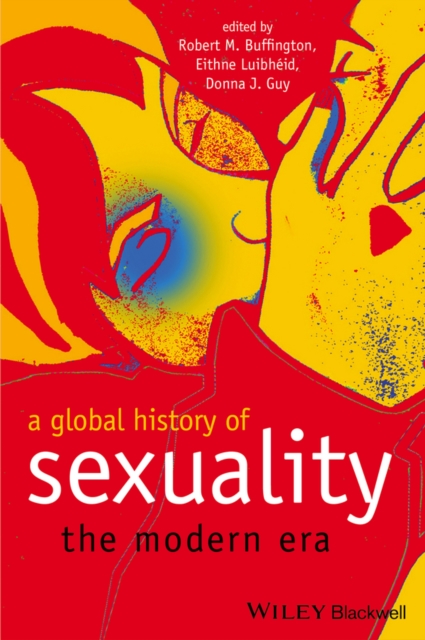
A global history of sexuality
A Global History of Sexuality provides a provocative, wide-ranging introduction to the history of sexuality from the late eighteenth century to the present day. Explores what sexuality has meant in the everyday lives of individuals over the last 200 years Organized around four major themes: the formation of sexual identity, the regulation of sexuality by societal norms, the regulation of sexuality by institutions, and the intersection of sexuality with globalization Examines the topic from a comparative, global perspective, with well-chosen case studies to illuminate the broader themes Includes interdisciplinary contributions from prominent historians, sociologists, anthropologists, and sexuality studies scholars Introduces important theoretical concepts in a clear, accessible way
eBook

Entry Denied
Since the late nineteenth century, immigrant women’s sexuality has been viewed as a threat to national security, to be contained through strict border-monitoring practices. By scrutinizing this policy, its origins, and its application, Eithne Luibhéid shows how the U.S. border became a site not just for controlling female sexuality but also for contesting, constructing, and renegotiating sexual identity._x000B_
eBook


Sexual Regimes and Migration Controls: Reproducing the Irish Nation-State in Transnational Contexts
This article examines the ways that state sexual regimes intersect with migration controls to re-make exclusionary nation-states and geopolitical hierarchies among women. I focus on two important Irish Supreme Court rulings: the X case (1992) and the 0 case (2002), respectively. X was a raped, pregnant, 14-year-old who sought an abortion in Britain, While the Supreme Court ultimately permitted her to procure an abortion, women's right to travel across international borders without government inquiry into their reproductive status came into question. The 0 case concerned a Nigerian asylum seeker who invoked the fact that she was pregnant in an effort to avoid deportation. The Supreme Court, however, affirmed that she could be deported, despite the Irish Constitution's pledge to protect the 'right to life of the unborn.' Considered together, these cases reveal how overlapping sexual/migration control regimes both reinscribe hierarchies among women based on geopolitical location, and rebound the exclusionary nation-state despite growing transnationalism.
Journal Article

The Regime of Destruction: Separating Families and Caging Children
This photo essay and assembled materials begin in recognition that forced separation is not a new practice but one with a long and brutal history connected to colonization, slavery, internment, and imprisonment. This project contextualizes and connects these histories to the specific cruelty being enacted on children at present. It is an online and installation-ready interventionist art project that participates visually, textually, and sonically in the collective outcry against the forced separation of migrant and refugee children from their families at the US/Mexico border. It is a call to action.
Journal Article
Counternarratives of Migration Law and Childbearing
Minister for justice john o’donoghue’s remarks, analyzed in chapter 1, reflect the viewpoint of global northern state officials who consider unauthorized human migration across international borders to be a very serious problem. The remarks also reflect and further contribute to the framing of childbearing migrants, especially asylum seekers, as “really” illegal migrants who are cynically exploiting the system for their own gain. According to the minister, this necessitated further efforts to criminalize them.
Catherine Dauvergne captures the paradox that faces states when they try to reduce illegal migration primarily through expanded criminalization: “Each extension of the law regulating migration increases
Book Chapter
Shifting Boundaries through Discourses of Childbearing
National, colonial, and racial relationships have historically depended on discourses about women’s sexed bodies to establish hierarchies of differences. Actual women’s bodies were often studied, exhibited, or otherwise used to affirm and naturalize these hierarchies.¹ One of the most infamous examples of a woman whose body was used in these ways was Saartjie, or Sarah, Baartman, a young Khoisan woman from Southern Africa who was exhibited in Europe between 1810 and 1815.² She was exhibited particularly so that Europeans could gaze upon her buttocks and genitalia, which were primary sites used by scientists at the time to establish racial and
Book Chapter
Reproductive Futurism and the Temporality of Migration Control
In march 2004 the minister for justice announced that voters would be asked to amend the constitution by removing the automatic entitlement to citizenship for any child born in Ireland, north or south. Newborn children who did not have at least one parent who was an Irish citizen, who was entitled to Irish citizenship, or who had resided legally in Ireland for three of the last four years would no longer acquire citizenship at birth. The targets of the proposed amendment were migrants, although their children were most directly affected. Migrants were targeted because “there has been no significant diminution
Book Chapter
From Childbearing to Multiple Sexuality and Migration Struggles
This book has tracked how pregnancy and migrant status became interwoven through panics over illegal immigration that expanded the numbers of migrants who would become designated as illegal while at the same time refashioning social, economic, and geopolitical hierarchies. This chapter argues that struggles over migrant pregnancies were part of a wider constellation of conflicts over migrant sexualities and intimacies that, although distinct in important ways, were nonetheless linked through their antagonistic relationship to nationalist hetero-normativity. First I describe what happened to migrant parents with citizen children after the passage of the citizenship referendum. Next I briefly discuss other conflicts
Book Chapter