
Catalogue Search | MBRL


Are you sure you want to remove the book from the shelf?

{{itemTitle}}
109
result(s) for
"Lyddon, Dave"
Sort by:


Alan Fox and the managerial “unitary” frame of reference in unionised companies: context, roots, elaboration and international applicability
PurposeThis study investigates the origins and elaboration of the managerial “unitary” frame of reference associated with Alan Fox, focusing on unionised firms: the industrial relations context, intellectual roots, elaboration, adaptation by other writers, and international applicability.Design/methodology/approachTracing the above requirements through contemporaneous sources.FindingsFox’s designation of the unitary frame needs to be understood in its 1960s’ context, particularly the promotion of “productivity bargaining”, and its furthering through management training and education. Fox’s specific contribution is identified. Subsequent UK writers have underplayed the importance of the legal dimension of managerial authority, especially relevant in the US context, while other extra-economic factors bolster the managerial unitary frame in authoritarian societies such as China.Originality/valueThe use of Fox's neglected 1960s’ writings; tracking how Fox developed the unitary frame concept and how it was funnelled into the narrow parameters of non-unionism by subsequent writers; identifying its applicability beyond the UK (with the USA as a historical example and China as a contemporary one).
Journal Article
The changing pattern of UK strikes, 1964-2014
Purpose
– The purpose of this paper is to provide an overview of the changing strike activity in the UK over the last 50 years.
Design/methodology/approach
– The paper draws on a wide literature on UK strikes and an extensive trawl of newspaper sources. It is divided into four main sections. The first two summarise, in turn, the changing amount and locus of strike activity between 1964 and 2014. The third discusses the changing relationship and balance between official and unofficial strikes. The last covers the role of the courts and legislation on strikes, highlighting some key moments in this turbulent history.
Findings
– The period 1964-2014 can be divided into three sub-periods: high-strike activity until 1979; a transition period of “coercive pacification” in the 1980s; and unprecedentedly low-strike activity since the early 1990s. Unions were more combative against the legislative changes of the 1980s than they are normally given credit for.
Research limitations/implications
– Given its broad scope, this paper cannot claim to be comprehensive.
Originality/value
– This is a rare study of the changing nature of UK strikes over such a long time period.
Journal Article

Strikes around the world, 1968-2005
This unique study draws on the experience of fifteen countries around the world - South Africa, Argentina, Canada, Mexico, United States, Korea, Australia, New Zealand, Belgium, Denmark, France, Germany, the Netherlands, Sweden and the United Kingdom. Covering the high and low points of strike activity over the period 1968-2005, the study shows continuing evidence of the durability, adaptability and necessity of the strike.
eBook
Strike statistics and the problems of international comparison
'[A]lthough it is difficult to say with any precision whether one country experiences more or less strikes than another, we can certainly make an informed judgement as to the country in which strike activity has been increasing fastest over a specified period' (Shalev 1978: 325-326).
Book Chapter

Dutch herring
In the seventeenth century, the Dutch herring fisheries in the North Sea were considered the most sophisticated and demanding fishing operation in the world. This is the first study to assess the North Sea herring and herring fisheries over the span of several centuries. It contributes to the understanding of pre-modern natural resource exploitation and the role of the natural environment in long-term development of the Dutch herring fisheries.
eBook
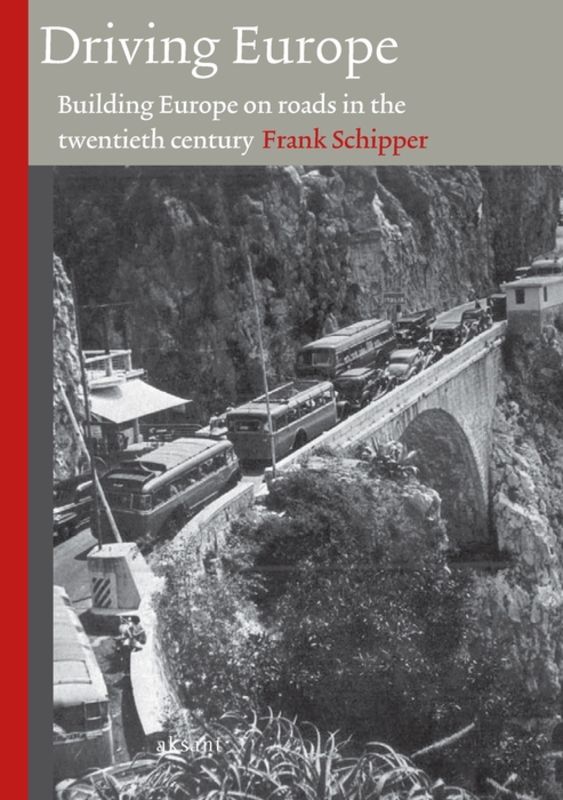
Driving Europe
Today we can hardly imagine life in Europe without roads and the automobiles that move people and goods around. In fact, the vast majority of movement in Europe takes place on the road. Travelers use the car to explore parts of the continent on their holidays, and goods travel large distances to reach consumers. Indeed, the twentieth century has deservedly been characterized as the century of the car. The situation looked very different around 1900. People crossing national borders by car encountered multiple hurdles on their way. Technically, they imported their vehicle into a neighboring country and had to pay astronomic import duties. Often they needed to pass a driving test in each country they visited. Early on, automobile and touring clubs sought to make life easier for traveling motorists. International negotiations tackled the problems arising from differing regulations. The resulting volume describes everything from the standardized traffic signs that saved human lives on the road to the Europabus taking tourists from Stockholm to Rome in the 1950s. Driving Europe offers a highly original portrait of a Europe built on roads in the course of the twentieth century.
eBook

Cultural styles of knowledge transmission
Anthropologist Ad Borsboom devoted his academic career from 1972 onwards to the transmission of cultural knowledge. Borsboom handed the insights he acquired during many years of fieldwork among Australian Aborigines on to other academics, students, and the general public. This collection of essays by his colleagues, specializing in cultures from across the globe, focuses on knowledge transmission. The contributions deal with local forms of education or pedagogy, the learning experiences of fieldwork, and the nexus of status and education. Whereas some essays are reflexive, others are personal in nature. But all of the authors are fascinated by the divergent ways in which people handle :\"knowledge.\" The volume provides readers with respectful representations of other cultures and their distinct epistemologies.
eBook
From strike wave to strike drought : The United Kingdom, 1968-2005
The annual number of recorded strikes in the United Kingdom (UK) fluctuated between 2,000 and 3,000 from the mid-1950s to 1979. For ten years until the late 1960s the steep decline in the number of coalmining strikes (which had dominated early post-war figures) masked the rise in manufacturing and transport strikes. A Royal Commission into industrial relations (Donovan 1968) highlighted the developing strike 'problem'. Aggregate strike numbers then exploded to nearly 4,000 in 1970.
Book Chapter

Electrifying europe
Nowadays most consumers are aware of the European dimensions of their electricity supply. But what ideas lie behind this European network? In constructing electricity networks, Europe performed a Janus-faced function. On the one hand, a European network would bolster economic growth and peace. On the other, economic growth through electrification would increase military potential. By combining a wide array of rarely used sources, this book unravels how engineers, industrialists, and policymakers used ideas of Europe to gain support for building a European system. By focusing on transnational and European actors, this book is a valuable addition to existing national histories of electrification. It is an original contribution to the history of technology, while also making the role of technology visible in more mainstream European history.
eBook