
Catalogue Search | MBRL


Are you sure you want to remove the book from the shelf?

{{itemTitle}}
4
result(s) for
"Lynteris, Christos, editor"
Sort by:

Histories of post-mortem contagion : infectious corpses and contested burials
This edited volume draws historians, anthropologists and archaeologists together to explore the contested worlds of epidemic corpses and their disposal. Why are burials so frequently at the center of disagreement, recrimination and protest during epidemics? Why are the human corpses produced in the course of infectious disease outbreaks seen as dangerous, not just to the living, but also to the continued existence of society and civilization? Examining cases from the Black Death to Ebola, contributors challenge the predominant idea that a single, universal framework of contagion can explain the political, social and cultural importance and impact of the epidemic corpse.
Book
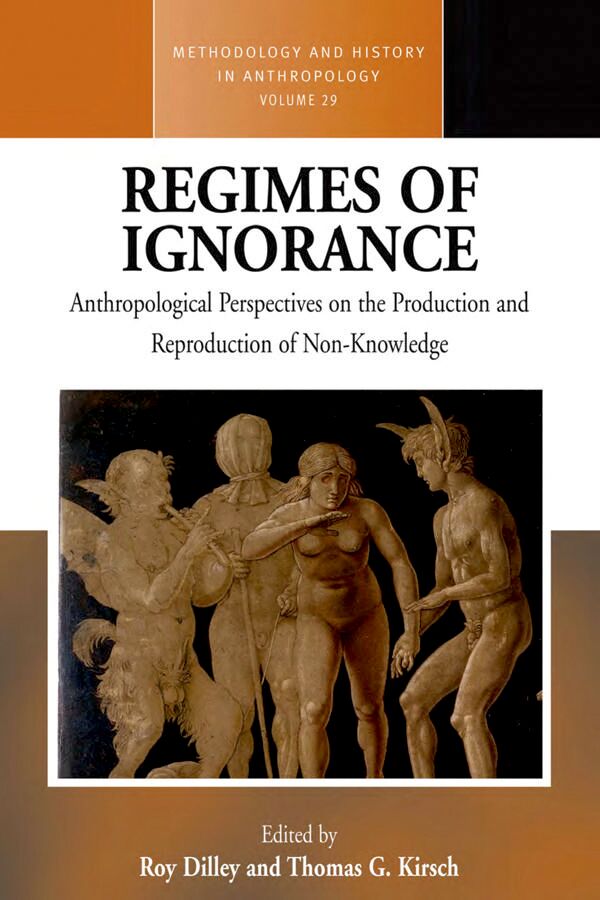
Regimes of Ignorance
Non-knowledge should not be simply regarded as the opposite of knowledge, but as complementary to it: each derives its character and meaning from the other and from their interaction. Knowledge does not colonize the space of ignorance in the progressive march of science; rather, knowledge and ignorance are mutually shaped in social and political domains of partial, shifting, and temporal relationships. This volume's ethnographic analyses provide a theoretical frame through which to consider the production and reproduction of ignorance, non-knowledge, and secrecy, as well as the wider implications these ideas have for anthropology and related disciplines in the social sciences and humanities.
eBook


Framing animals as epidemic villains : histories of non-human disease vectors
This book takes a historical and anthropological approach to understanding how non-human hosts and vectors of diseases are understood, at a time when emerging infectious diseases are one of the central concerns of global health. The volume critically examines the ways in which animals have come to be framed as 'epidemic villains' since the turn of the nineteenth century. Providing epistemological and social histories of non-human epidemic blame, as well as ethnographic perspectives on its recent manifestations, the essays explore this cornerstone of modern epidemiology and public health alongside its continuing importance in today's world. Covering diverse regions, the book argues that framing animals as spreaders and reservoirs of infectious diseases - from plague to rabies to Ebola - is an integral aspect not only to scientific breakthroughs but also to the ideological and biopolitical apparatus of modern medicine. As the first book to consider the impact of the image of non-human disease hosts and vectors on medicine and public health, it offers a major contribution to our understanding of human-animal interaction under the shadow of global epidemic threat.
Book