
Catalogue Search | MBRL


Are you sure you want to remove the book from the shelf?

{{itemTitle}}
4,078
result(s) for
"MICHEL Marc"
Sort by:
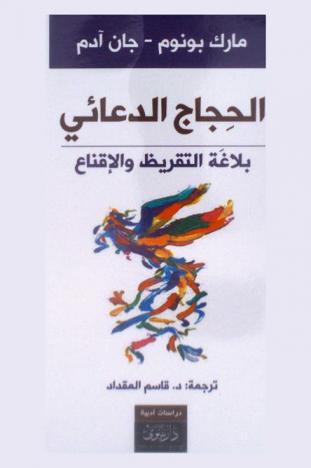
الحجاج الدعائي : بلاغة التقريظ والإقناع
الدعاية وردة الحياة المعاصرة ؛ لأنها تشدد على التفاؤل والبهجة، وهي بمثابة تسلية للعين والروح نعم، في حقيقة الأمر، الدعاية أجمل تعبير عن عصرنا، وأكبر اختراعات اليوم، إنها فن، فن يستعين بالعالمية، وتعدد الألسن، وعلم نفس الجماهير، وتقلبات التقنيات الراكدة، أو المتحركة المعروفة، ولا يتوقف تجدد استخدامها الدائم لمواد جديدة بشكل مكثف، وطرائق غير مألوفة أبدا تتميز الدعاية العالمية بغنائيتها ؛ حيث تتعانق الدعاية مع الشعر الغنائية طريقة في الوجود والشعور؛ واللغة انعكاس للوعي البشري؛ الشعر يعرفنا (بوصفه منتجا كما الدعاية) يتصوره للروح. لقد وعى الشاعر مجمل الحياة المعاصرة، بوعيه لزمانه، لأنه ضمير تلك الفترة. لهذا أناشد جميع الشعراء وأقول لهم؛ يا أصدقائي، الدعاية مجالكم، لأنها تتكلم لسانكم، وتحقق شاعريتكم.
Book

Crystallization by particle attachment in synthetic, biogenic, and geologic environments
Crystals grow in a number a ways, including pathways involving the assembly of other particles and multi-ion complexes. De Yoreo
et al.
review the mounting evidence for these nonclassical pathways from new observational and computational techniques, and the thermodynamic basis for these growth mechanisms. Developing predictive models for these crystal growth and nucleation pathways will improve materials synthesis strategies. These approaches will also improve fundamental understanding of natural processes such as biomineralization and trace element cycling in aquatic ecosystems.
Science
, this issue
10.1126/science.aaa6760
Materials nucleate and grow by the assembly of small particles and multi-ion complexes.
Field and laboratory observations show that crystals commonly form by the addition and attachment of particles that range from multi-ion complexes to fully formed nanoparticles. The particles involved in these nonclassical pathways to crystallization are diverse, in contrast to classical models that consider only the addition of monomeric chemical species. We review progress toward understanding crystal growth by particle-attachment processes and show that multiple pathways result from the interplay of free-energy landscapes and reaction dynamics. Much remains unknown about the fundamental aspects, particularly the relationships between solution structure, interfacial forces, and particle motion. Developing a predictive description that connects molecular details to ensemble behavior will require revisiting long-standing interpretations of crystal formation in synthetic systems, biominerals, and patterns of mineralization in natural environments.
Journal Article
Structure of Ferrihydrite, a Nanocrystalline Material
Despite the ubiquity of ferrihydrite in natural sediments and its importance as an industrial sorbent, the nanocrystallinity of this iron oxyhydroxide has hampered accurate structure determination by traditional methods that rely on long-range order. We uncovered the atomic arrangement by real-space modeling of the pair distribution function (PDF) derived from direct Fourier transformation of the total x-ray scattering. The PDF for ferrihydrite synthesized with the use of different routes is consistent with a single phase (hexagonal space group P6₃mc; a = ~5.95 angstroms, c = ~9.06 angstroms). In its ideal form, this structure contains 20% tetrahedrally and 80% octahedrally coordinated iron and has a basic structural motif closely related to the Baker-Figgis δ-Keggin cluster. Real-space fitting indicates structural relaxation with decreasing particle size and also suggests that second-order effects such as internal strain, stacking faults, and particle shape contribute to the PDFs.
Journal Article

Sutimlimab in Cold Agglutinin Disease
Cold agglutinin disease is a type of autoimmune hemolytic anemia. A total of 17 of 24 patients (71%) with cold agglutinin disease who received sutimlimab (a monoclonal antibody that targets the C1s protein, which activates the classic complement pathway) were transfusion-free at the end of the study.
Journal Article

CHD2-Related CNS Pathologies
Epileptic encephalopathies (EE) are severe epilepsy syndromes characterized by multiple seizure types, developmental delay and even regression. This class of disorders are increasingly being identified as resulting from de novo genetic mutations including many identified mutations in the family of chromodomain helicase DNA binding (CHD) proteins. In particular, several de novo pathogenic mutations have been identified in the gene encoding chromodomain helicase DNA binding protein 2 (CHD2), a member of the sucrose nonfermenting (SNF-2) protein family of epigenetic regulators. These mutations in the CHD2 gene are causative of early onset epileptic encephalopathy, abnormal brain function, and intellectual disability. Our understanding of the mechanisms by which modification or loss of CHD2 cause this condition remains poorly understood. Here, we review what is known and still to be elucidated as regards the structure and function of CHD2 and how its dysregulation leads to a highly variable range of phenotypic presentations.
Journal Article

Adverse events associated with JAK inhibitors in 126,815 reports from the WHO pharmacovigilance database
Increasing number of Janus kinase (JAK) inhibitors have been approved for chronic haematopoietic neoplasms and inflammatory/autoimmune diseases. We aimed to assess safety of the first three approved JAK inhibitors: ruxolitinib, tofacitinib and baricitinib. In this retrospective observational study, pharmacovigilance data were extracted from the World Health Organization database. Adverse events are classified according to Medical Dictionary for Regulatory Activities hierarchy. Until February 28, 2021, all Individual Case Safety Reports [ICSRs] with the suspected drug ruxolitinib, tofacitinib or baricitinib were included. Disproportionality analysis was performed and the information component (IC) was estimated. Adverse events were considered a significant signal if the lower end of the 95% credibility interval of the IC (IC025) was positive. We identified 126,815 ICSRs involving JAK inhibitors. Ruxolitinib, tofacitinib and baricitinib were associated with infectious adverse events (IC025 1.7, especially with viral [herpes and influenza], fungal, and mycobacterial infectious disorders); musculoskeletal and connective tissue disorders (IC025 1.1); embolism and thrombosis (IC025 0.4); and neoplasms (IC025 0.8, especially malignant skin neoplasms). Tofacitinib was associated with gastrointestinal perforation events (IC025 1.5). We did not find a significant increase in the reporting of major cardiovascular events. We identified significant association between adverse events and ruxolitinib, tofacinitib and baricitinib in international pharmacovigilance database.
Journal Article

Evans’ Syndrome: From Diagnosis to Treatment
Evans’ syndrome (ES) is defined as the concomitant or sequential association of warm auto-immune haemolytic anaemia (AIHA) with immune thrombocytopenia (ITP), and less frequently autoimmune neutropenia. ES is a rare situation that represents up to 7% of AIHA and around 2% of ITP. When AIHA and ITP occurred concomitantly, the diagnosis procedure must rule out differential diagnoses such as thrombotic microangiopathies, anaemia due to bleedings complicating ITP, vitamin deficiencies, myelodysplastic syndromes, paroxysmal nocturnal haemoglobinuria, or specific conditions like HELLP when occurring during pregnancy. As for isolated auto-immune cytopenia (AIC), the determination of the primary or secondary nature of ES is important. Indeed, the association of ES with other diseases such as haematological malignancies, systemic lupus erythematosus, infections, or primary immune deficiencies can interfere with its management or alter its prognosis. Due to the rarity of the disease, the treatment of ES is mostly extrapolated from what is recommended for isolated AIC and mostly relies on corticosteroids, rituximab, splenectomy, and supportive therapies. The place for thrombopoietin receptor agonists, erythropoietin, immunosuppressants, haematopoietic cell transplantation, and thromboprophylaxis is also discussed in this review. Despite continuous progress in the management of AIC and a gradual increase in ES survival, the mortality due to ES remains higher than the ones of isolated AIC, supporting the need for an improvement in ES management.
Journal Article