
Catalogue Search | MBRL


Are you sure you want to remove the book from the shelf?

{{itemTitle}}
20
result(s) for
"MacNair, Rachel"
Sort by:


OUR PRO-LIFE FUTURE
According to the Guttmacher Institute, a partner of Planned Parenthood, the rate peaked at 29.3 per thousand women between the ages of fifteen and forty-four in 1981, but by 2014 it was down to 14.6 abortions per thousand women-a drop by almost half. If they see that their actions and the actions of those around them have changed, then they're inclined to change their beliefs or attitudes to fit those actions. [...]they look for reasons why the change happened, reasons that will preserve their self-esteem and explain why they didn't have those same thoughts before. In Defenders of the Unborn: The Pro-Life Movement before Roe v. Wade, Daniel K. Williams notes that the Michigan group \"Voice of the Unborn\" produced a campaign brochure saying, \"Michigan was the first state in America to outlaw the death penalty for criminals. Williams observes that in North Dakota, pro-life campaigner Al Fortman \"enjoyed an excellent relationship with several of the state's Catholic bishops and forged ties with some of the state's Protestant ministers by linking the pro-life issue to other social justice causes, such as opposition to the Vietnam War, that interested mainline Protestant clergy.\"
Journal Article
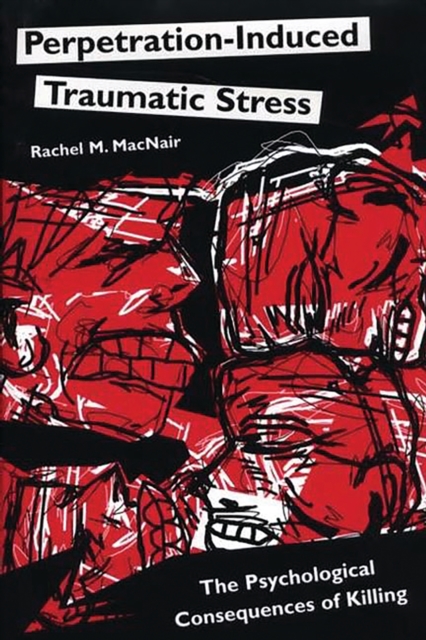
Perpetration-Induced Traumatic Stress: The Psychological Consequences of Killing
This volume introduces the concept of Perpetration-Induced Traumatic Stress (PITS), a form of PTSD symptoms caused not by traditionally expected roles, such as being a victim or rescuer in trauma, but by being an active participant in causing trauma. Sufferers of PITS may be in the roles of soldiers, executioners, or police officers, where it is socially acceptable or even expected for them to cause trauma, including death. Scattered evidence of PITS is consolidated, its implications are explored, and exciting potentials for future research are suggested. Compared to the more widely understood PTSD, there appears to be greater severity and different symptom patterns for those affected by PITS. Obvious differences to be explored for those who kill include questions of context, guilt, meaning, content of dreams, and sociological questions, leading to special implications for therapy, research into the causality of PTSD, and violence prevention efforts. Disciplines including sociology, public policy, history, philosophy, and theology will also find applications for this groundbreaking material.
eBook


Symptom pattern differences for perpetration -induced traumatic stress in veterans: Probing the National Vietnam Veterans Readjustment Study
In the scant literature on posttraumatic stress disorder (PTSD) resulting from being a perpetrator, there is the suggestion that symptom patterns may differ between PTSD with etiological perpetration as opposed to victimization. The symptom pattern differences were probed with a secondary analysis using multivariate statistics on the National Vietnam veterans Adjustment Study (n = 1,638), a government study. It contained an extensive set of questions, collected from a stratified random sample in the 1980s. Findings showed that pattern differences derived from discriminant function analysis included greater frequency of self-reported violent outbursts and greater severity of intrusive symptoms in the perpetration groups. Also higher for these groups was hyperarousal, alienation, survivor guilt, and a sense of disintegration. Concentration and memory problems, however, were more characteristic of non-perpetration groups. Neither self-rated battle intensity nor participation in killing of civilians or prisoners were sufficient to account for results. Factor analysis resulted in the same factors for the perpetration and non-perpetration groups, but the factors were not consistent with the symptom clusters of the official definition of PTSD. These findings have practical implications for therapy and epidemiology, and theoretical implications for causation of PTSD symptoms. Including the variable of perpetration is important because comparing groups in which some have killed and others have not may lead to confusing results that obscure the actual pattern. There are sociological and historical implications, as well as possibilities for groups other than veterans, such as police officers, criminal murderers, executioners, and Nazis.
Dissertation

Keep RU-486 out of USA
THE EDITORIAL PAGE;Today's debate is on WOMEN'S HEALTH and whether RU- 486 should be tested in the USA.;OPPOSING VIEW:Plan for chemically induced miscarriages is yet another assault upon women.;Rachel MacNair is president of Feminists for Life of America, Kansas City, Mo. For chemically induced miscarriages in France, women undergo pelvic exams, blood tests, ultrasound. They take RU-486 and return in two days for an injection of prostaglandin; side effects are awful, but the failure rate drops from 15% to 3%. In a week, if the miscarriage isn't complete, surgical abortion is done.
Newspaper Article