
Catalogue Search | MBRL


Are you sure you want to remove the book from the shelf?

{{itemTitle}}
12
result(s) for
"Maddanu, Simone"
Sort by:

Restless cities on the edge : collective actions, immigration and populism
This book is a sociological description and analysis of urban collective actions, protests, resistance, and riots that started in the 1990s and continue in different forms to this date in Rome, Italy. Through participant observation, ethnographic study, and in-depth qualitative interviewsoften occurring during times of protest or even violent actionthis book studies a variety of urban realities: grassroots movements, anti-migrant district riots, and the daily lives of the fluid and fluctuating multi-ethnic groups in the city. Ultimately, this book gives voice to some of the protagonists involved, proposing interpretations to each reality described, but also making cross-connections with politics and migration when pertinent. It offers a new understanding of urban collective actions cognizant of the 'common goods', but also of the emergence of new right-wing populism. Antimo Luigi Farro is a Full Professor of Sociology, Department of Social Sciences and Economics, Sapienza University of Rome, Italy. His published books include Reimagining Social Movements: From Collectives to Individuals (Ed. with Henri Lustiger-Thaler, Routledge 2016). Simone Maddanu received his PhD in Sociology at the School for Advanced Studies in Social Sciences (EHESS) of Paris, France. He currently teaches sociology and contemporary social problems at the University of South Florida, Tampa, USA. He has published books and articles related to social movements, immigration, Islam in Europe, common goods, and modernity.
BOOK

Global Modernity from Coloniality to Pandemic
Global Modernity from Coloniality to Pandemic explores issues related to the global crises of our time: reason, science, and the environment by revisiting the notions of modernity, modernism, and modernization, which can no longer be considered purely Western or strictly secular. The book poses questions about viewing modernity today from the vantage point of traditionally disparate disciplines - engaging scholars from sociology to science, philosophy to robotics, medicine to visual culture, mathematics to cultural theory, biology to environmental studies. Leading sociologist Alain Touraine contributes a new text in which he reflects on the role of women, refugees and migrants, and the future of democracy. In their conclusion, the editors posit a fundamental ethical distinction between modernization and modernity and call for a new understanding of modernity that is globally distributed, informed by the voices of many, and concerned with crises that threaten all of us at the level of the species - a modernity-to-come.
eBook
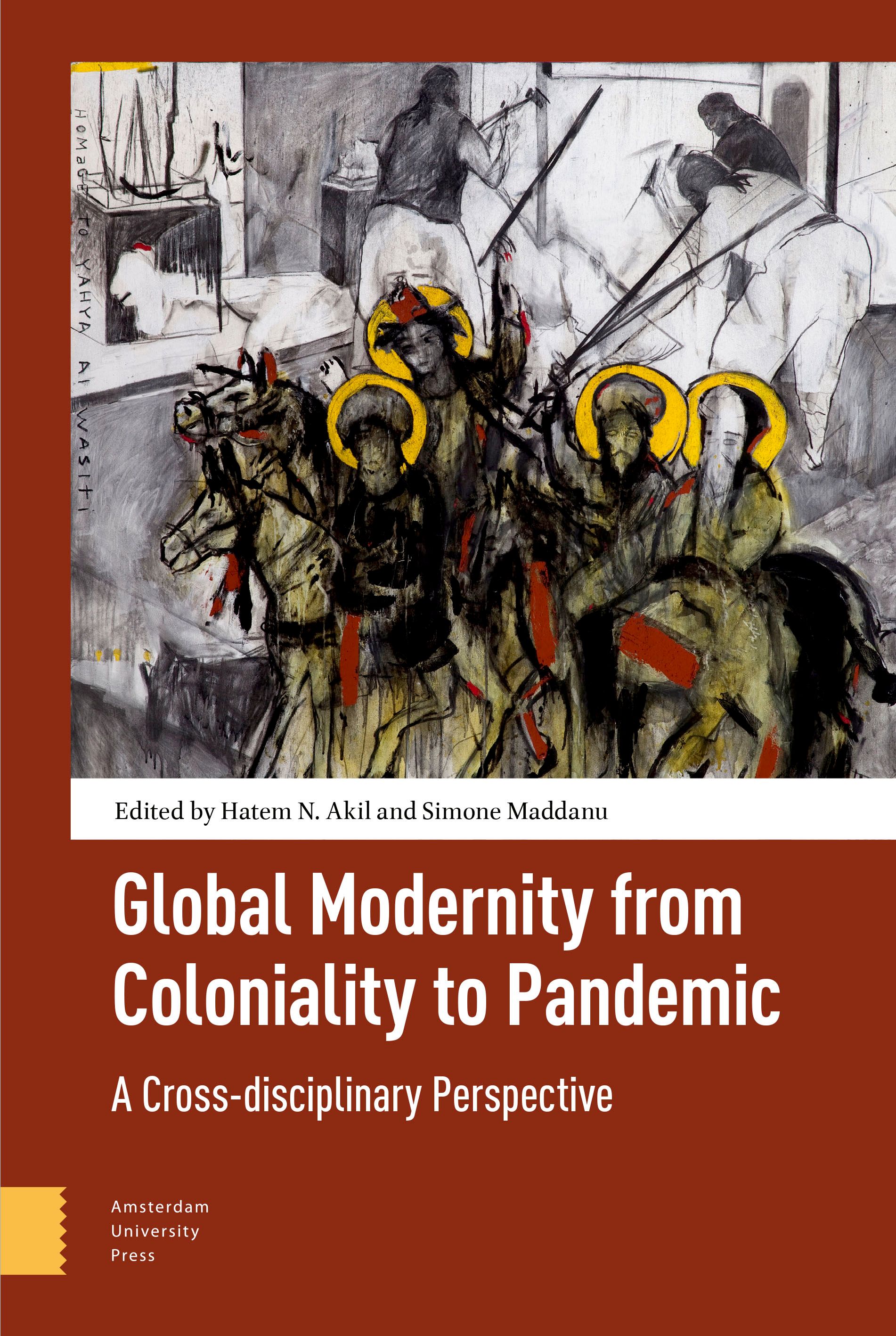
Global Modernity from Coloniality to Pandemic
Global Modernity from Coloniality to Pandemic explores issues related to the global crises of our time: reason, science, and the environment by revisiting the notions of modernity, modernism, and modernization, which can no longer be considered purely Western or strictly secular. The book poses questions about viewing modernity today from the vantage point of traditionally disparate disciplines - engaging scholars from sociology to science, philosophy to robotics, medicine to visual culture, mathematics to cultural theory, biology to environmental studies. Leading sociologist Alain Touraine contributes a new text in which he reflects on the role of women, refugees and migrants, and the future of democracy. In their conclusion, the editors posit a fundamental ethical distinction between modernization and modernity and call for a new understanding of modernity that is globally distributed, informed by the voices of many, and concerned with crises that threaten all of us at the level of the species - a modernity-to-come.
eBook

Global Modernity from Coloniality to Pandemic
This book poses questions about viewing modernity today from the vantage point of traditionally disparate disciplines engaging scholars from sociology to science, philosophy to robotics, medicine to visual culture, mathematics to cultural theory, etc., including a contribution by Alain Touraine. From coloniality to pandemic, modernity can now represent a global necessity in which awareness of human and environmental crises, injustices, and inequality would create the possibility of a modernity-to-come.
eBook
Connecting Modernities
Editors' introductory chapter delineates common threads among the volume's cross-disciplinary contributions and connects these to the history of research on modernity as well as the most compelling issues confronting us today. The introduction discusses how the pandemic carries on the possibility (threat?) of a tabula rasa condition, a civilizational detour based on a foundation of global awareness of nature and society. The authors support the need for global problem-solving strategies, new global ethics, and a global resource management paradigm solidly cognizant of the commons and redistribution. The introduction explores the main hiatuses in today's modernity and provides an update to the necessary assertion of a global modernity in the midst of political, ecological, and health crises.
Book Chapter
Toward a New Global?
This chapter unifies cross-disciplinary references, analysis, and conceptualizations of modernity and modernization, highlighting a clear distinction between the spirit of both modernization and modernity. As we saw from different perspectives and criticisms, although modernization operates as a levelling process, modernity still appears to be worth a potential update. From coloniality to pandemic, by connecting modernities and histories, modernity can now represent a global necessity, where awareness of injustice, inequality, and human and environmental crises would create the possibility of a modernity-to-come.
Book Chapter
Conflicting Modernities: Militarization and Islands
This chapter mainly points out how militarization as a bureaucratic and discursive \"apparatus\" results in a colonial modernization. Furthermore, the chapter establishes a direct link between military settlements - by various occupations - and a narrative of modernization and modernity. Both military protocols and the scope of the military activities contribute to a form of colonization and dependence, economically as well as culturally. Militarization is a wider concept involving at least two dimensions: the economic and political factors sustaining the expansion of military spending; and the social, cultural, and ideological dimension. However, the master narrative of modernization clashes with rising claims to autonomy in the local population that assert an alternative modernity.
Book Chapter
Connecting Modernities: A Global Update
AbstractEditors’ introductory chapter delineates common threads among the volume's cross-disciplinary contributions and connects these to the history of research on modernity as well as the most compelling issues confronting us today. The introduction discusses how the pandemic carries on the possibility (threat?) of a tabula rasa condition, a civilizational detour based on a foundation of global awareness of nature and society. The authors support the need for global problem-solving strategies, new global ethics, and a global resource management paradigm solidly cognizant of the commons and redistribution. The introduction explores the main hiatuses in today's modernity and provides an update to the necessary assertion of a global modernity in the midst of political, ecological, and health crises.Keywords: connected modernities; pandemic COVID-19; global modernity; commons; social movementsThe use terms and concepts like modernity, modernism, and modernization is a leitmotif and common denominator of various disciplines. However, modernity, modernism, and modernization are also controversial concepts that range from the theoretical to the empirical. Resurging in the last decades in the light of globalization, the climate crisis, technological advancement, and populism, the questioning of modernity begins to couple with questions of our present time and plans for the future.When and how did we start being modern? One may note that the attribution of specific characteristics of modernity traces back to a fundamental switch from one epoch to another: the dissociation with tradition; the adoption of secularism and religious disenchantment; the use of the scientific method as the predominant paradigm (as if never changing); the acceptance of the utter dominance of reason, rationality, and positivism; the emergence of the nation state; the assertion of universal human rights and universal values – and so on. Art, literature, fashion, mores, and hygiene concerns (the new manners as described by Norbert Elias, 1969) all become part of the rhetoric of modernity, leading to a self-celebratory promise of a new civilization.Since the 70s, the resurgence of modernity studies started to occupy the framework of a “post-” condition. French philosophers and sociologists such as Lyotard, Bell, and Touraine have interrogated the features of a fundamental change from an industrial society to a programmed or communication society (Touraine 1971 [1969]; Castells 1996, 1977) in which identities and information appear to be more emphasized than the classic conflicts surrounding labor issues and control of the means of production (Touraine 1977 [1973]).
Book Chapter