
Catalogue Search | MBRL


Are you sure you want to remove the book from the shelf?

{{itemTitle}}
76
result(s) for
"Mair, Heather"
Sort by:

Boolean Analysis of Factors Affecting Women’s Participation in Rural Tourism
Women’s participation is a significant development priority in tourism, especially rural tourism. Despite their critical role in rural tourism, women face different constraints and limitations that prevent them from fully participating in local tourist activities. This study explores the most influential factors on women’s participation in rural tourism, using qualitative methods of inquiry (semi-structured interviews and observations) to collect data from 17 women who are active in rural tourism in the villages of Khorasan Razavi, Iran. Eight fundamental causes were identified and classified into macro- and micro-level factors that affect women’s participation in rural tourism, using the Boolean algebra analysis. The findings show socio-geographic proximity, a newly emerging theme, and patriarchal structure influence women’s participation at the macro-level. Similarly, self-confidence, family support, financial assistance, and the absence of role conflict at the micro-level are necessary and sufficient causes to influence women to participate and overcome challenging situations in rural tourism activities.
Journal Article

Blogging Slum Tourism: A Critical Discourse Analysis of Travel Blogs
Modern slum tourism, rooted in the social justice movements of South Africa and Brazil in the early 1990s, has become an increasingly popular practice among tourists looking for experiences off the beaten path. Unsurprisingly, a form of tourism that allows wealthy travelers to experience
the \"reality\" of how poor people live has elicited criticism and controversy. Slum tourism has been lauded as an innovative economic opportunity for poor urban neighborhoods and has been condemned for promoting poverty voyeurism. The first author undertook a critical discourse analysis in
the winter of 2013-2014, analyzing slum tourism discourse in travel blogs. Eighteen travel blogs and 36 blogs postings were analyzed using a Foucauldian critical discourse perspective. The study found that travel bloggers use a number of structures of authority and structures of responsibility
to convince their readers of the value of this touristic practice and the integrity of the travelers who would choose to participate in slum tourism.
Journal Article

Critical tourism pedagogies: Exploring the potential through food
Tourism scholars and educators are challenging the long-standing assumption that education should meet the needs of industry and have begun asking what can be done to help students think more broadly and critically about the tourism encounter. Less considered, however, is the role and potential of tourism as (critical) public pedagogy. We move ‘beyond’ the classroom to assess tourism's broader role in the development of critical inquiry. This paper first illuminates the public, pedagogical role of tourism, arguing that tourism is inherently (and often uncritically) pedagogical. Drawing on the works of key critical pedagogical thinkers, we explore the ways in which tourism could engender critical inquiry. Using food as a platform for this exploration, we offer examples of how critical tourism pedagogies could operate in this context. We conclude by identifying opportunities to situate and evaluate other tourism experiences in regards to how they could encourage critical tourism pedagogies.
Journal Article

Rural Tourism Development
This book of cases about rural tourism development in Canada demonstrates the different ways that tourism has been positioned as a local response to political and economic shifts in a nation that is itself undergoing rapid change, both continentally and globally.
eBook

Big Ships, Small Towns: Understanding Cruise Port Development in Falmouth, Jamaica
Cruise ships and associated developments are topics of growing scholarly and public interest. It is increasingly important to understand how these developments affect the local community. The Historic Port of Falmouth was developed through a partnership between Royal Caribbean and the
Port Authority of Jamaica in 2011 and is the largest purpose-built port of call in the Caribbean. The purpose of this qualitative case study was to understand the impacts of the new development in Falmouth, Jamaica from the perspective of those who live there. Three subthemes emanating from
data analysis are: big promises, big disappointments; access denied; and all is not lost at sea. After presenting these themes, we introduce the overarching theme of \"big ships, big bubble\" and further develop Weaver's notion of \"containment\" as a way to capture the
mix of powerlessness and hopefulness as it was expressed by members of this community.
Journal Article

Rural tourism development : localism and cultural change
This book of cases about rural tourism development in Canada demonstrates the different ways that tourism has been positioned as a local response to political and economic shifts in a nation that is itself undergoing rapid change, both continentally and globally.
Book
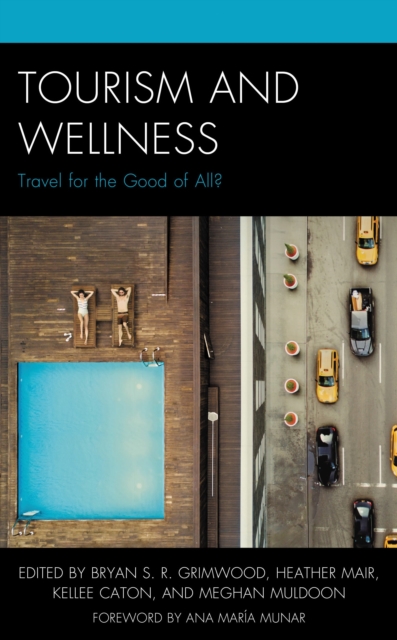
Tourism and wellness : travel for the good of all?
Tourism and Wellness: Travel for the Good of All?enhances academic understandings and analyses of tourism as a social and worldmaking force by situating broad questions of well-being, health, and equity within the scaffolds of critical tourism studies.
eBook
The memory-work sessions: Exploring critical pedagogy in tourism
The paper reports on a pedagogical ‘experiment’ undertaken by scholars aiming to critically reflect on tourism and tourism studies. Memory-work, a feminist, qualitative methodology, was chosen because it centres critical tourism inquiry within the context of sharing meaningful, personal experiences. The team met regularly to engage in supportive, critical dialogue about their memories and to spark critical reflections about tourism more broadly. Four substantive themes (embodied remembering, gendered bodies, racialized bodies, and embodying the gaze) were developed from collective analyses of initial discussions. A deeper reflection on the potential of this approach for engendering critical tourism pedagogy was also undertaken to explore its potential as critical tourism pedagogy. Five pedagogical themes (building safe spaces and developing trust, creating empathy, engaging tourism literature in ‘real life’, opening doors for ongoing reflection, and decentring power and knowledge) were identified. The paper concludes with recommendations for adapting this approach to their own tourism teaching and learning endeavours.
Journal Article

Seeking Judgment Free Spaces: Poverty, Leisure, and Social Inclusion
This study explored the experiences and meanings of leisure for individuals living in poverty and who are homeless or at imminent risk of becoming homeless. Results show that a key component for moving toward leisure that addresses our most challenging social ills rests with its power to create \"judgment free spaces.\" Three themes emerged: (1) the significance of vibrant organizations where acceptance, not exposure, is fostered; (2) a need for increased opportunities to become, and remain, connected to the broader community and to choose how this connection is manifested; and (3) the importance of personal and private spaces that are both safe and appropriate. The paper concludes with a call to re-think the spaces where leisure occurs.
Journal Article

Putting the culture back into agriculture: civic engagement, community and the celebration of local food
This paper reports on the case study of a community-supported agriculture (CSA) farm in south-western Ontario, Canada. As an exemplar of urban agriculture, Fourfold Farm CSA operates from an alternative agriculture paradigm and is built upon the socio-ecological practices of civic engagement, community and the celebration of local food. Analysis of in-depth, key informant interviews with members of the CSA as well as the co-founders reveals the extent to which the farm is much more than a source of healthy, organic food. The paper outlines the ways the CSA operators and their members articulate a deeper endeavour to link urban food consumers with food producers through cultural activities. The discussion concludes with a call for more social research in agriculture as well as a broader effort to articulate the ways urban agriculture can contribute to putting the culture back into agriculture and creating sustainable systems of farming.
Journal Article