
Catalogue Search | MBRL


Are you sure you want to remove the book from the shelf?

{{itemTitle}}
72
result(s) for
"Mairs, Rachel"
Sort by:

From Khartoum to Jerusalem : the Dragoman Solomon Negima and his clients (1885-1933)
In 2014, a collection of papers was found on eBay: a scrapbook, inside which was written 'Testimonial Book of Dragoman Solomon N. Negima'. The letters pasted into the testimonial book bear recommendations of Negima's services as dragoman - a combination of tourist guide and interpreter - in the Holy Land, from travellers of different nationalities, social classes, religions, genders and races. Using these reference letters, and the first-hand published and unpublished accounts of the travellers themselves, this book tells the stories of several such tourists, including the intrepid Victorian female traveller, Ellen E. Miller, and an African-American minister, Rev. Charles T. Walker, who had been born into slavery. Between the lines of others' letters, Solomon Negima's remarkable life story also emerges: from a German mission school in Jerusalem, to the British army in the Sudan, to a successful career as a dragoman in Palestine and Syria, and finally to comfortable retirement with his son, Aziz, and daughter, Olinda, at a Mormon mission in Jerusalem. The discovery of this unique scrapbook allows us an insight into the lives of individuals whose histories would otherwise be lost to us, and a new perspective on the history of travel in the Middle East.
Book

The Hellenistic Far East
In the aftermath of Alexander the Great's conquests in the late fourth century B.C., Greek garrisons and settlements were established across Central Asia, through Bactria (modern-day Afghanistan) and into India. Over the next three hundred years, these settlements evolved into multiethnic, multilingual communities as much Greek as they were indigenous. To explore the lives and identities of the inhabitants of the Graeco-Bactrian and Indo-Greek kingdoms, Rachel Mairs marshals a variety of evidence, from archaeology, to coins, to documentary and historical texts. Looking particularly at the great city of Ai Khanoum, the only extensively excavated Hellenistic period urban site in Central Asia, Mairs explores how these ancient people lived, communicated, and understood themselves. Significant and original, The Hellenistic Far East will highlight Bactrian studies as an important part of our understanding of the ancient world.
eBook


Pulmonary Delivery of Antibiotics to the Lungs: Current State and Future Prospects
This paper presents a comprehensive review of the current literature, clinical trials, and products approved for the delivery of antibiotics to the lungs. While there are many literature reports describing potential delivery systems, few of these have translated into marketed products. Key challenges remaining are the high doses required and, for powder formulations, the ability of the inhaler and powder combination to deliver the dose to the correct portion of the respiratory tract for maximum effect. Side effects, safety concerns, and disappointing clinical trial results remain barriers to regulatory approval. In this review, we describe some possible approaches to address these issues and highlight prospects in this area.
Journal Article

James Sanua (Ya'qūb b. Rafā'īl Ṣanū') as Language Teacher
James Sanua (1839-1912) is best known today for his political journalism and role in the development of popular Arabic theater in Cairo. This article examines an aspect of his career that has received less attention: his teaching of Arabic and other languages in Egypt and France. Three of Sanua's works are analyzed: his short Arabic play The Tourist and the Donkey-Man, which satirizes foreigners' Arabic; the phrasebook Petit souvenir de James Sanua; and the multilingual play in verse, Babel Hotel. These works offer some limited insight into Sanua's teaching practice as well as the economic role the teaching of Arabic played in the life of a nineteenth-century Egyptian intellectual.
Journal Article
Methylene Blue-Loaded Dissolving Microneedles: Potential Use in Photodynamic Antimicrobial Chemotherapy of Infected Wounds
Photodynamic therapy involves delivery of a photosensitising drug that is activated by light of a specific wavelength, resulting in generation of highly reactive radicals. This activated species can cause destruction of targeted cells. Application of this process for treatment of microbial infections has been termed “photodynamic antimicrobial chemotherapy” (PACT). In the treatment of chronic wounds, the delivery of photosensitising agents is often impeded by the presence of a thick hyperkeratotic/necrotic tissue layer, reducing their therapeutic efficacy. Microneedles (MNs) are an emerging drug delivery technology that have been demonstrated to successfully penetrate the outer layers of the skin, whilst minimising damage to skin barrier function. Delivering photosensitising drugs using this platform has been demonstrated to have several advantages over conventional photodynamic therapy, such as, painless application, reduced erythema, enhanced cosmetic results and improved intradermal delivery. The aim of this study was to physically characterise dissolving MNs loaded with the photosensitising agent, methylene blue and assess their photodynamic antimicrobial activity. Dissolving MNs were fabricated from aqueous blends of Gantrez® AN-139 co-polymer containing varying loadings of methylene blue. A height reduction of 29.8% was observed for MNs prepared from blends containing 0.5% w/w methylene blue following application of a total force of 70.56 N/array. A previously validated insertion test was used to assess the effect of drug loading on MN insertion into a wound model. Staphylococcus aureus, Escherichia coli and Candida albicans biofilms were incubated with various methylene blue concentrations within the range delivered by MNs in vitro (0.1–2.5 mg/mL) and either irradiated at 635 nm using a Paterson Lamp or subjected to a dark period. Microbial susceptibility to PACT was determined by assessing the total viable count. Kill rates of >96%, were achieved for S. aureus and >99% for E. coli and C. albicans with the combination of PACT and methylene blue concentrations between 0.1 and 2.5 mg/mL. A reduction in the colony count was also observed when incorporating the photosensitiser without irradiation, this reduction was more notable in S. aureus and E. coli strains than in C. albicans.
Journal Article

‘PROCLAIMING IT TO GREEKS AND NATIVES, ALONG THE ROWS OF THE CHEQUER-BOARD’: READERS AND VIEWERS OF ACROSTICH INSCRIPTIONS IN GREEK, DEMOTIC AND LATIN
Hellenistic and Roman acrostich inscriptions are usually full of verbal and visual clues, which point the reader in the direction of the ‘hidden message’ contained in the vertical lines of the text. The authors of such inscriptions want their audiences to appreciate the skill that has gone into their composition. There are several complementary ways in which the presence of an acrostich might be signalled to the reader or viewer and their attention directed towards it. These include direct verbal statements, or more subtle allusions, within the text of the inscription. But, even without having read its text, the viewer of an inscription containing a ‘hidden message’ is often immediately aware that some kind of wordplay is at work. Acrostichs, palindromes and various kinds of word square are all graphically striking, or their appearance may be enhanced to make them more so. Regular spacing, the repetition of the acrostich in a separate column and the use of painted or incised grids are all ways in which the layout of the text on the stone can invite the viewer to play a word game. In some cases, as I will argue in this paper, acrostich makers envisaged—even intended—the participants in this game to include the illiterate as well as the literate.
Journal Article
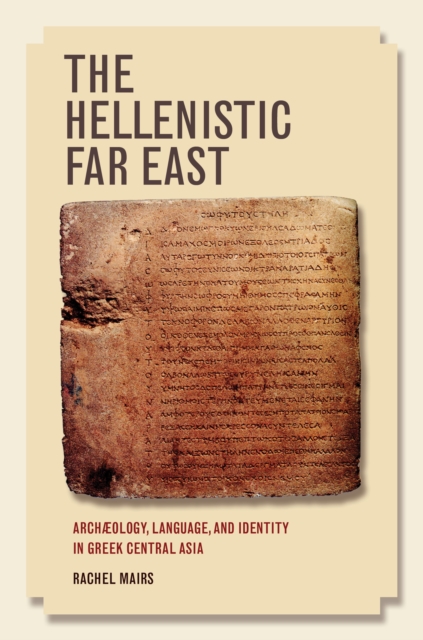
The Hellenistic Far East
Rachel Mairs explores the archaeological and epigraphic evidence for Greek colonies in Central Asia in the Hellenistic period, in the aftermath of the campaigns of Alexander the Great. In communities such as the Graeco-Bactrian city of Ai Khanoum, the descendents of colonists interacted with their neighbours, and created dynamic new cultures and identities. Mairs marshals a variety of evidence, from archaeology, to coins, to documentary and historical texts, to explore how these ancient people lived, communicated, and understood themselves.
eBook

Translator, Traditor: The Interpreter as Traitor in Classical Tradition
In recent years, a series of reports have appeared in the British press about the fate of Iraqi interpreters employed by the British forces in Basra. As well as the day-to-day risk of death or injury in the course of their work, interpreters have been vulnerable to reprisals from insurgents who view them as collaborators and traitors. There have been a large number of documented cases of Iraqi interpreters being murdered, often in an especially brutal manner. Many other cases have gone undocumented, in part because of the tendency for interpreters to work under pseudonyms and even wear masks to conceal their identity, making it difficult to identify a particular victim as an interpreter. The issue of protecting interpreters came to a head in 2007 with the handover of Basra to Iraqi administration and the subsequent withdrawal of British troops. A special protection scheme was set up, whereby those who had worked for the British forces for twelve months would be eligible for resettlement in the United Kingdom. The issue, however, has remained a contentious one: many interpreters were ineligible for resettlement or did not want to move to the UK, and many of those who did accept resettlement found themselves economically disadvantaged and socially marginalized. One group of Iraqi interpreters have taken legal action against the British government.
Journal Article

‘Interpreting’ at Vindolanda: Commercial and Linguistic Mediation in the Roman Army
A fragmentary tablet from Vindolanda (Tab. Vindol. II, 213) contains an occurrence of the verb interpretari (‘interpret’, ‘explain’, ‘mediate’) in an apparently commercial context, relating to the grain supply for the Roman fort. This usage is paralleled in a text on a wooden stilus tablet from Frisia in the Netherlands. ‘Interpreters’ and their activities make rather infrequent appearances in the Latin epigraphic and documentary records. In the Danubian provinces, interpreters (interpretes) are attested as army officers and officials in the office of the provincial governor. ‘Interpreters’, in both Latin and Greek inscriptions and papyri, often, however, play more ambiguous roles, not always connected with language-mediation, but also, or instead, with mediation in commercial transactions.
Journal Article