
Catalogue Search | MBRL


Are you sure you want to remove the book from the shelf?

{{itemTitle}}
115
result(s) for
"Major, Andrea"
Sort by:

Slavery, abolitionism and empire in India, 1772-1843
Explores the political, economic, and ideological agendas that at the height of the British abolition and missionary movements allowed East Indian slavery to be represented as qualitatively different from its trans-Atlantic counterpart.
Book

Mechanical Properties of PVC/TPU Blends Enhanced with a Sustainable Bio-Plasticizer
The development of sustainable and mechanically versatile polymeric materials is essential to meet the growing demand for eco-friendly, high-performance products. This study investigates the mechanical properties of blends comprising polyvinyl chloride (PVC), thermoplastic polyurethane (TPU), and glycerol diacetate monolaurate, a bio-based plasticizer derived from waste cooking oil, addressing the underexplored combined effects of these components. By varying the proportions, the blends’ tensile strength, elasticity, elongation at break, and hardness were tailored for diverse applications. Incorporating the bio-plasticizer significantly enhanced the PVC’s flexibility and elongation at break, while reducing its tensile strength and rigidity. The addition of TPU further enhanced the elasticity, toughness, and resilience, with the final properties governed by synergistic interactions between PVC’s rigidity, TPU’s elasticity, and the plasticizer’s softening effects. Dynamic mechanical analysis (DMA) confirmed that the bio-plasticizer enhanced the compatibility between the PVC and TPU, leading to ternary PVC/TPU/bio-plasticizer blends with an improved elasticity and elongation at break, without a significant loss in tensile strength. These blends exhibited a broad range of tunable properties, enabling applications from flexible films to impact-resistant components. Overall, these findings highlight the potential of PVC/TPU/bio-plasticizer systems to deliver high-performance materials with enhanced sustainability. This work offers valuable insights for developing greener polymer systems and advancing the creation of tailored materials for diverse industrial applications in alignment with global sustainability goals.
Journal Article


Thermodynamic and Technological Compatibility of Polyvinyl Chloride, Thermoplastic Polyurethane, and Bio-Plasticizer Blends
Polymer blending enhances material properties by combining different polymers, which requires careful consideration of both thermodynamic and technological compatibility. This study investigates the compatibility of polyvinyl chloride (PVC), thermoplastic polyurethane (TPU), and a bio-plasticizer in blends produced via roll milling at various mixing ratios. Compatibility and morphology were analyzed using thermally stimulated discharge (TSD), dynamic mechanical analysis (DMA), and scanning electron microscopy (SEM), while mechanical and thermal properties were assessed by mechanical testing and thermogravimetric analysis (TGA). The PVC/TPU (100/30) blend exhibited superior phase compatibility over PVC/TPU (100/50), as indicated by a single relaxation peak in TSD and DMA, along with a more homogeneous morphology and enhanced tensile properties. The PVC/TPU/bio-plasticizer (100/20/50) blend showed a well-balanced mechanical performance and improved phase homogeneity. The TSD peak maxima trends for the TPU/bio-plasticizer blend highlighted the bio-plasticizer’s dual role in enhancing flexibility at low concentrations while restricting molecular mobility at higher concentrations. TGA revealed TPU’s positive effect on PVC’s degradation profile, while the bio-plasticizer reduced thermal stability. These findings demonstrate that blending PVC, TPU, and bio-plasticizer creates compatible materials with enhanced and diverse properties, making them suitable for industrial applications.
Journal Article

Rheological and Thermal Properties of Recycled Petroleum-Based Polyesters MWCNT Nanocomposite: Sustainable Materials
This work investigates the effect of recycling on the rheological and thermal properties of petroleum-based polyester nanocomposites. PET and PBT are used widely in the automobile and packaging industries, and there is a growing need for effective ways to utilize recycled polyesters. The melt mixing method was used to prepare the nanocomposites using a twin-screw extruder. After recycling, the rheological properties of the PBT nanocomposite remained stable, as the degradation of PBT chain was low due to the presence of MWCNT and molecular chain flexibility. In contrast, the complex viscosity of PET recycled nanocomposite decreases significantly because the high processing temperature of 280 °C led to substantial polymer chain scission and network breakdown. Due to the presence of MWCNT, PET and PBT nanocomposites show higher thermal stability than pure and recycled nanocomposites. The recycling of PET and PBT nanocomposites demonstrated potent thermal stability under inert and air/oxidative atmospheres. These results indicate that the effect of recycling strongly depends on the polymer matrix: while PET-based nanocomposites exhibit notable reductions in rheological properties after recycling, PBT-based nanocomposites retain stable rheological and thermal performance due to MWCNT reinforcement. The enhancement in this research could make the recycled materials valuable for the automotive industry.
Journal Article

Sovereignty and Social Reform in India
The British prohibition of sati (the funeral practice of widow immolation) in 1829 has been considered an archetypal example of colonial social reform. It was not the end of the story, however, as between 1830 and 1860, British East India Company officials engaged in a debate with the Indian rulers of the Rajput and Maratha princely states of North West India about the prohibition and suppression of sati in their territories. This book examines the debates that brought about legislation in these areas, arguing that they were instrumental in setting the terms of post-colonial debates about sati, and more generally, in defining the parameters of British involvement in Indian social and religious issues.
This book provides a reinterpretation of the major themes of sovereignty, authority and social reform in colonial South Asian history by examining the shifting pragmatic, political, moral and ideological forces which underpinned British policies on and attitudes to sati. The author illuminates the complex ways in which East India Company officials negotiated the limits of their own authority in India, their conceptions of nature and the extent of Indian princely sovereignty, and argues that and the so-called ‘civilising mission’ was often dependent on local circumstances and political expediencies rather than overarching imperial principles; the book also evaluates Indian responses to the supposed modernising Enlightenment discourse.
This book will be of great interest to students and scholars of South Asian history as well as British colonial studies.
1. Chivalry, Sacrifice and Devotion: Imagining Sati in Rajput Society 2. Princes, Politics and Pragmatism: The Formation of British Policy on Sati in the Princely States 3. Victims, Perpetrators and Self-Determined Sacrifices: Strategies for Suppressing Sati in the Princely States
Andrea Major is Lecturer in Wider World History at the University of Leeds. She is author of Pious Flames: European Encounters with Sati, 1500-1830 and editor of Sati: A Historical Anthology .
eBook

British Humanitarian Political Economy and Famine in India, 1838–1842
This article explores the nature and limitations of humanitarian political economy by discussing metropolitan British responses to a major famine that took place in the Agra region of north-central India in 1837–38. This disaster played a significant role in catalyzing wider debates about the impact of East India Company governance and the place of the subcontinent within the post-emancipation British Empire. By comparing the responses of organization such as the Aborigines Protection Society and British India Society to that of proponents of the newly emergent indenture system, the paper seeks to contextualize responses to the famine in terms both of longer histories of famine in South Asia and of the specific imperial circumstances of the late 1830s. In doing so, it explores how ideas of agricultural distress in India fed into competing strategies to utilize Indian labor in the service of colonial commodity production both within India and around the empire.
Journal Article

Increasing Incidence of Canine Leptospirosis in Switzerland
A marked increase in canine leptospirosis was observed in Switzerland over 10 years with a peak incidence of 28.1 diagnosed cases/100,000 dogs/year in the most affected canton. With 95% affected dogs living at altitudes <800 m, the disease presented a seasonal pattern associated with temperature (r2 0.73) and rainfall (r2 0.39), >90% cases being diagnosed between May and October. The increasing yearly incidence however was only weakly correlated with climatic data including number of summer (r2 0.25) or rainy days (r2 0.38). Serovars Australis and Bratislava showed the highest seropositivity rates with 70.5% and 69.1%, respectively. Main clinical manifestations included renal (99.6%), pulmonary (76.7%), hepatic (26.0%), and hemorrhagic syndromes (18.2%), leading to a high mortality rate (43.3%). Similar to the human disease, liver involvement had the strongest association with negative outcome (OR 16.3). Based on these data, canine leptospirosis presents similar features and severity as the human infection for which it therefore can be considered a model. Its re-emergence in a temperate country with very high incidence rates in canines should thus be viewed as a warning and emphasize the need for increased awareness in other species.
Journal Article
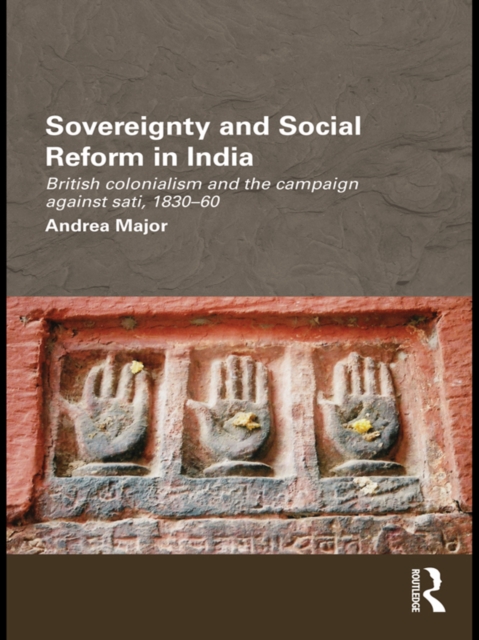
Sovereignty and social reform in India: British colonialism and the campaign against sati
The British prohibition of sati (the funeral practice of widow immolation) in 1829 has been considered an archetypal example of colonial social reform. It was not the end of the story, however, as between 1830 and 1860, British East India Company officials engaged in a debate with the Indian rulers of the Rajput and Maratha princely states of North West India about the prohibition and suppression of sati in their territories. This book examines the debates that brought about legislation in these areas, arguing that they were instrumental in setting the terms of post-colonial debates about sati, and more generally, in defining the parameters of British involvement in Indian social and religious issues. This book provides a reinterpretation of the major themes of sovereignty, authority and social reform in colonial South Asian history by examining the shifting pragmatic, political, moral and ideological forces which underpinned British policies on and attitudes to sati. The author illuminates the complex ways in which East India Company officials negotiated the limits of their own authority in India, their conceptions of nature and the extent of Indian princely sovereignty, and argues that and the so-called 'civilising mission' was often dependent on local circumstances and political expediencies rather than overarching imperial principles; the book also evaluates Indian responses to the supposed modernising Enlightenment discourse. This book will be of great interest to students and scholars of South Asian history as well as British colonial studies.
eBook
Sovereignty and Social Reform in India
The British prohibition of sati (the funeral practice of widow immolation) in 1829 has been considered an archetypal example of colonial social reform. It was not the end of the story, however, as between 1830 and 1860, British East India Company officials engaged in a debate with the Indian rulers of the Rajput and Maratha princely states of North West India about the pro- hibition and suppression of sati in their territories. This book examines the debates that brought about legislation in these areas, arguing that they were instrumental in setting the terms of post-colonial debates about sati and, more generally, in defining the parameters of British involvement in Indian social and religious issues.
This book provides a reinterpretation of the major themes of sovereignty, authority and social reform in colonial South Asian history by examining the shifting pragmatic, political, moral and ideological forces which underpinned British policies on and attitudes to sati. The author illuminates the complex ways in which East India Company officials negotiated the limits of their own authority in India, their conceptions of the nature and extent of Indian princely sovereignty, and argues that the so-called ‘civilising mission’ was often dependent on local circumstances and political expediencies rather than overarching imperial principles; the book also evaluates Indian responses to the supposed modernising Enlightenment discourse.
This book will be of great interest to students and scholars of South Asian history as well as British colonial studies.
eBook