
Catalogue Search | MBRL


Are you sure you want to remove the book from the shelf?

{{itemTitle}}
184
result(s) for
"Maley, Willy"
Sort by:


Double Dutch: The Boate Brothers and Colonial Cosmography
The article focuses on two Dutch doctors – the Boate brothers, Arnold (1606-1653) and Gerard (1604-1650) – medical graduates of Leiden University who moved to London in 1630 to work as practising physicians. The brothers contributed to diverse forms of knowledge as part of the new science, including agriculture, anatomy, entomology, geography, industrial history, medicine, metallurgy, mineralogy and theology, but are known primarily for Gerard’s posthumously published ground-breaking book, Irelands Naturall History (1652) for which Arnold did the spadework. The Boates collaborated on some of the most important intellectual enterprises of the seventeenth century, and worked alongside the leading intellectuals of the period, including innovative Irish thinkers James Ussher and Robert Boyle, and Samuel Hartlib, mainspring of a major knowledge network. The Boates’ activities in Leiden, London, Dublin and Paris furnish a prototype for interdisciplinary engagement. The brothers were key members of multiple interlocking extra-institutional groupings. Active as part of a Baconian Office of Address and engaged both in the Hartlib Circle and the more shadowy Invisible College, they laboured in the seedbed of what would later become the Royal Society and the Dublin Philosophical Society. Irelands Naturall History is a model of the regional history that Francis Bacon saw as a vital branch of cosmography.
Journal Article

Winston Churchill’s Divi Britannici (1675) and Archipelagic Royalism
Divi Britannici (1675) is a major restoration history that deserves to be more widely known. The work’s author, Sir Winston Churchill (1620–1688), is certainly less well-known than his celebrated descendant of the same name. Seldom mentioned in discussions of seventeenth-century historiography, Divi Britannici can be read alongside contemporary histories, including John Milton’s History of Britain (1670). If British historians have generally overlooked Divi Britannici then Churchill’s work did come to the notice of Michel Foucault, who recognized its arguments around conquest, rights and sovereignty as crucial to the development of political thought in the period. In this essay we excavate Churchill’s arguments, sift through the scattered critical legacy, and locate Divi Britannici both within the context of Restoration histories, with their warring interpretations of England and Britain’s past, and within a tradition of British historiography that associates monarchical rule with national stability. What scholars have missed, however, is the propensity of Churchill to align the restored Stuart monarchy with a form of ethnic co-operation between Scotland, Ireland and England, designed to counter the perceived divisions which were exacerbated by the policies of Cromwell and the parliamentarians.
Journal Article


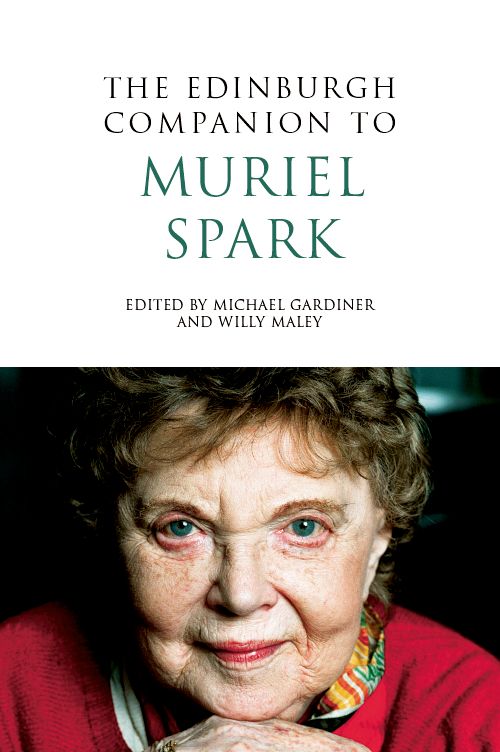
The Edinburgh Companion to Muriel Spark
ThisCompanionbrings together an international 'Brodie set' of critics to trace the history, impact, reception and major themes of Spark's work, from her early poetry to her last novel. It encompasses the range of Spark's output, pursuing contextual lines of approach including biography, geography, gender, identity, nation and religion, and considering her legacy and continuing influence in the twenty-first century. Spark emerges here as a serious thinker on issues as diverse as the Welfare State, secularisation, decolonisation, and anti-psychiatry, and a writer whose work may be placed alongside Proust, Joyce, Nabokov, and Lessing.
The critics collected here are mindful of how, although overwhelmingly known as a novelist, by the time of her first novel,The Comforters, in 1957, Spark already had a significant profile through poetry, biographical criticism, and literary journalism, as chair of the Poetry Society and editor of thePoetry Review, and as author or co-author of a number of scholarly studies of writers including Wordsworth, Mary Shelley, the Bröntes, Cardinal Newman, and John Masefield. Within a relatively modest space this Companion touches on the whole range of Spark's work and, in introducing the oeuvre thematically for those looking to explore this elegant and challenging author further, also sets the agenda for future Spark studies.
Key Features
A collection of original, specially commissioned chapters by leading experts in the fieldCovers the whole spectrum of Spark's workAddresses the key issues and themes in Spark's work without losing sight of the questions of form and contentProvides original insights into the contexts of Spark's work as viewed through literary theory
eBook


Introduction: monumental Sidney
Sir Henry (1529-86), only surviving son of the military hero, Moor-fighter and Knight of the Garter, Sir William Sidney and Anne Fitzwilliam; husband of Mary Dudley (sister of Robert Dudley, earl of Leicester) and brother-in-law of Thomas Radcliffe, earl of Sussex; father of Philip, Mary, and Robert (and another Mary, Elizabeth and Thomas); London-born gentleman of the privy chamber and death-bed companion of King Edward VI; diplomat, courtier, bridge-builder, administrator, colonizer, self-aggrandizer, treasurer, governor, patron of music and letters, writer.1 As the following essays demonstrate, Sir Henry's relative obscurity is unwarranted. According to Ware, Sidney wrote in English an admonition to his son and also a treatise containing a miscellany of things Irish.29 The essays collected here describe aspects of Sidney's profoundly humanistic, including antiquarian, mindset (as for example highlighted by Philip Schwyzer, below), an emphasis found also in his monuments (see the piece by Kinsella included here). Sidney patronized expert cartography in Ireland, which in turn led to further developments.33 The roots of the Jacobean Ulster Plantation lie in the 1560s, when moves already afoot to settle that unruly region were brought into sharp relief by the death of Shane O'Neill in 1567.34 The queen immediately wrote to Sir Henry Sidney urging that Ulster be properly mapped, a letter reproduced by John Hooker in the second edition of Holinshed's Chronicles in 1586.35 Robert Lythe's surveys of 1567-70, sponsored by Sidney, were followed by the failed ventures in Ulster of Sir Thomas Smith and Walter Devereux, first earl of Essex, in the 1570s.36 In 1568, Sidney informed Cecil that a private venture would defray the costs of garrisons or settlements borne by the crown.37 John Davies later decried such ventures, arguing that 'when Priuate men attempt the Conquest of Countries at their own charge, commonly their enterprizes doe perrish without successe: as when, in the time of Queene Elizabeth, Sir Thomas Smith vndertooke to recouer the Ardes' 3 This did not prevent Davies from profiting directly from the Ulster settlement, however.39 The sense of Ireland as displaced center and staging post to world travel rather than provincial periphery or backwater comes through in the works dedicated to Sidney while he was governor there. [...]wheare I beganne, way well the sicke and wounded partes of your common wealth, cure the roote, regarde the foundacion, the principall piliers, the sommer postes, the stone walles; as for the roof and the tiles, if ye repaier them onelye and suffer the growndeworke to perishe, a tempeste of weather, a flawe will shake your building.60 From one perspective Sidney may be viewed as a destructive force-he and his henchmen like Humphrey Gilbert often took no prisoners and gave no quarter.
Journal Article