
Catalogue Search | MBRL


Are you sure you want to remove the book from the shelf?

{{itemTitle}}
16,606
result(s) for
"Malone, Mark"
Sort by:

William Dawson: An Introduction
The following introduction to William Dawson's life and work comes primarily from that book, William Levi Dawson: American Music Educator (University Press of Mississippi). [...]his father believed that hard worknot education-would enable his son to be successful in a world that segregated African Americans from white folks, did not offer equal opportunities for those of his race, and subjected Black men and women to Jim Crow laws. [...]at age thirteen, Dawson rode the train right onto the Tuskegee campus, took advantage of the myriad music-making opportunities, and was mentored by Washington, who took a strong interest in the young man.4 Following graduation from Tuskegee in 1921, Dawson accepted the position of band director at Kansas Vocational College in Topeka for one year, then took the job as music director at Lincoln High School in Kansas City, Missouri. In late 1925, the H. T. FitzSimons Company of Chicago published Dawson's first choral piece, King Jesus is A-Listening, which was quickly followed by, Talk About A Child That Do Love Jesus, and My Lord, What A Mourning.6 After resigning from Lincoln High School in 1925, Dawson left Kansas City to study with Adolph Weidig in pursuit of a master's degree in composition from the American Conservatory of Music in Chicago. Immersed in musical pursuits, he worked for two music publishers, conducted a church choir, continued study with composers of note in the \"Windy City,\" played first trombone in the Chicago Civic Orchestra, played trombone with Charlie \"Doc\" Cook's Doctors of Syncopation jazz ensemble, and amassed a choir and band in August 1929 to audition to win a spot as the Black performance group for the 1933 Chicago World's Fair.
Journal Article
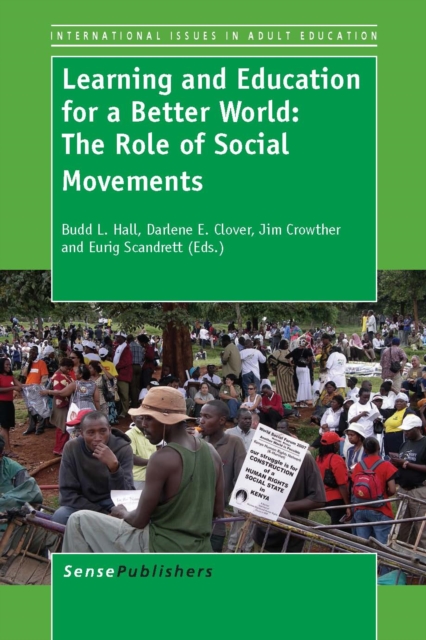
Learning and education for a better world
The book offers contemporary theoretical and practical insights into the learning that happens both within and outside of social movements. Social movement scholars present work linked to the arts, to organic farming, to environmental action, to grassroots activists in the Global South, to the Arab Spring, the Occupy movement, the shackdwellers movements, school reform and the role of Marx, Gramscii and Williams in understanding social movement learning.
eBook

An Isolated Winter Cloud-to-Ground Lightning Flash Causing Damage and Injury in Connecticut
An isolated lightning flash at 1436:52 UTC 11 February 1996 struck and destroyed a house in Burlington, Connecticut, injuring an occupant of the house. A flash detected simultaneously by the National Lightning Detection Network was within 1.1 km of the house. The flash was separated from any other flash by several hours and hundreds of kilometers and occurred during winter. Positive charge was lowered to ground by the flash, as has been found in previous studies of winter storms. Its estimated peak current of +76 kA was stronger than most positive flashes and nearly all negative cloud-to-ground flashes for the entire year in the same area. The incident is compared with other previously documented lightning casualty and damage statistics during wintertime for Connecticut and other regions of the United States. The importance of the flash is described in relation to the resulting material damage and personal injury, the handling of insurance claims, the use of flash data in forecasting and warning applications, and personal safety.
Journal Article
Repertoire & Standards Committee Reports: Two-Year College Choirs - A Showchoir/Two-Year College Choirs Collaborative Effort
Realizing the need to place greater emphasis on vocal production in Two-Year College show groups, a grant proposal was submitted to the American Choral Directors Association (ACDA) to secure funding to develop an assessment form for the first-ever adjudicated festival featuring showchoirs in community colleges. A pilot study was enthusiastically received by the National Repertoire & Standards (R&S) Chair, who continues to encourage innovation and creativity in raising the standards of excellence for choral music. The Ken Thomas Showchoir Showdown, a non-adjudicated festival in Mississippi, was selected for the ACDA pilot study. Two-year college directors eagerly accepted the challenge to participate in the project that would provide adjudicators' comments with regard to Musical Effect, Choreography, and Overall Effect. Responses from the directors following the Showchoir Showdown were enthusiastic.
Journal Article
Repertoire & Standards: Two-Year Colleges - Athletic and Aesthetic Coaching
A commentary describes the two-year college choral director's role as that of an aesthetic coach. Choral directors begin with a mental concept of the choral essence to be attained, skillfully build the vocal sound via the development of voices during the warm-up process, and endeavor to achieve an aesthetic movement through performance.
Journal Article