
Catalogue Search | MBRL


Are you sure you want to remove the book from the shelf?

{{itemTitle}}
11
result(s) for
"Mankel, Christoph"
Sort by:

Reviewing Theoretical and Numerical Models for PCM-embedded Cementitious Composites
Accumulating solar and/or environmental heat in walls of apartment buildings or houses is a way to level-out daily temperature differences and significantly cut back on energy demands. A possible way to achieve this goal is by developing advanced composites that consist of porous cementitious materials with embedded phase change materials (PCMs) that have the potential to accumulate or liberate heat energy during a chemical phase change from liquid to solid, or vice versa. This paper aims to report the current state of art on numerical and theoretical approaches available in the scientific literature for modelling the thermal behavior and heat accumulation/liberation of PCMs employed in cement-based composites. The work focuses on reviewing numerical tools for modelling phase change problems while emphasizing the so-called Stefan problem, or particularly, on the numerical techniques available for solving it. In this research field, it is the fixed grid method that is the most commonly and practically applied approach. After this, a discussion on the modelling procedures available for schematizing cementitious composites with embedded PCMs is reported.
Journal Article
Effect of Foaming Agent, Binder and Density on the Compressive Strength and Thermal Conductivity of Ultra-Light Foam Concrete
The study is focused on ultra-light foam concrete (FC) aimed as a thermal insulation material. Two important properties of such material were investigated: compressive strength and thermal conductivity. In the conducted tests, the influence of the air-dry density (200–500 kg/m3), type of foaming agent (synthetic and protein) and binder type (ordinary Portland cement—OPC; calcium sulphoaluminate cement—CSA; metakaolin; siliceous fly ash—SFA; calcareous fly ash—CFA) on the mentioned properties were examined. The results confirmed the dependence of compressive strength and thermal conductivity on the FC density but also indicated the important effect of the nature of the foaming agent and the binder type. The best thermo-mechanical properties were obtained for the foam concrete made of protein-based foaming agent, OPC and metakaolin. Simultaneously, the use of CSA mixed with metakaolin and foam based on the synthetic foaming agent also shows satisfactory properties.
Journal Article
Evaluation of the Thermal Performance of Fly Ash Foam Concrete Containing Phase Change Materials (PCMs)
The aim of this study was to assess the characteristics of fly ash foam concrete containing two varying temperature ranges of microencapsulated phase change materials (PCMs): PCM28D (26–30 °C) and PCM43D (41–45 °C). In total, five different fly ash foam concrete samples were prepared, and the unit weight of cement was substituted with varying percentages of PCM (0%, 10% and 30%). As a result, differential scanning calorimetry (DSC) analysis revealed that PCM43D-30% exhibited a heat storage capacity of 45.32 °C and 37.89 °C with 42.87 J/g and 41.01 J/g in its liquid and solid phases, respectively. Furthermore, thermocycle analysis indicated that PCM43D-30% maintained the temperature within the stated phase change range for a duration of 7 h. In conclusion, the incorporation of PCMs (28D and 43D) in fly ash foam concrete shows promise in reducing indoor temperature fluctuations, thereby improving energy efficiency. The improved thermal performance can be suitable for various applications such as inner and outside walls of energy-efficient construction designs.
Journal Article
PCM-Impregnated Textile-Reinforced Cementitious Composite for Thermal Energy Storage
The growing global energy demand requires solutions that improve energy efficiency in all sectors. The civil construction sector is responsible for a large part of global energy consumption. In this context, phase change materials (PCMs) can be incorporated into construction materials to improve the energy efficiency of buildings. The purpose of this study was to incorporate a PCM to jute fabric, applying it in civil construction as a reinforcement for cement matrices. In order to do that, a method of immersing jute fabric in liquid phase change material, and then coating it with a polymer, was proposed. Treated jute fabric was then used to produce a laminated composite with a cementitious matrix. Morphological, mechanical and chemical characterization of jute textiles was performed, as well as an analysis of the composites’ mechanical and thermal behavior. The results verified that jute textiles absorbed 102% PCM in weight, which was successfully contained in the capillary porosity of jute. The PCM was able to delay the composite’s temperature increase by up to 24 °C. It was concluded that this method can be used to incorporate PCM to natural textiles, producing composites with thermal energy storage properties.
Journal Article

A Comparative Study on the Thermal Energy Storage Performance of Bio-Based and Paraffin-Based PCMs Using DSC Procedures
Thermal-Energy Storage (TES) properties of organic phase change materials have been experimentally investigated and reported in this paper. Three paraffin-based Phase Change Materials (PCMs) and one bio-based PCM are considered with melting temperatures of 24 °C, 25 °C and 26 °C. Sensible heat storage capacities, melting characteristics and latent heat enthalpies of the studied PCMs are investigated through Differential Scanning Calorimetry (DSC) measurements. Two alternative methods, namely the classical dynamic DSC and a stepwise approach, are performed and compared with the aim to eliminate and/or overcome possible measurement errors. In particular, for DSC measurements this could be related to the size of the samples and its representativity, heating rate effects and low thermal conductivity of the PCMs, which may affect the results and possibly cause a loss of objectivity of the measurements. Based on results achieved from this study, clear information can be figured out on how to conduct and characterize paraffin and bio-based PCMs, and how to apply them in TES calculations for building applications and/or simulations. It is observed that both paraffinic and bio-based PCMs possess a comparable TES capacity within the selected phase transition temperature, being representative for the human thermal comfort zone. The phase change of bio-based PCMs occurred over a much narrower temperature range when compared to the wider windows characterizing the paraffin-based materials. Bio-based PCMs turned out to be very suitable for building applications and can be an environmentally friendly substitute for petroleum-based PCMs.
Journal Article
Optimization of Multilayered Walls for Building Envelopes Including PCM-Based Composites
This work proposes a numerical procedure to simulate and optimize the thermal response of a multilayered wallboard system for building envelopes, where each layer can be possibly made of Phase Change Materials (PCM)-based composites to take advantage of their Thermal-Energy Storage (TES) capacity. The simulation step consists in solving the transient heat conduction equation across the whole wallboard using the enthalpy-based finite element method. The weather is described in detail by the Typical Meteorological Year (TMY) of the building location. Taking the TMY as well as the wall azimuth as inputs, EnergyPlusTM is used to define the convective boundary conditions at the external surface of the wall. For each layer, the material is chosen from a predefined vade mecum, including several PCM-based composites developed at the Institut für Werkstoffe im Bauwesen of TU Darmstadt together with standard insulating materials (i.e., EPS or Rockwool). Finally, the optimization step consists in using genetic algorithms to determine the stacking sequence of materials across the wallboard to minimize the undesired heat loads. The current simulation-based optimization procedure is applied to the design of envelopes for minimal undesired heat losses and gains in two locations with considerably different weather conditions, viz. Sauce Viejo in Argentina and Frankfurt in Germany. In general, for each location and all the considered orientations (north, east, south and west), optimal results consist of EPS walls containing a thin layer made of the PCM-based composite with highest TES capacity, placed near the middle of the wall and closer to the internal surface.
Journal Article
Modelling the Thermal Energy Storage of Cementitious Mortars Made with PCM-Recycled Brick Aggregates
This paper reports a numerical approach for modelling the thermal behavior and heat accumulation/liberation of sustainable cementitious composites made with Recycled Brick Aggregates (RBAs) employed as carriers for Phase-Change Materials (PCMs). In the framework of the further development of the fixed grid modelling method, classically employed for solving the well-known Stefan problem, an enthalpy-based approach and an apparent calorific capacity method have been proposed and validated. More specifically, the results of an experimental program, following an advanced incorporation and immobilization technique, developed at the Institut für Werkstoffe im Bauwesen for investigating the thermal responses of various combinations of PCM-RBAs, have been considered as the benchmark to calibrate/validate the numerical results. Promising numerical results have been obtained, and temperature simulations showed good agreement with the experimental data of the analyzed mixtures.
Journal Article

Potential Use of Bio-Oleogel as Phase Change Material
Two bio-oleogels were investigated. These materials were produced with a combination of canola and soybean oil with 4, 6, 8, and 10% of beeswax (by weight). Sensible heat storage capacity, melting parameters, and enthalpies were investigated by the differential scanning calorimetry (DSC) test. An ordinary DSC dynamic test was performed. Cycles of heating and cooling were performed, as well as tests with different heating rates. According to the results, the materials present a melting temperature between −16 to −12 °C and a total latent heat between 22.9 and 367.6 J/g. BC10 (canola oil with 10% beeswax) was the sample with the best performance, with a latent heat of 367.6 J/g and a melting temperature of −13.6 °C, demonstrating its possible use as a phase change material for cold storage.
Journal Article
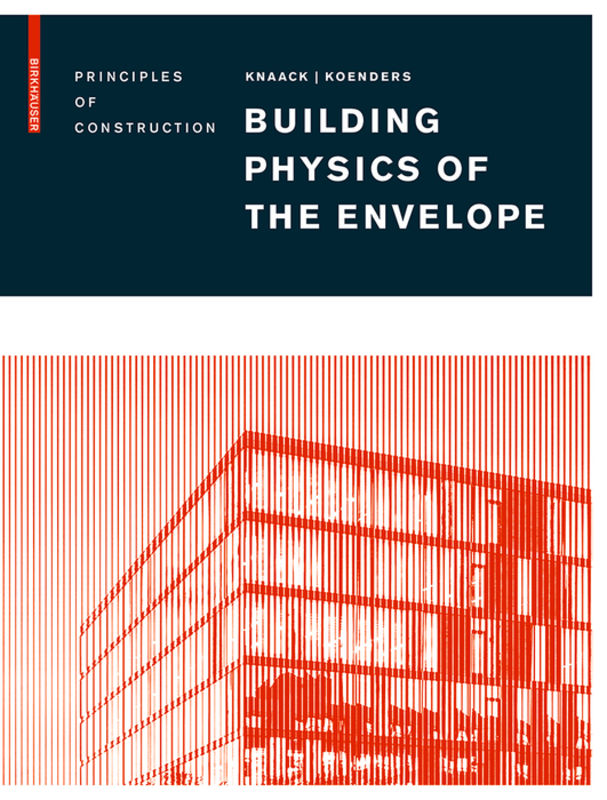
Building Physics of the Envelope
Die Fassade ist die Schnittstelle des Gebäudes mit seiner Umwelt. Dort treffen bauphysikalische Parameter wie Wärme, Feuchte, Schall und Licht auf das Haus und wirken auf es ein. Alle diese Einflüsse bedürfen der Regulierung durch die Gebäudehülle, um Behaglichkeit für den Nutzer und Funktionstüchtigkeit der Architektur zu gewährleisten. Diese Einführung erläutert die wichtigsten Phänomene, um dann den Bezug zur Baupraxis herzustellen: Welche Materialien reagieren in welcher Weise auf diese Faktoren? Wie gehen Fassadensystemen mit Wärme, Feuchte, Schall und Licht um? Das praxisorientierte Buch, entstanden aus der Zusammenarbeit eines Architekten und eines Bauingenieurs, beschreibt die wichtigsten Fassadenmaterialien und -konstruktionen im Hinblick auf ihre bauphysikalische Performance.
The facade is the building’s interface with its environment. It is here that building physics parameters such as heat, humidity, sound and light interact with the building. All these influences need to be controlled by the building envelope in order to ensure the comfort of the user and the functional performance of the architecture. This introduction explains the most important phenomena and then relates them to design and building practice – which materials react in which way to these factors? How do facade systems deal with heat, humidity, sound and light? This practice-oriented book, which is the result of cooperation between an architect and a structural engineer, describes the most important facade materials and constructions under the aspect of their building physics performance.
eBook
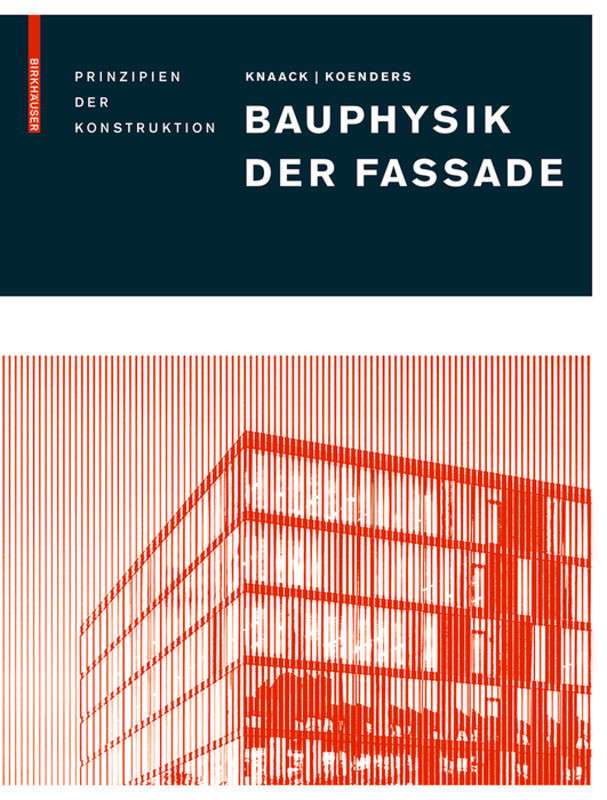
Bauphysik der Fassade
Die Fassade ist die Schnittstelle des Gebäudes mit seiner Umwelt. Dort treffen bauphysikalische Parameter wie Wärme, Feuchte, Schall und Licht auf das Haus und wirken auf es ein. Alle diese Einflüsse bedürfen der Regulierung durch die Gebäudehülle, um Behaglichkeit für den Nutzer und Funktionstüchtigkeit der Architektur zu gewährleisten. Diese Einführung erläutert die wichtigsten Phänomene, um dann den Bezug zur Baupraxis herzustellen: Welche Materialien reagieren in welcher Weise auf diese Faktoren? Wie gehen Fassadensystemen mit Wärme, Feuchte, Schall und Licht um? Das praxisorientierte Buch, entstanden aus der Zusammenarbeit eines Architekten und eines Bauingenieurs, beschreibt die wichtigsten Fassadenmaterialien und -konstruktionen im Hinblick auf ihre bauphysikalische Performance.
The facade is the building’s interface with its environment. It is here that building physics parameters such as heat, humidity, sound, and light interface with the building and impact on it. All these influences need to be controlled by the building envelope in order to ensure the comfort of the user and the functional capability of the architecture. This introduction explains the most important phenomena and then relates them to practical building situations – which materials react in which way to these factors? How do facade systems deal with heat, humidity, sound, and light? This practical book, which is the result of cooperation between an architect and a structural engineer, describes the most important facade materials and constructions under the aspect of their building physics performance.
eBook