
Catalogue Search | MBRL


Are you sure you want to remove the book from the shelf?

{{itemTitle}}
4
result(s) for
"Mann, Charles C., author"
Sort by:

The wizard and the prophet : two remarkable scientists and their dueling visions to shape tomorrow's world
\"In forty years, Earth's population will reach ten billion. Can our world support that? What kind of world will it be? Those answering these questions generally fall into two deeply divided groups-Wizards and Prophets, as Charles Mann calls them in this balanced, authoritative, nonpolemical new book. The Prophets, he explains, follow William Vogt, a founding environmentalist who believed that in using more than our planet has to give, our prosperity will lead us to ruin. Cut back! was his mantra. Otherwise everyone will lose! The Wizards are the heirs of Norman Borlaug, whose research, in effect, wrangled the world in service to our species to produce modern high-yield crops that then saved millions from starvation. Innovate! was Borlaug's cry. Only in that way can everyone win! Mann delves into these diverging viewpoints to assess the four great challenges humanity faces-food, water, energy, climate change-grounding each in historical context and weighing the options for the future. \"-- Provided by publisher.
Book

The wizard and the prophet : two remarkable scientists and their dueling visions to shape tomorrow's world
Examines two influential scientists--William Vogt (1902-1968) and Norman Borlaug (1914-2009)--and their approaches to environmental problems.
Book
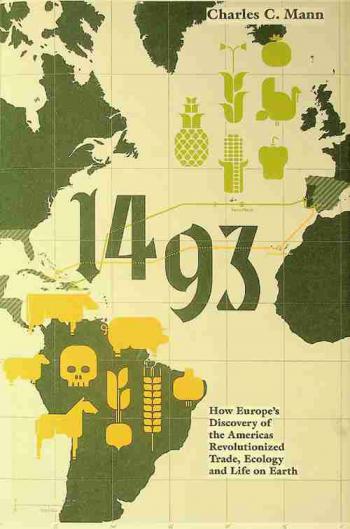
1493 : how Europe's discovery of the Americas revolutionized trade, ecology and life on Earth
\"From the author of 1491--the best-selling study of the pre-Columbian Americas--a deeply engaging new history that explores the most momentous biological event since the death of the dinosaurs. More than 200 million years ago, geological forces split apart the continents. Isolated from each other, the two halves of the world developed totally different suites of plants and animals. Columbus's voyages brought them back together--and marked the beginning of an extraordinary exchange of flora and fauna between Eurasia and the Americas. As Charles Mann shows, this global ecological tumult--the \"Columbian Exchange\"--Underlies much of subsequent human history. Presenting the latest generation of research by scientists, Mann shows how the creation of this worldwide network of exchange fostered the rise of Europe, devastated imperial China, convulsed Africa, and for two centuries made Manila and Mexico City-- where Asia, Europe, and the new frontier of the Americas dynamically interacted--the center of the world. In 1493, Charles Mann gives us an eye-opening scientific interpretation of our past, unequaled in its authority and fascination\"-
Book

1493 for young people : from Columbus's voyage to globalization
Examines the arc \"of globalization through travel, trade, colonization, and migration from its beginnings in the fifteenth century to the present. How did the lowly potato plant feed the poor across Europe and then cause the deaths of millions? How did the rubber plant enable industrialization? What is the connection between malaria, slavery, and the outcome of the American Revolution? How did the fabled silver mountain of sixteenth-century Bolivia fund economic development in the flood-prone plains of rural China and the wars of the Spanish Empire? Here is the story of how sometimes the greatest leaps also posed the greatest threats to human advancement\"-- Provided by publisher.
BOOK