
Catalogue Search | MBRL


Are you sure you want to remove the book from the shelf?

{{itemTitle}}
46
result(s) for
"Mannina, Giorgio"
Sort by:

Enhancing a Transition to a Circular Economy in the Water Sector: The EU Project WIDER UPTAKE
Wastewater treatment plants (WWTPs) require an urgent transition from a linear to a circular economy operation/design concept with a consequent resource recovery and more sustainable waste management. Natural resources have to be preserved, and wastes have to become an opportunity for recovering resources and materials (water reuse, energy, sludge reuse). However, the transition toward a circular economy is a complex and long process due to the existence of technical, economic, social and regulatory barriers. These existing barriers are critical challenges for a modern and sustainable WWTP concept. The recovery of resources must be considered a strategic target from the earliest process-design phase. In this context, the European Union’s Horizon 2020 project “Achieving wider uptake of water-smart solutions—WIDER UPTAKE” aims to overcome the existing barriers (technological, regulatory, organizational, social and economic) toward the transition from a linear to a circular economy model for WWTPs. This study is aimed at increasing the awareness of the existing barriers to a circular economy and summarizes the key contributions of the WIDER UPTAKE project in terms of water reuse, sludge reuse and nutrient recovery.
Journal Article
Water Resource Recovery Facilities (WRRFs): The Case Study of Palermo University (Italy)
The wastewater sector paradigm is shifting from wastewater treatment to resource recovery. In addition, concerns regarding sustainability during the operation have increased. In this sense, there is a need to break barriers (i.e., social, economic, technological, legal, etc.) for moving forward towards water resource recovery facilities and demonstration case studies can be very effective and insightful. This paper presents a new water resource recovery case study which is part of the Horizon 2020 EU Project “Achieving wider uptake of water-smart solutions—Wider Uptake”. The final aim is to demonstrate the importance of a resource recovery system based on the circular economy concept. The recovery facilities at Palermo University (Italy) are first presented. Afterwards, the resource recovery pilot plants are described. Preliminary results have underlined the great potential of the wastewater treatment plant in terms of resources recovery and the central role of the University in fostering the transition towards circular economy. The fermentation batch test highlighted a volatile fatty acids (VFAs) accumulation suitable for polyhydroxyalkanoates (PHAs) production. The results of static adsorption and desorption tests showed that the highest amount of adsorbed NH4+ was recorded for untreated and HCl-Na treated clinoptilolite.
Journal Article
Intermittent Aeration in a Hybrid Moving Bed Biofilm Reactor for Carbon and Nutrient Biological Removal
The paper presents an experimental study on a lab scale hybrid moving bed biofilm reactor with intermittent aeration. Specifically, a comparison between two different operating conditions was analyzed: continuous and intermittent aeration. Both continuous and intermittent aeration were monitored and compared in order to get the best operational conditions. The intermittent aeration campaign was sub-divided in three phases with different duration of alternation of aerobic and anoxic times and organic and nitrogen loading rates. The efficiency of N-removal improved by 70% during the intermittent aeration. The best condition was observed with 40 min of aeration and 20 min of no-aeration, an organic loading rate of 2.2 kgCODm−3day−1 and a nitrogen loading rate of 0.25 kgNm−3day−1: under these operational conditions the removal efficiencies for carbon and nitrogen were 93% and 90%, respectively. The derived results provide the basis for WWTP upgrade in order to meet stricter effluent limits at low energy requirements.
Journal Article
Roadmapping the Transition to Water Resource Recovery Facilities: The Two Demonstration Case Studies of Corleone and Marineo (Italy)
The current exploitation of freshwater, as well as the significant increase in sewage sludge production from wastewater treatment plants (WWTPs), represent nowadays a critical issue for the implementation of sustainable development consistent with the circular economy concept. There is an urgent need to rethink the concept of WWTPs from the conventional approach consisting in pollutant removal plants to water resource recovery facilities (WRRFs). The aim of this paper is to provide an overview of the demonstration case studies at the Marineo and Corleone WRRFs in Sicily (IT), with the final aim showing the effectiveness of the resources recovery systems, as well as the importance of plant optimization to reduce greenhouse gas (GHG) emissions from WRRFs. This study is part of the H2020 European Project “Achieving wider uptake of water-smart solutions—Wider-Uptake”, which final aim is to demonstrate the water-smart solution feasibility in the wastewater sector. The main project goal is to overcome the existing barriers that hamper the transition to circularity through the implementation of a governance analysis tool. The preliminary actions in the two demonstration cases are first presented, while, subsequently, the water-smart solutions to be implemented are thoroughly described, highlighting their roles in the transition process. The achieved preliminary results underlined the significant potential of WRRF application, a great chance to demonstrate the feasibility of innovative solutions in the wastewater sector to overcome the existing social, administrative and technical barriers.
Journal Article
Ammonium Recovery from Synthetic Wastewaters by Using Zeolitic Mixtures: A Desorption Batch-Study
Resource recovery from wastewater is very important in view of a circular economy approach in the water field. Among the different technologies applied to realize circular economy, an attractive option is the use of nutrient-enriched media that can be utilized as slow-release fertilizers. Zeolites have been re-discovered for their key role in ammonium (NH4+) adsorption from treated wastewater. Although many studies have been carried out to assess the ability of zeolites to adsorb NH4+, only few papers concerning NH4+ desorption from zeolites are available in the literature. Therefore, this study investigated NH4+ desorption from mineralogically different zeolites, before (ZNS and ZNC) and after (ZSS and ZSC) their treatment with sodium chloride. The zeolites differed in mordenite content. The amount of the desorbed NH4+ varied from 78 to 84% of the total NH4+ adsorbed. In particular, the NaCl-treated materials showed the largest desorption (27.6 ± 0.2 mg L−1, and 27.9 ± 0.7 mg L−1, ZSS, and ZSC, respectively) as compared to the untreated zeolites (22.9 ± 0.3 mg L−1, and 24.2 ± 0.3 mg L−1, ZNS, and ZNC, respectively) because of the different affinity of the cations for the zeolite surface. A monomodal pseudo-first-order model best approximated the desorption kinetics, suggesting only one mechanism of NH4+ desorption from zeolites. Such a mechanism is based on the ion exchange between dissolved Na+ and adsorbed NH4+. The desorption kinetics also showed that NH4+ desorbed slower from the NaCl-treated zeolites than the untreated ones. This effect was explained by the different affinity of Na+ and NH4+ for the zeolite surfaces as due to the diverse sizes of the Na+ and NH4+ hydration spheres. By revealing the effect of zeolite mineralogy and surface treatments in the desorption of NH4+, this study can suggest new and effective synthetic strategies for the achievement of cheap new materials to be applied in environmental remediation within a circular economy perspective.
Journal Article

Greenhouse gas emissions from membrane bioreactors: analysis of a two-year survey on different MBR configurations
This study aimed at evaluating the nitrous oxide (N2O) emissions from membrane bioreactors (MBRs) for wastewater treatment. The study investigated the N2O emissions considering multiple influential factors over a two-year period: (i) different MBR based process configurations; (ii) wastewater composition (municipal or industrial); (iii) operational conditions (i.e. sludge retention time, carbon-to-nitrogen ratio, C/N, hydraulic retention time); (iv) membrane modules. Among the overall analysed configurations, the highest N2O emission occurred from the aerated reactors. The treatment of industrial wastewater, contaminated with salt and hydrocarbons, provided the highest N2O emission factor (EF): 16% of the influent nitrogen for the denitrification/nitrification-MBR plant. The lowest N2O emission (EF = 0.5% of the influent nitrogen) was obtained in the biological phosphorus removal-moving bed-MBR plant likely due to an improvement in biological performances exerted by the co-presence of both suspended and attached biomass. The influent C/N ratio has been identified as a key factor affecting the N2O production. Indeed, a decrease of the C/N ratio (from 10 to 2) promoted the increase of N2O emissions in both gaseous and dissolved phases, mainly related to a decreased efficiency of the denitrification processes.
Journal Article

Initial pH Conditions Shape the Microbial Community Structure of Sewage Sludge in Batch Fermentations for the Improvement of Volatile Fatty Acid Production
Conversion of wastewater treatment plants into biorefineries is a sustainable alternative for obtaining valuable compounds, thus reducing pollutants and costs and protecting the environment and human health. Under specific operating conditions, microbial fermentative products of sewage sludge are volatile fatty acids (VFA) that can be precursors of polyhydroxyalkanoate thermoplastic polyesters. The role of various operating parameters in VFA production has yet to be elucidated. This study aimed to correlate the levels of VFA yields with prokaryotic microbiota structures of sewage sludge in two sets of batch fermentations with an initial pH of 8 and 10. The sewage sludge used to inoculate the batch fermentations was collected from a Sicilian WWTP located in Marineo (Italy) as a case study. Gas chromatography analysis revealed that initial pH 10 stimulated chemical oxygen demands (sCOD) and VFA yields (2020 mg COD/L) in comparison with initial pH 8. Characterization of the sewage sludge prokaryotic community structures—analyzed by next-generation sequencing of 16S rRNA gene amplicons—demonstrated that the improved yield of VFA paralleled the increased abundance of fermenting bacteria belonging to Proteobacteria, Bacteroidetes, Chloroflexi, and Firmicutes phyla and, conversely, the reduced abundance of VFA-degrading strains, such as archaeal methanogens.
Journal Article
Treatment of Oily Wastewater with Membrane Bioreactor Systems
The aim of the present work was to investigate the behavior of a membrane bioreactor (MBR) system for the treatment of oily wastewater. A bench scale MBR was fed with synthetic wastewater containing diesel fuel. Organic carbon, hydrocarbon and ammonium removal, kinetic constants, extracellular polymeric substances production, and membrane fouling rates were monitored. The MBR plant was operated for more than 200 days, and the results highlighted good carbon removal and nitrification, suggesting a sort of biomass adaptation to hydrocarbons. Membrane fouling analysis showed an increase in total resistance, likely due to hydrocarbons, which caused an irreversible fouling (pore blocking) mainly due to oil deposition.
Journal Article
Towards A New Decision Support System for Design, Management and Operation of Wastewater Treatment Plants for the Reduction of Greenhouse Gases Emission
The increasing attention paid to the environment has led to a reduction in the emissions from wastewater treatment plants (WWTPs). Moreover, the increasing interest in the greenhouse gas (GHG) emissions from WWTPs suggests that we reconsider the traditional tools used for designing and managing WWTPs. Indeed, nitrous oxide, carbon dioxide and methane can be emitted from wastewater treatment, significantly contributing to the greenhouse gas (GHG) footprint. The reduction of energy consumption as well as GHG emission are of particular concern for large WWTPs which treat the majority of wastewater in terms of both volume and pollution load. Nowadays, there is an increasing need to develop new tools that include additional performance indicators related to GHG emissions and energy consumption as well as traditional effluent quality parameters. Energy consumption, in fact, can be considered as an indirect source of GHGs. This paper presents the development of an ongoing research project aiming at setting-up an innovative mathematical model platform for the design and management of WWTPs. The final goal of the project by means of this platform is to minimize the environmental impact of WWTPs through their optimization in terms of energy consumptions and emissions, which can be regarded as discharged pollutants, sludge and GHGs.
Journal Article
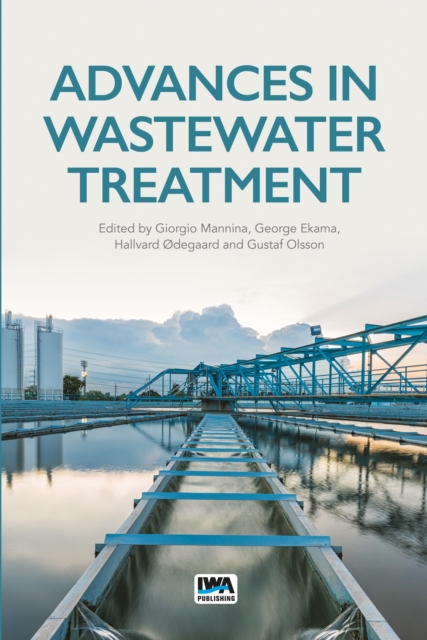
Advances in Wastewater Treatment
Advances in Wastewater Treatment presents a compendium of the key topics surrounding wastewater treatment, assembled by looking at the future technologies, and provides future perspectives in wastewater treatment and modelling.
eBook