
Catalogue Search | MBRL


Are you sure you want to remove the book from the shelf?

{{itemTitle}}
4,789
result(s) for
"Marie, Nicolas"
Sort by:
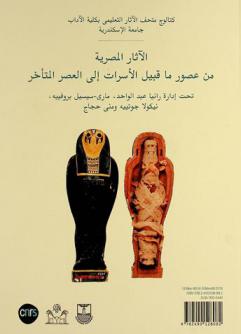
الآثار المصرية من عصور ما قبيل الأسرات إلى العصر المتأخر : كتالوج متحف الآثار التعليمي بكلية الآداب بجامعة الإسكندرية = Antiquités égyptiennes de la préhistoire à la basse Époque : catalogue du Musée éducatif d'Antiquités de la Faculté des lettres de l'Université d'Alexandrie
يتناول كتاب (الآثار المصرية من عصور ما قبيل الأسرات إلى العصر المتأخر) والذي قام بالإشراف عليه (رانيا عبد الواحد و3 آخرون) ويقع في حوالي (308) صفحة من القطع المتوسط موضوع (فهرس متحف الآثار التعليمي بكلية الآداب بجامعة الإسكندرية) مستعرضا المحتويات التالية : الجزء الأول : عصور ما قبل التاريخ وعصر ما قبيل الأسرات، الجزء الثاني : من عصر الدولة القديمة حتى نهاية العصر المتأخر.
Book

An Overview of Shared Mobility
In a wider understanding, shared mobility can be defined as trip alternatives that aim to maximize the utilization of the mobility resources that a society can pragmatically afford, disconnecting their usage from ownership. Then, shared mobility is the short-term access to shared vehicles according to the user’s needs and convenience. The contributions and added value of this paper are to provide an up-to-date and well-structured review on the area of shared mobility to researchers and practitioners of the transport sector. Hence, this paper presents a bibliographical review of shared mobility and its diverse modalities, as an alternative to individual transportation, especially in cases of individual automobiles or short trips restricted to an urban city. The present literature review on shared modes of transportation has discovered that the introduction of these modes alone will not solve transportation problems in large cities, with elevated and growing motorization rates. However, it can among the strategies employed to help alleviate the problems caused by traffic jams and pollution by reducing the number of vehicles in circulation, congestions, and the urban emission of polluting gases. Thus, the implementation of shared mobility schemes offers the potential to enhance the efficiency, competitiveness, social equity, and quality of life in cities. This paper covers the fundamental aspects of vehicle and/or ride sharing in urban centers, and provides an overview of current shared mobility systems.
Journal Article

Food system sustainability : insights from duALIne
\"As western-style food systems extend further around the world, food sustainability is becoming an increasingly important issue. Such systems are not sustainable in terms of their consumption of resources, their impact on ecosystems or their effect on health and social inequality\"-- Provided by publisher.
Book

Change Detection Based on the Coefficient of Variation in SAR Time-Series of Urban Areas
This paper discusses change detection in SAR time-series. First, several statistical properties of the coefficient of variation highlight its pertinence for change detection. Subsequently, several criteria are proposed. The coefficient of variation is suggested to detect any kind of change. Furthermore, several criteria that are based on ratios of coefficients of variations are proposed to detect long events, such as construction test sites, or point-event, such as vehicles. These detection methods are first evaluated on theoretical statistical simulations to determine the scenarios where they can deliver the best results. The simulations demonstrate the greater sensitivity of the coefficient of variation to speckle mixtures, as in the case of agricultural plots. Conversely, they also demonstrate the greater specificity of the other criteria for the cases addressed: very short event or longer-term changes. Subsequently, detection performance is assessed on real data for different types of scenes and sensors (Sentinel-1, UAVSAR). In particular, a quantitative evaluation is performed with a comparison of our solutions with baseline methods. The proposed criteria achieve the best performance, with reduced computational complexity. On Sentinel-1 images containing mainly construction test sites, our best criterion reaches a probability of change detection of 90% for a false alarm rate that is equal to 5%. On UAVSAR images containing boats, the criteria proposed for short events achieve a probability of detection equal to 90% of all pixels belonging to the boats, for a false alarm rate that is equal to 2%.
Journal Article
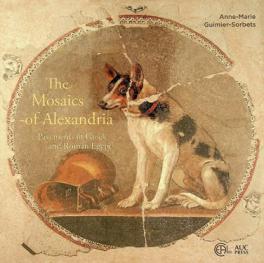
Mosaics of Alexandria : pavements of Greek and Roman Egypt
\"The art of the mosaic was developed by the Greeks, notably within the royal court of Macedonia, and was initially unknown to the Egyptians. Macedonian mosaicists then established busy workshops in the capital, Alexandria, and in the new towns of Greek Egypt. Under the stimulus of commissions from the Ptolemaic court, these workshops soon showed that they were capable of innovation. Beginning with pebbles, they then used tesserae of different sizes, and adopted new materials (glass, faience, paint) in order to transpose onto the floor images from grand paintings, which was the major art form of the time and was characterized by the vivid use of color. Alexandrian mosaicists were at the forefront of creativity during the Hellenistic period and their influence spread around the Mediterranean. After the Roman conquest of Egypt they adapted to the tastes of their new sponsors and to changes in architecture and were able to retain an important place within this art as it developed across the entire empire, in Rome and from east to west. The Mosaics of Alexandria provides the first overview of the mosaics and pavements of Egypt that were created between the end of the fourth century BC and the sixth century AD. It presents a selection of some seventy mosaics and pavements from Alexandria and Greco-Roman Egypt. Generally little known and more often than not unpublished, these works are illustrated here in full color, some for the first time. The aim is to better understand the artistic and artisanal production of a type of decoration that played an important role within the living environment of the ancients.\"-- Provided by publisher.
Book

Abrupt Emergence of a Single Dominant Multidrug-Resistant Strain of Escherichia coli
Background. Fluoroquinolone-resistant Escherichia coli are increasingly prevalent. Their clonal origins— potentially critical for control efforts—remain undefined. Methods. Antimicrobial resistance profiles and fine clonal structure were determined for 236 diverse-source historical (1967—2009) E. coli isolates representing sequence type ST131 and 853 recent (2010—2011) consecutive E. coli isolates from 5 clinical laboratories in Seattle, Washington, and Minneapolis, Minnesota. Clonal structure was resolved based on fimH sequence (fimbrial adhesin gene: H subclone assignments), multilocus sequence typing, gyrA and parC sequence (fluoroquinolone resistance-determining loci), and pulsed-field gel electrophoresis. Results. Of the recent fluoroquinolone-resistant clinical isolates, 52% represented a single ST131 subclonal lineage, H30, which expanded abruptly after 2000. This subclone had a unique and conserved gyrA/parC allele combination, supporting its tight clonality. Unlike other ST131 subclones, H30 was significantly associated with fluoroquinolone resistance and was the most prevalent subclone among current E. coli clinical isolates, overall (10.4%) and within every resistance category (11%—52%). Conclusions. Most current fluoroquinolone-resistant E. coli clinical isolates, and the largest share of multidrug-resistant isolates, represent a highly clonal subgroup that likely originated from a single rapidly expanded and disseminated ST131 strain. Focused attention to this strain will be required to control the fluoroquinolone and multi-drug-resistant E. coli epidemic.
Journal Article


Impact of In Vitro Passive Permeability in a P-gp-transfected LLC-PK1 Model on the Prediction of the Rat and Human Unbound Brain-to-Plasma Concentration Ratio
PurposeMore accurate prediction of the extent of drug brain exposure in early drug discovery and understanding potential species differences could help to guide medicinal chemistry and avoid unnecessary animal studies. Hence, the aim of the current study was to validate the use of a P-gp transfected LLC-PK1 model to predict the unbound brain-to-plasma concentration ratio (Kpuu,brain) in rats and humans.MethodsMOCK-, Mdr1a- and MDR1-transfected LLC-PK1 monolayers were applied in a transwell setup to quantify the bidirectional transport for 12 specific P-gp substrates, 48 UCB drug discovery compounds, 11 compounds with reported rat in situ brain perfusion data and 6 compounds with reported human Kpuu,brain values. The in vitro transport data were introduced in a minimal PBPK model (SIVA®) to determine the transport parameters. These parameters were combined with the differences between in vitro and in vivo passive permeability as well as P-gp expression levels (as determined by LC-MS/MS), to predict the Kpuu,brain.ResultsA 10-fold difference between in vitro and in vivo passive permeability was observed. Incorporation of the differences between in vitro and in vivo passive permeability and P-gp expression levels resulted in an improved prediction of rat (AAFE 2.17) and human Kpuu,brain (AAFE 2.10).ConclusionsWe have succesfully validated a methodology to use a P-gp overexpressing LLC-PK1 cell line to predict both rat and human Kpuu,brain by correcting for both passive permeability and P-gp expression levels.
Journal Article


Opioid receptor desensitization: mechanisms and its link to tolerance
Opioid receptors (OR) are part of the class A of G-protein coupled receptors and the target of the opiates, the most powerful analgesic molecules used in clinic. During a protracted use, a tolerance to analgesic effect develops resulting in a reduction of the effectiveness. So understanding mechanisms of tolerance is a great challenge and may help to find new strategies to tackle this side effect. This review will summarize receptor-related mechanisms that could underlie tolerance especially receptor desensitization. We will focus on the latest data obtained on molecular mechanisms involved in opioid receptor desensitization: phosphorylation, receptor uncoupling, internalization, and post-endocytic fate of the receptor.
Journal Article